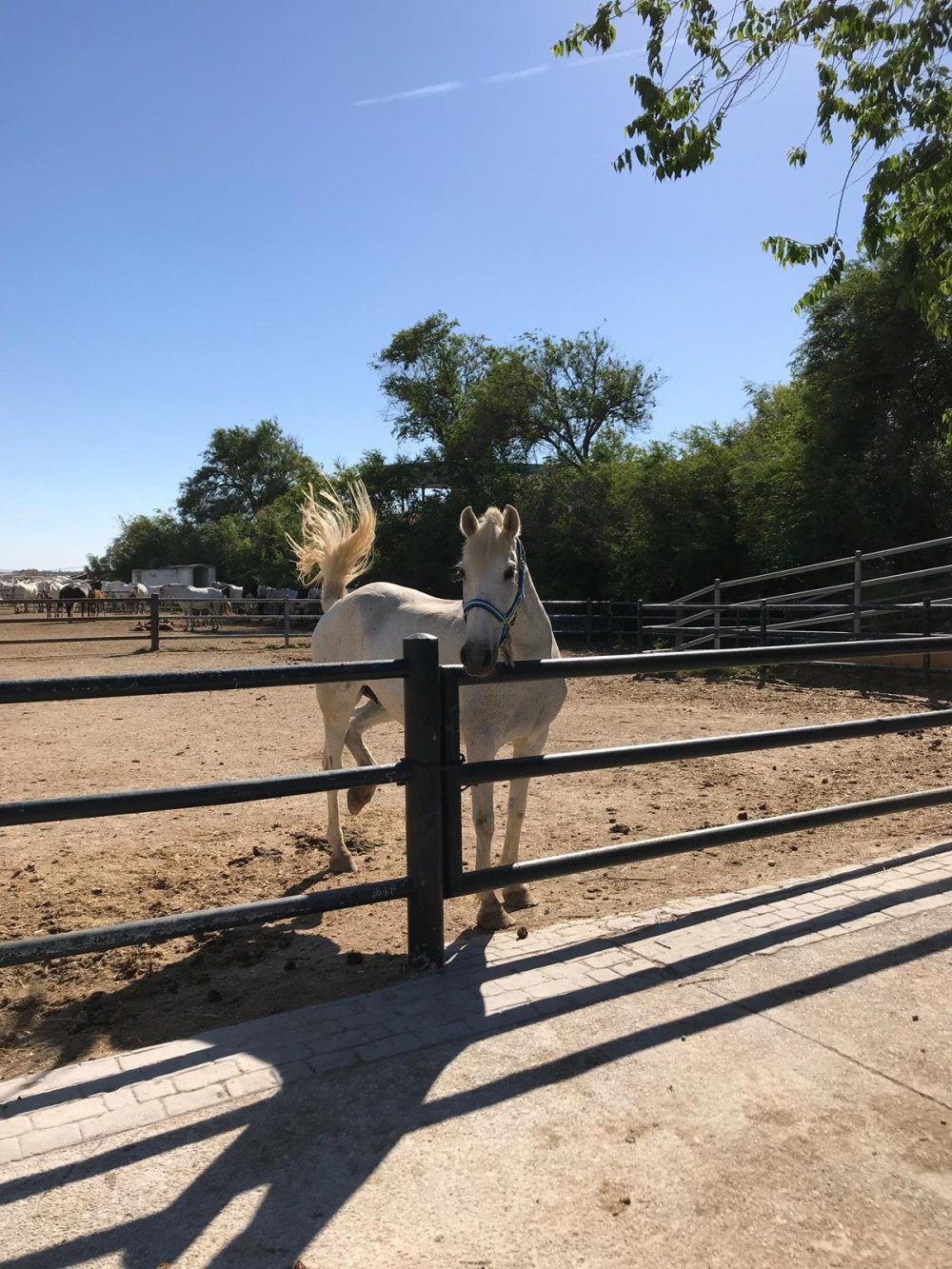
Today we started the morning off by heading to Yeguada De La Cartuja.The most important reserve of Andalusian Horse, Cartujano lineage worldwide. The essential aim of this breeding farm is to preserve the genetic heritage that holds this lineage and to contribute to the improvement of the Andalusian Horse. This is a breeding facility of the Cartuja horse which is a cousin of the famous Spanish Andalusian horse breed. The operation is mainly used as a stud farm and the operation is controlled by the government.
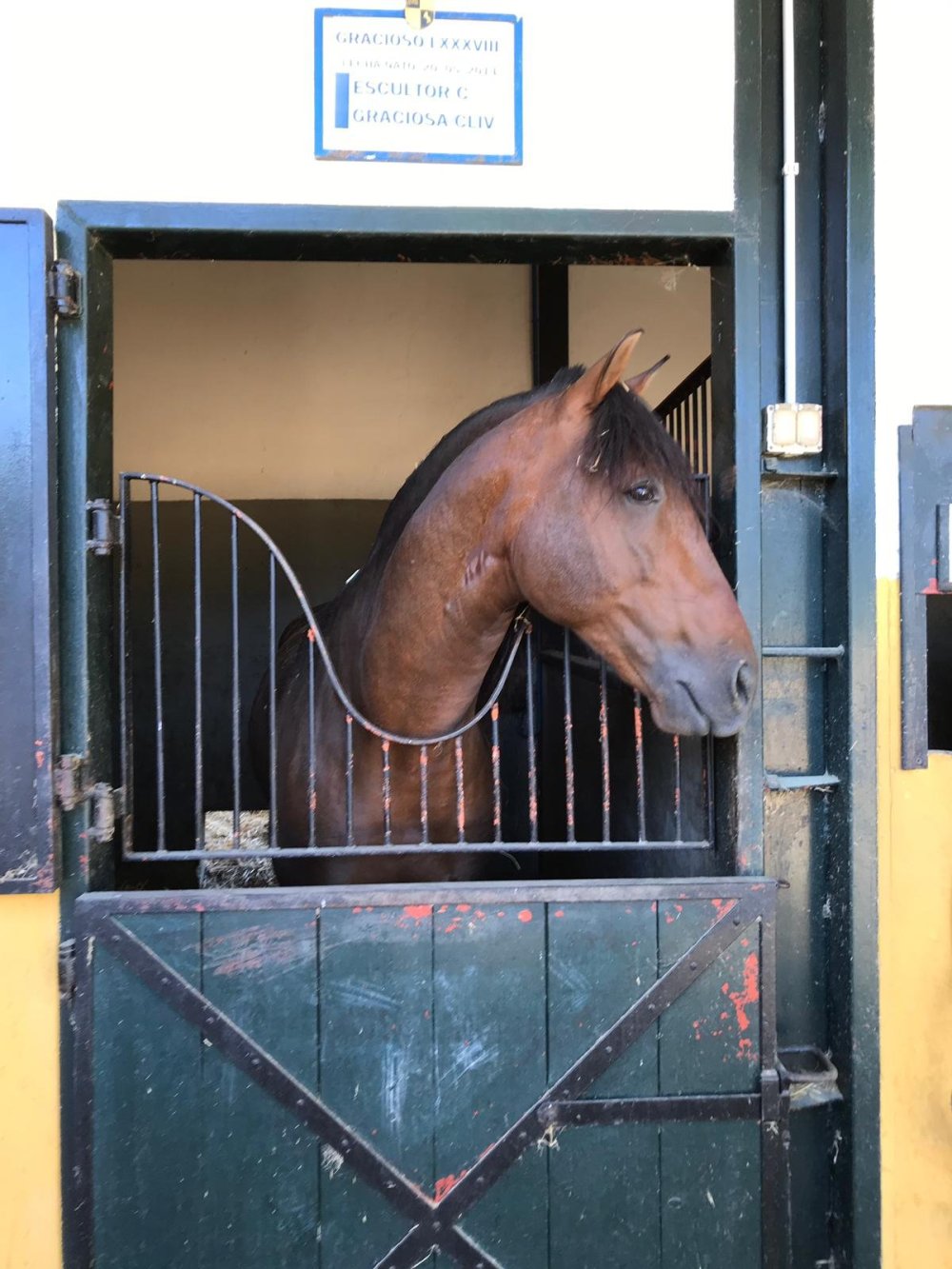
On the farm there are about 280 horses, including mares, stallions, and foals. Although many know the Cartuja breed as being the famous grey and white colors, but many consumers are seeking bays, chestnuts, and black offspring as they are easier to maintain on a day to day basis. Horses are bred to be compact, have a straight top line, a round neck and long movements making them the ideal dressage horse. The Cartuja breed are most known for being used for dressage, but since they are such a hardworking and willing breed they also excel in jumping, eventing, and working cattle.
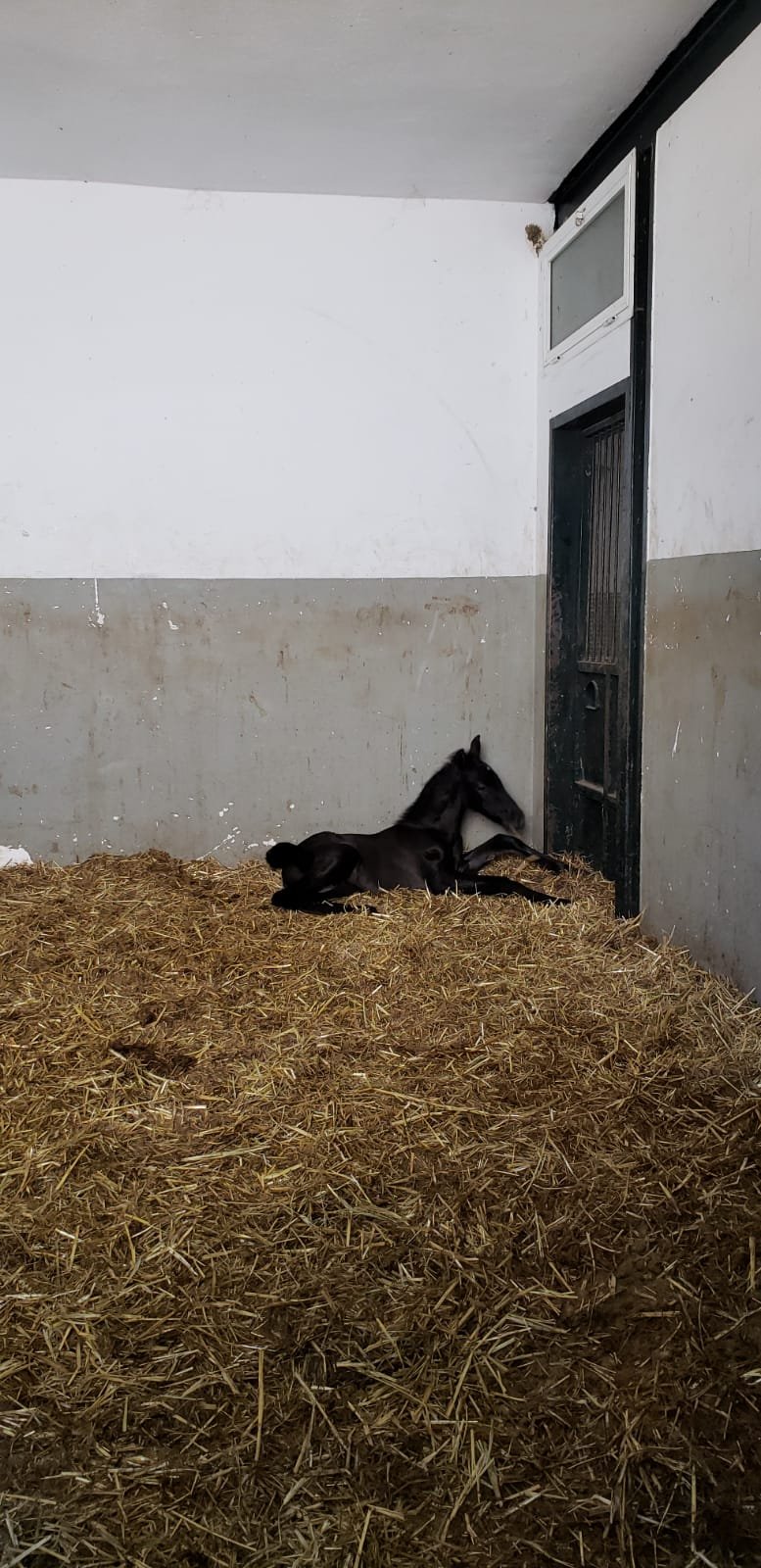
They begin weaning the horses around 8 months, which is usually a little later than other farms. They breed to have about 20 foals each year. Mares are ultrasounded at 15 days, Around 25 days after birth the foals begin being separated from their mothers for a few hours a day to allow them to socialize with humans and make the weaning process easier. The horses are given the time to mature and grow without being pushed. The colts and fillies begin training at 4 years old. This also depends they say on the personality and character of the horses. Some horses need more time and some are ready to begin training at a younger age.
In the U.S. we are used to gelding all of our male horses for the safety of the people handling horses and for unwanted breeding. Here in Spain it is very popular to keep horses as stallions because they believe that it is important to keep the males intact so they can remain pure and produce offspring. At the Yeguada De La Cartuja stud farm, they believe that with the proper upbringing and training they can produce stallions that can be ridden by children and those with little riding experience and that they can function and be handled.
Overall the tour was very informative. It was great to see another aspect of the horse industry and to see stallions that were able to work and breed but also able to be safe to be around.
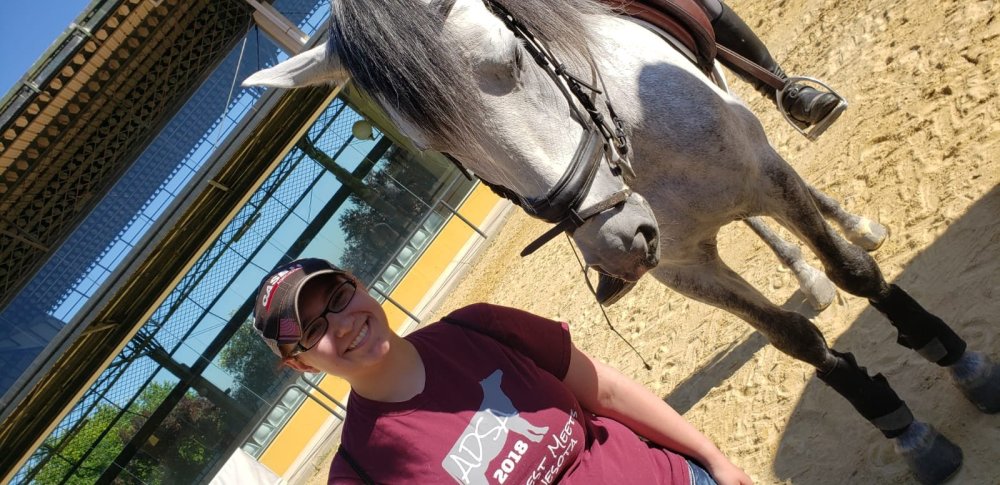
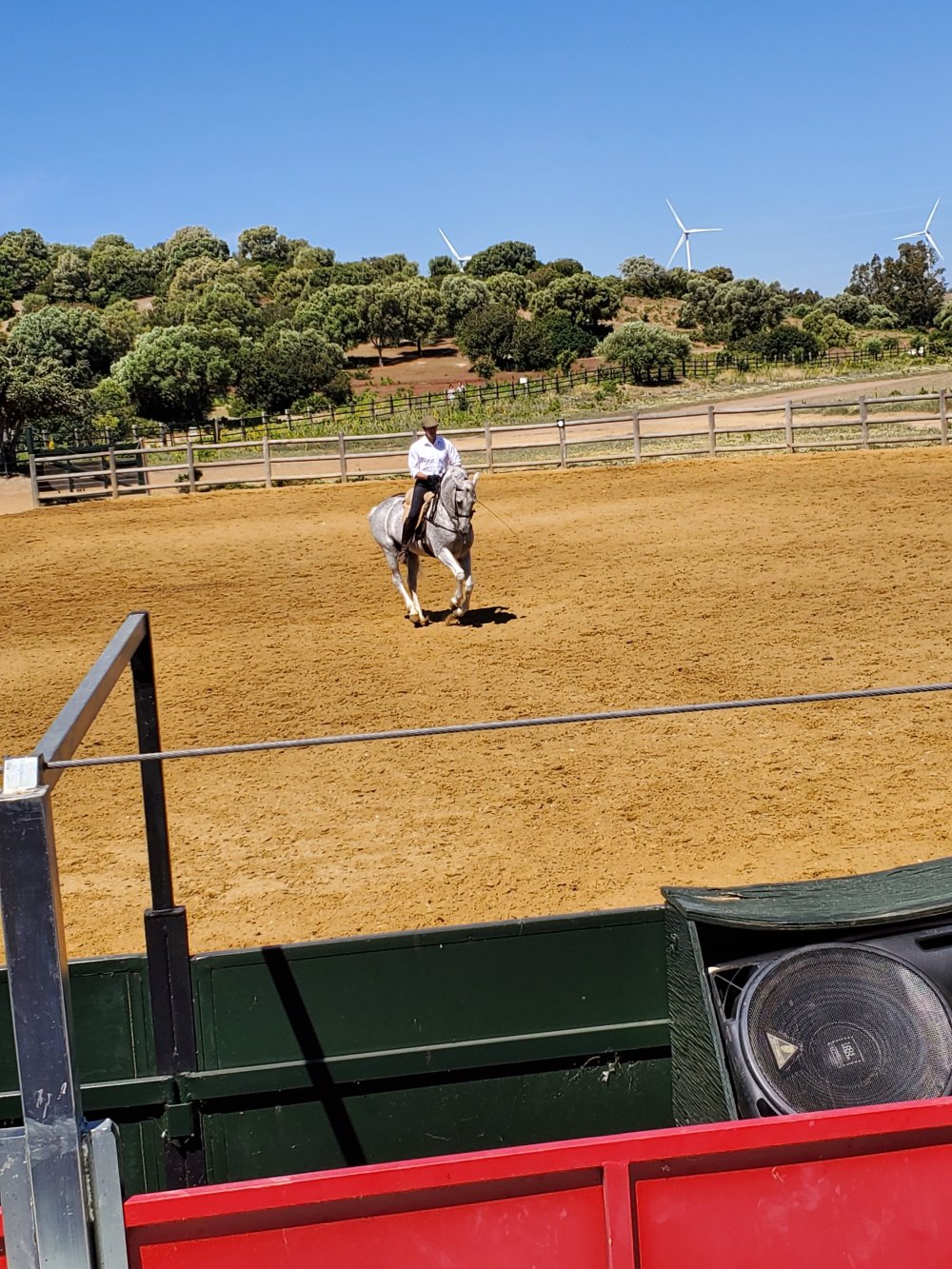
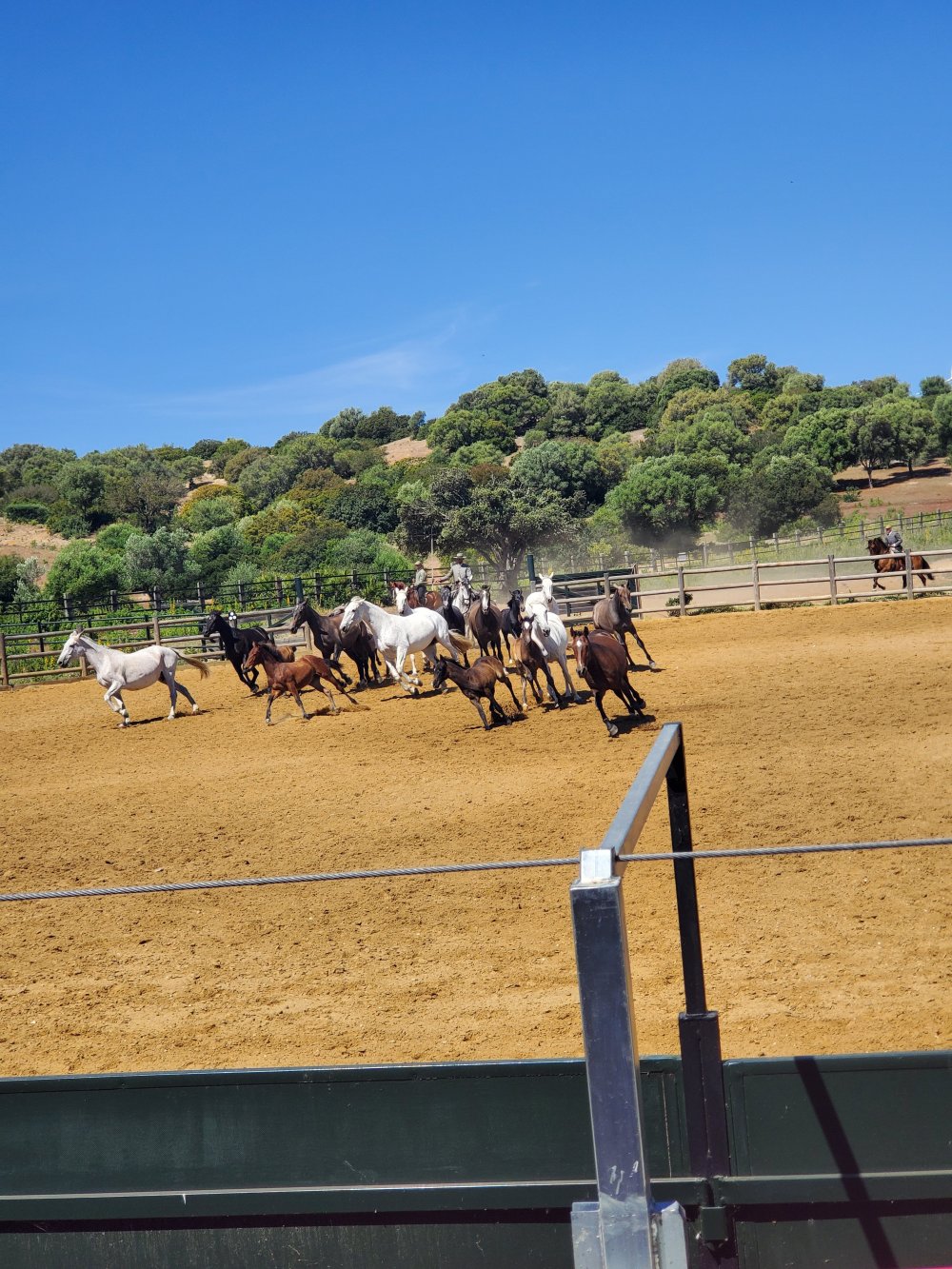
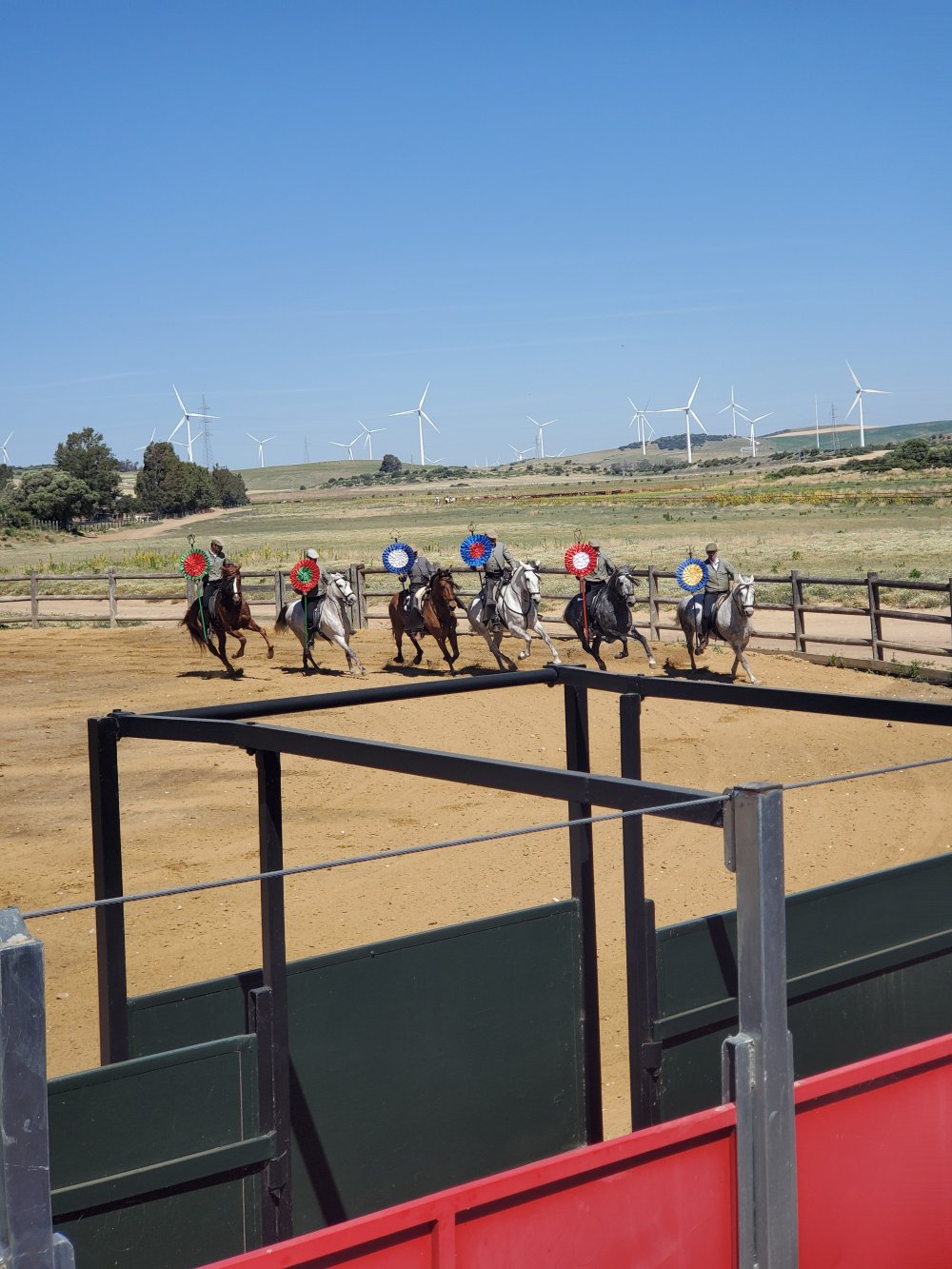
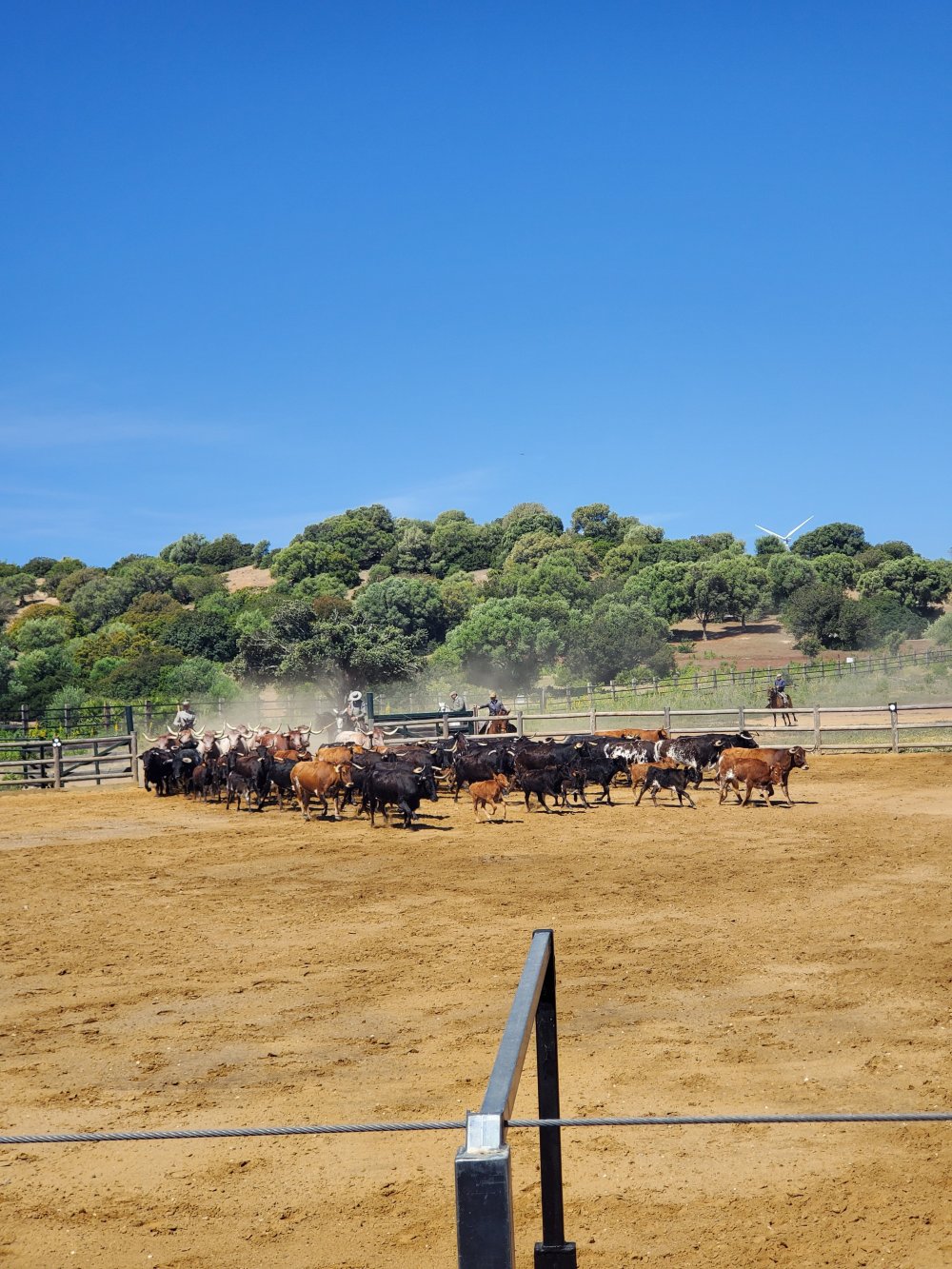
The second stop of the day was Acampo Abierto. This show walked us through the life of the fighting bulls, the horses used in bullfights, and the people. The bulls start their lives on the wide open range and live there for their whole lives. The breeders use 3 methods of branding: the traditional liquid nitrogen brand, an ear tag, and an emblem placed on the bull at the time of his bullfight. The horses are also born and raised on the free range. They are weaned at 6 months and at 3 years of age, it is decided if they will start their training as a dressage horse or a bullfighting horse.
 Ag & the Equine Industry in Spain