About the Trip

Welcome to our blog!

We are a group of 21 NDSU undergraduate students and 2 faculty advisors who are going on a 2-week study abroad trip to southern Spain to learn more about their agriculture and equine industry. The blog will be updated daily, so check back between May 13 – 27 to hear more about our adventures!

Capture

May 22

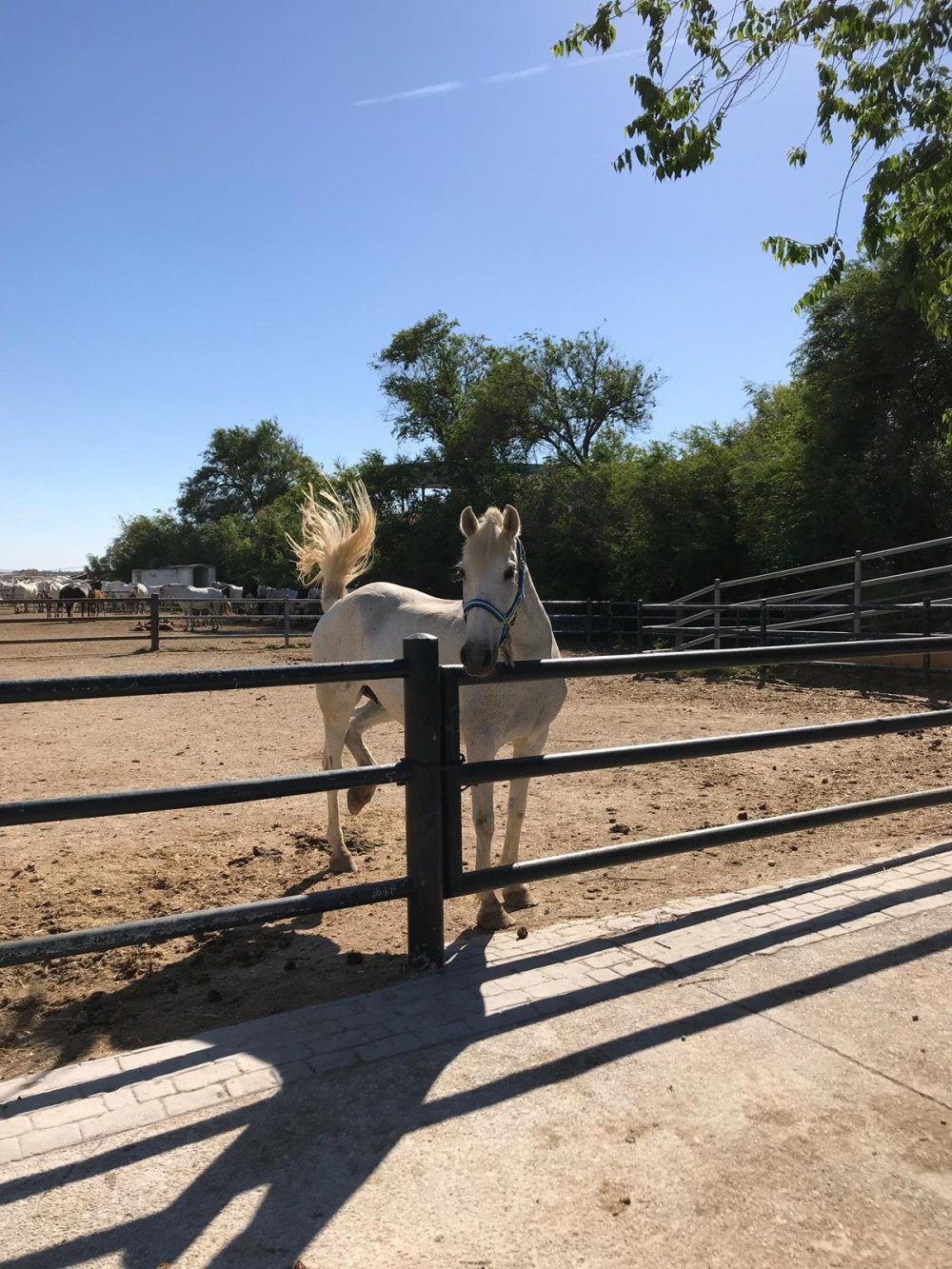
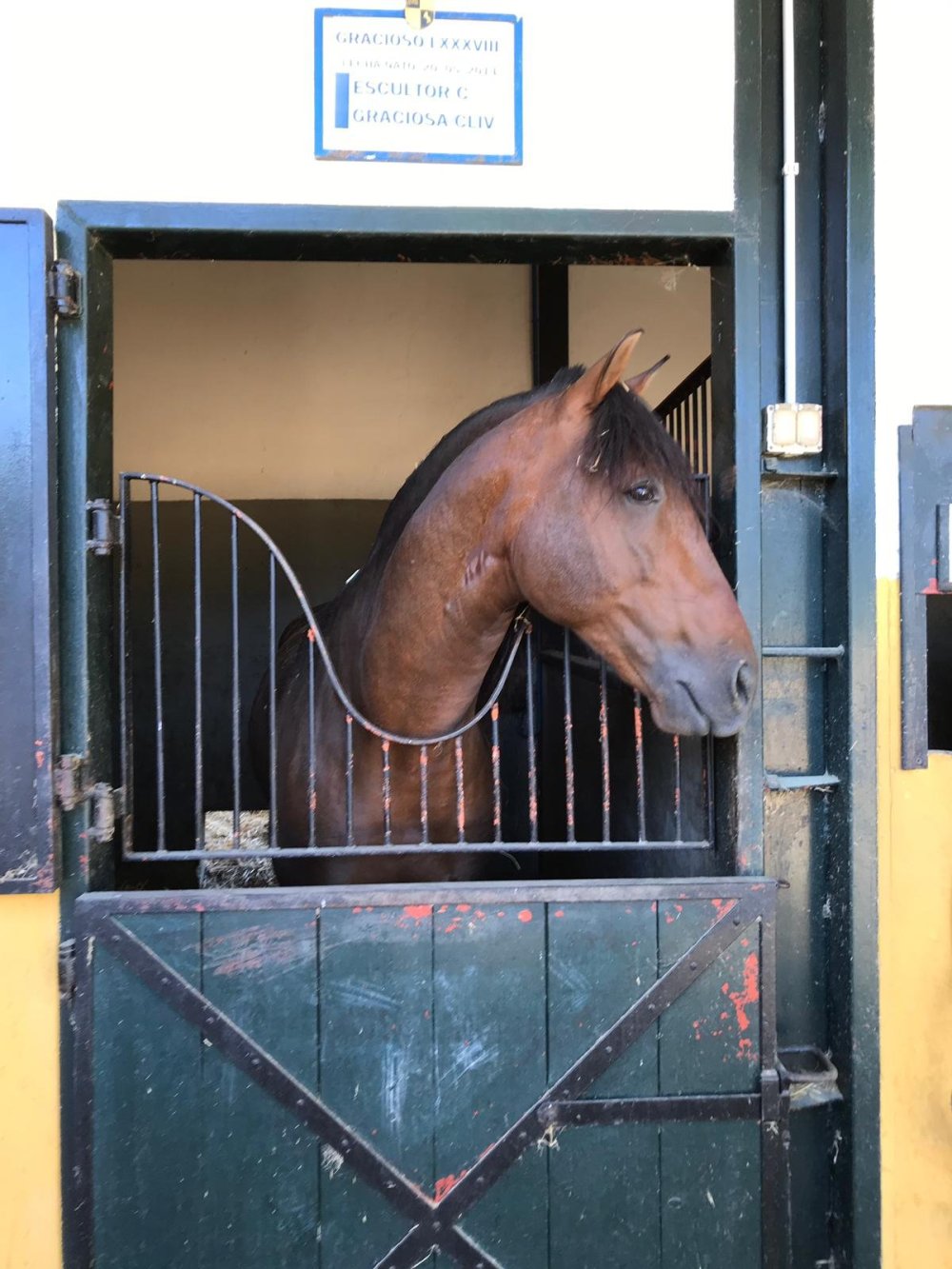
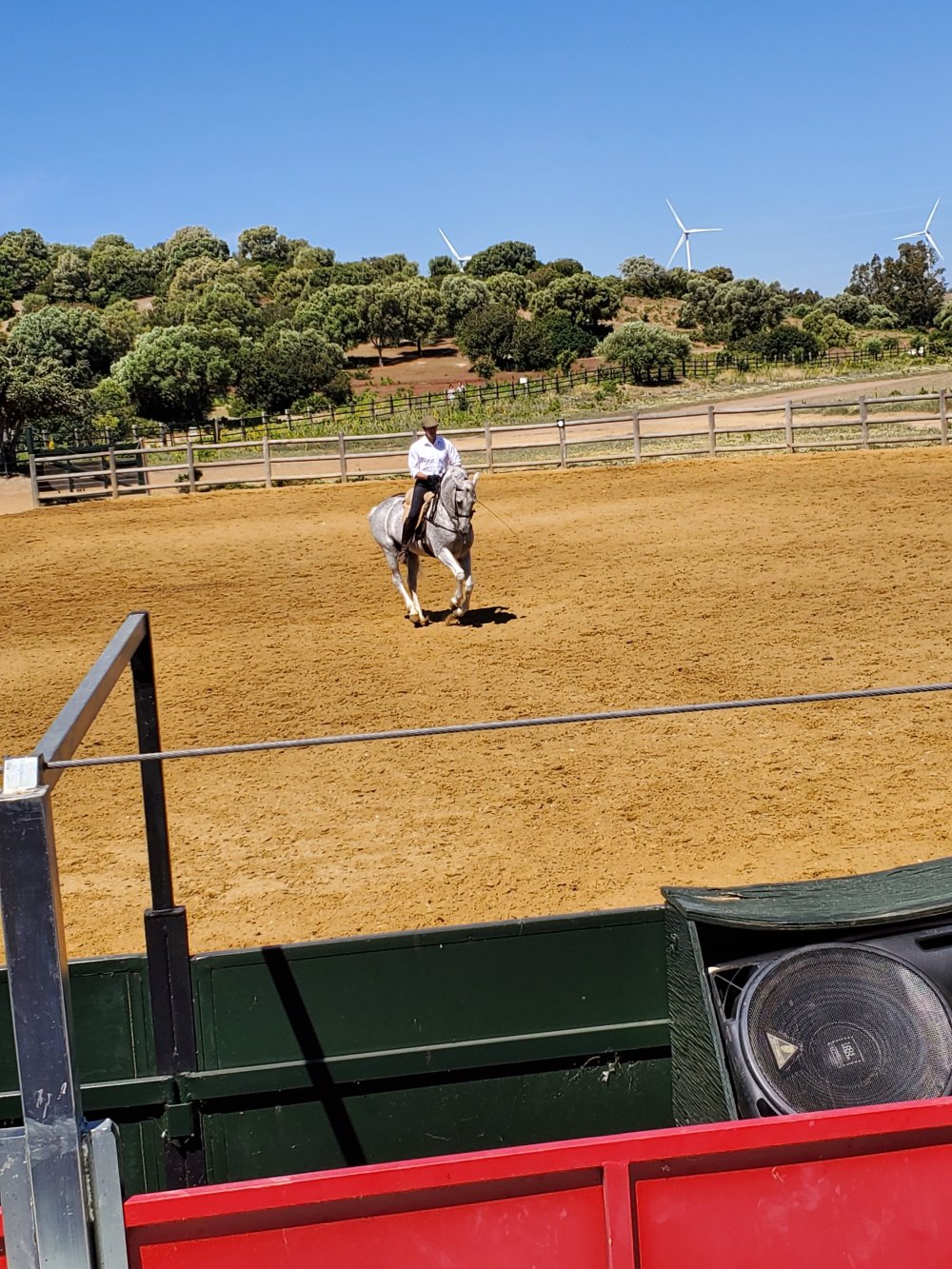
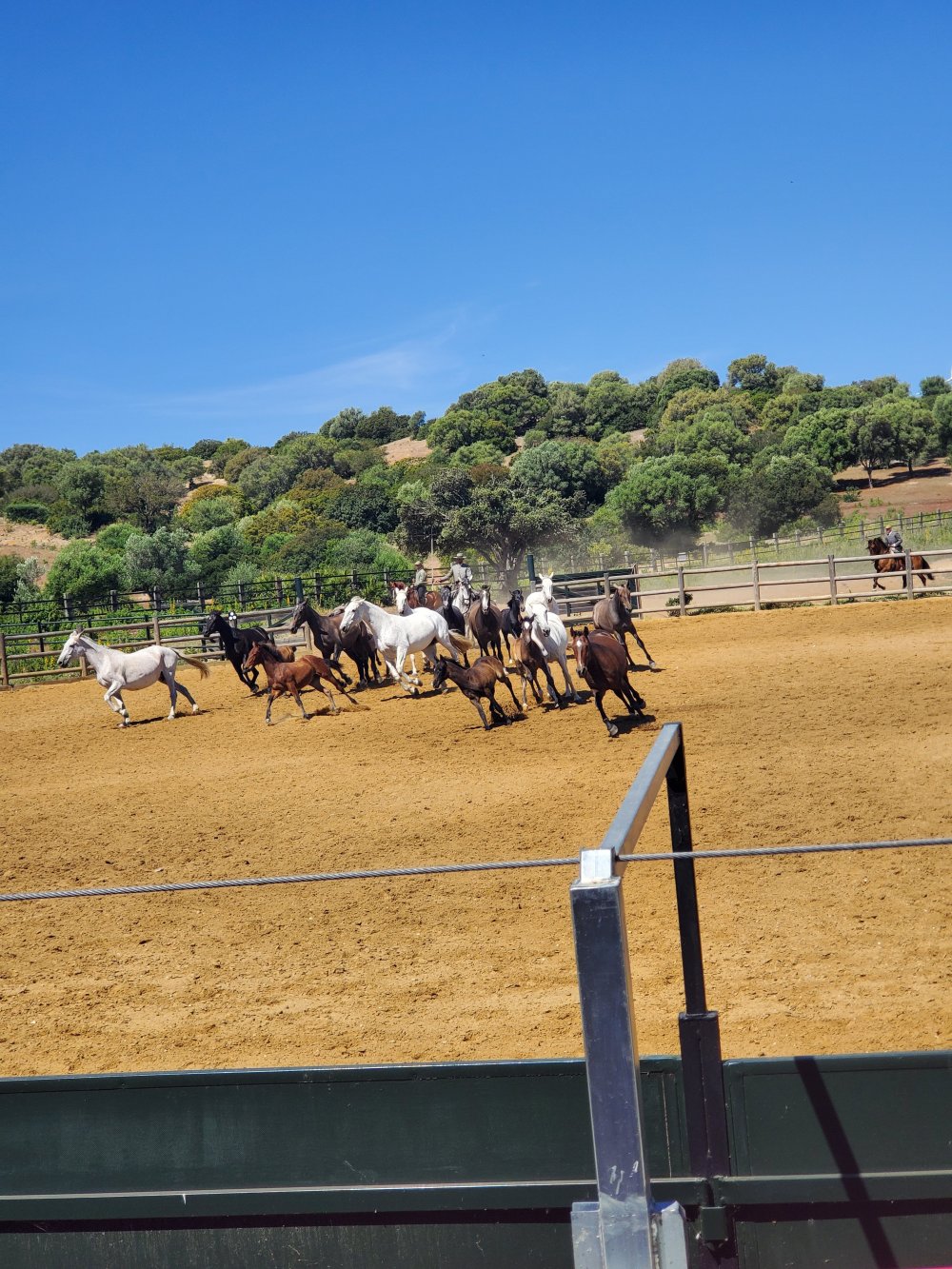
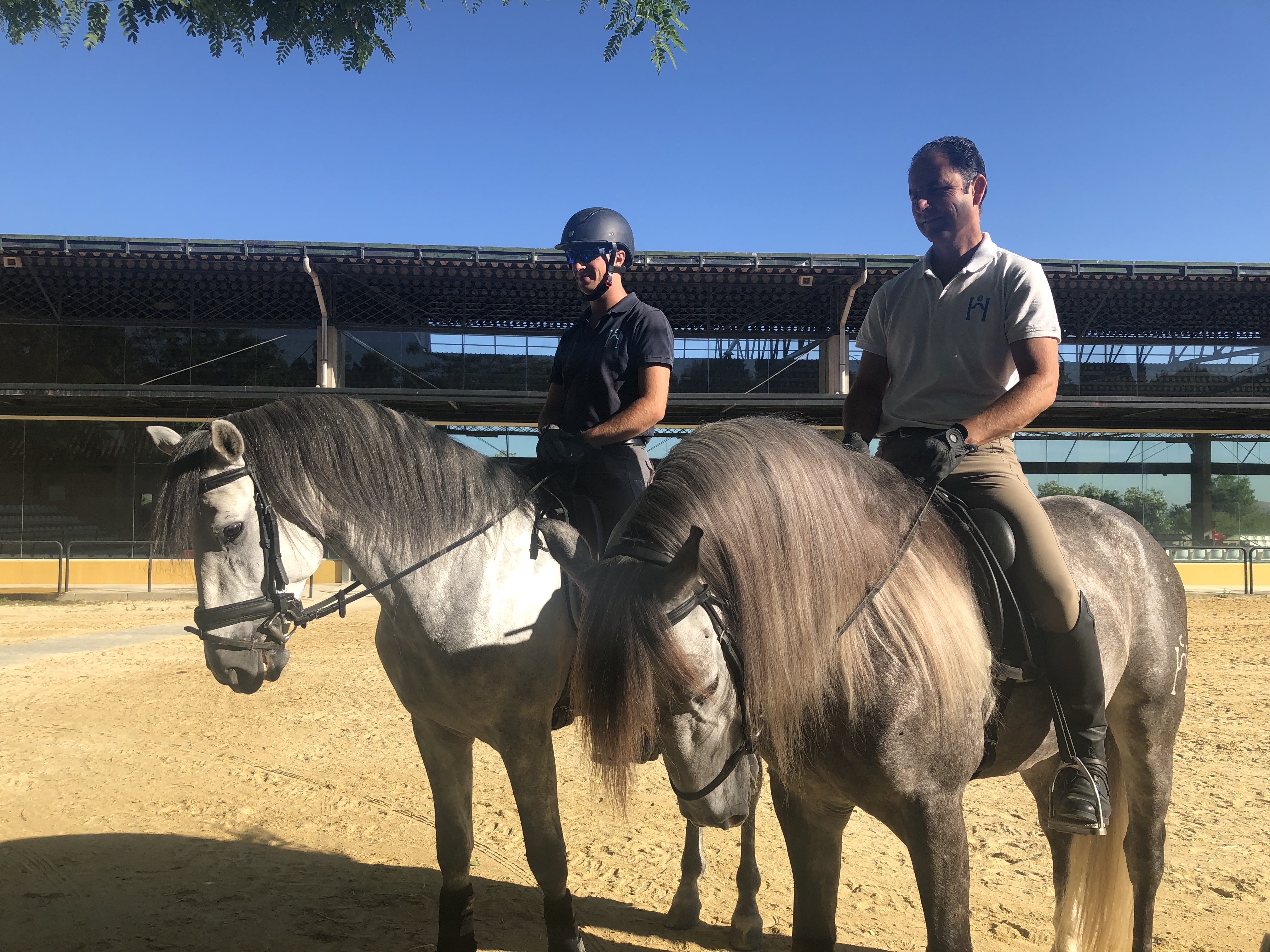
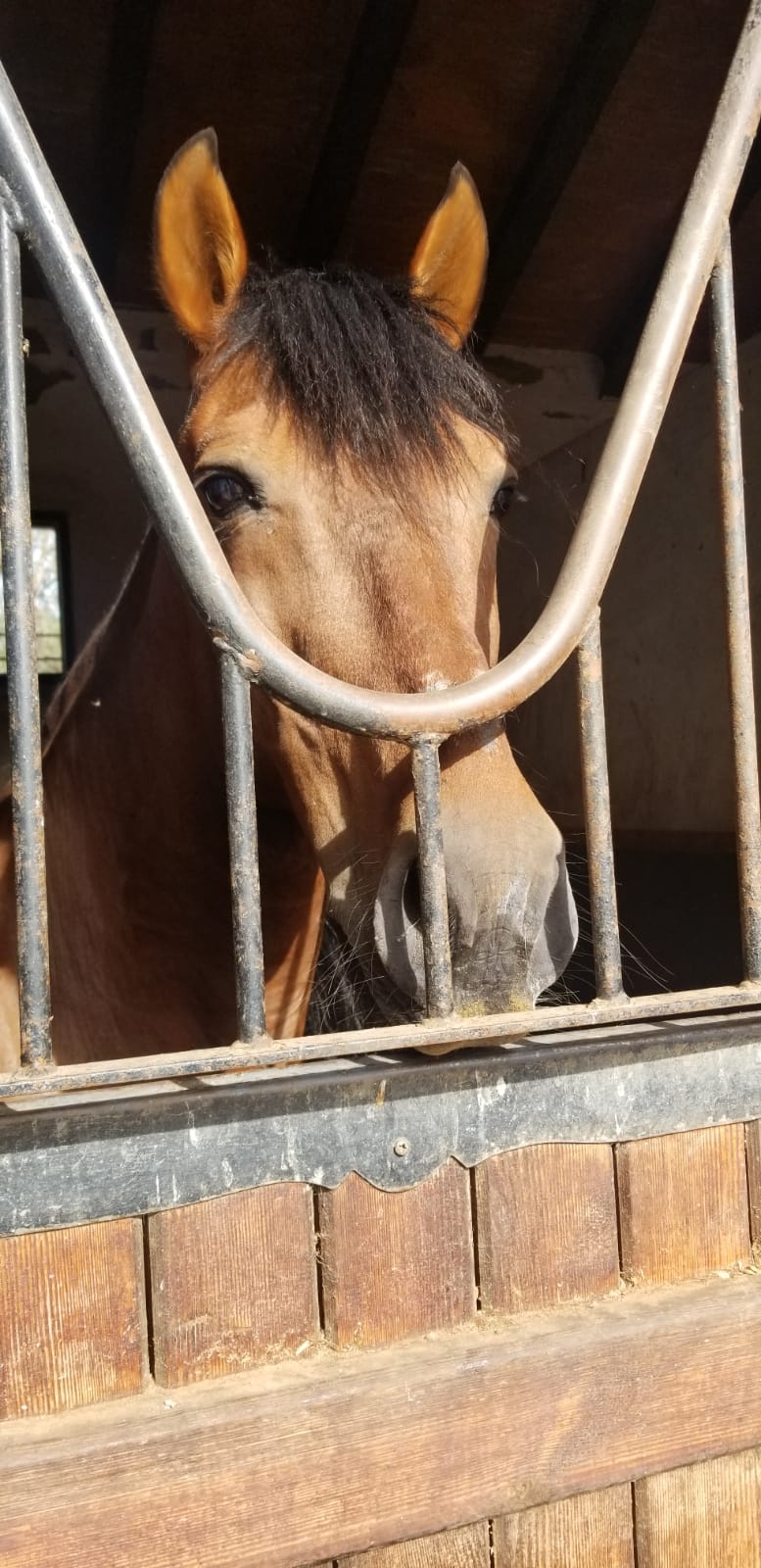
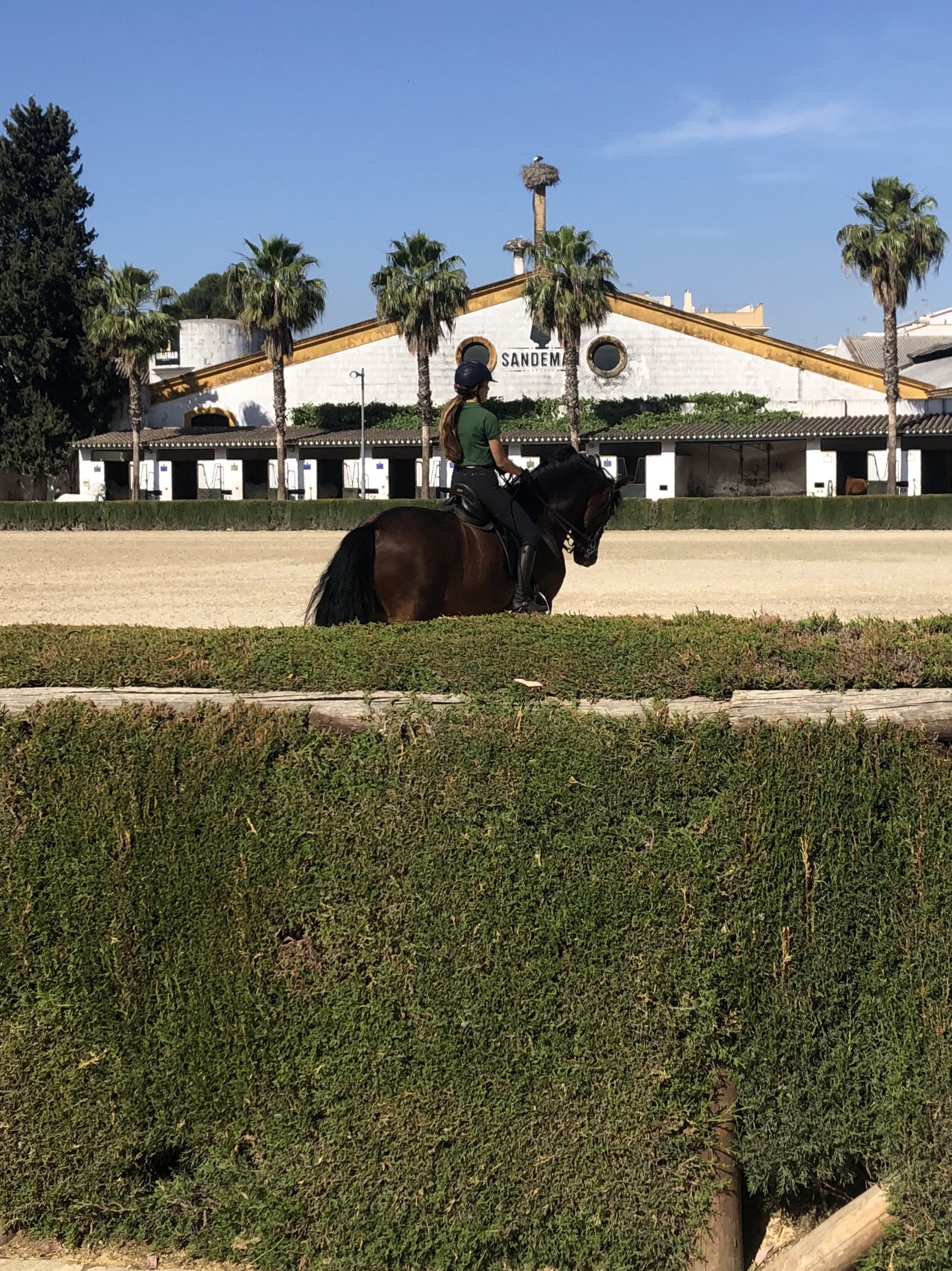
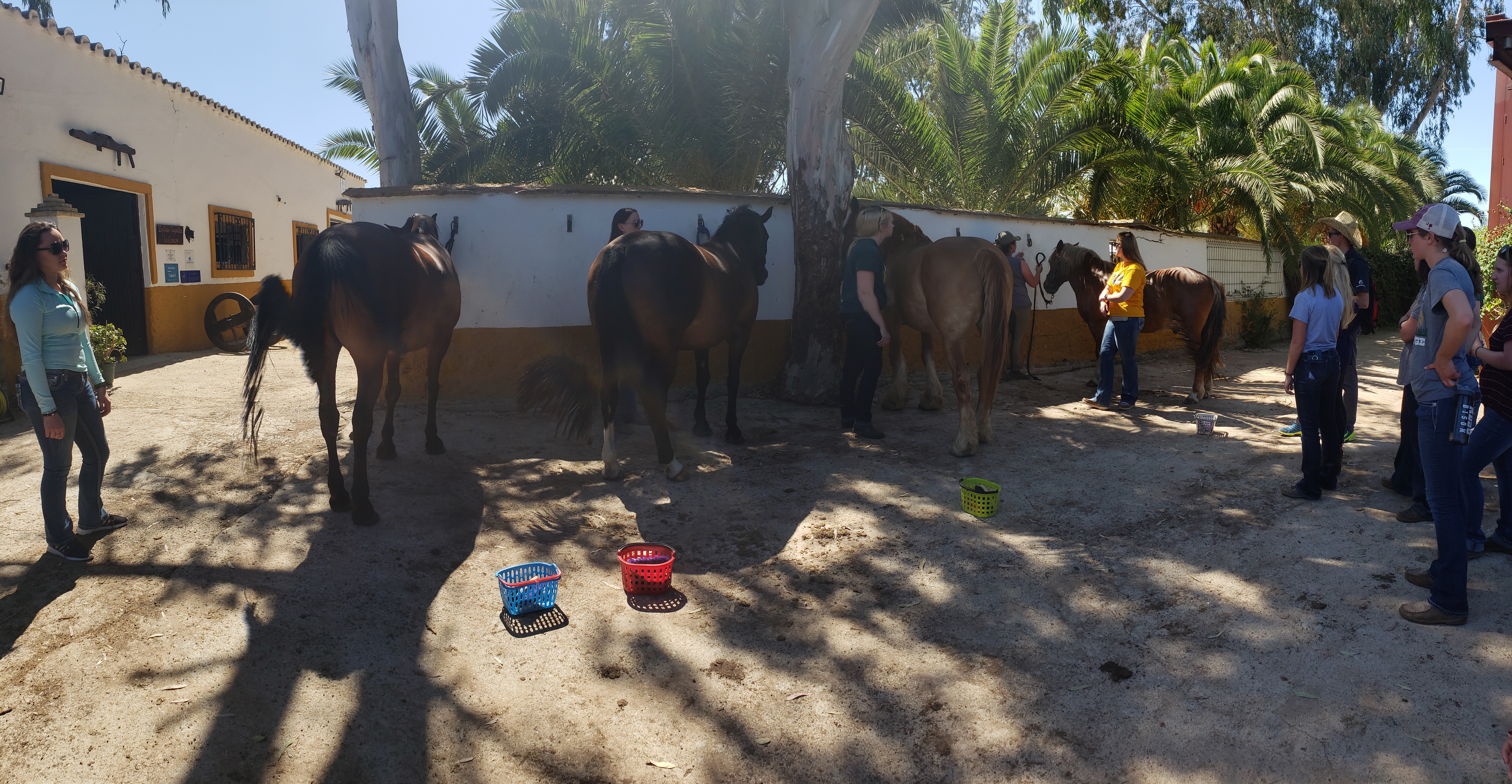
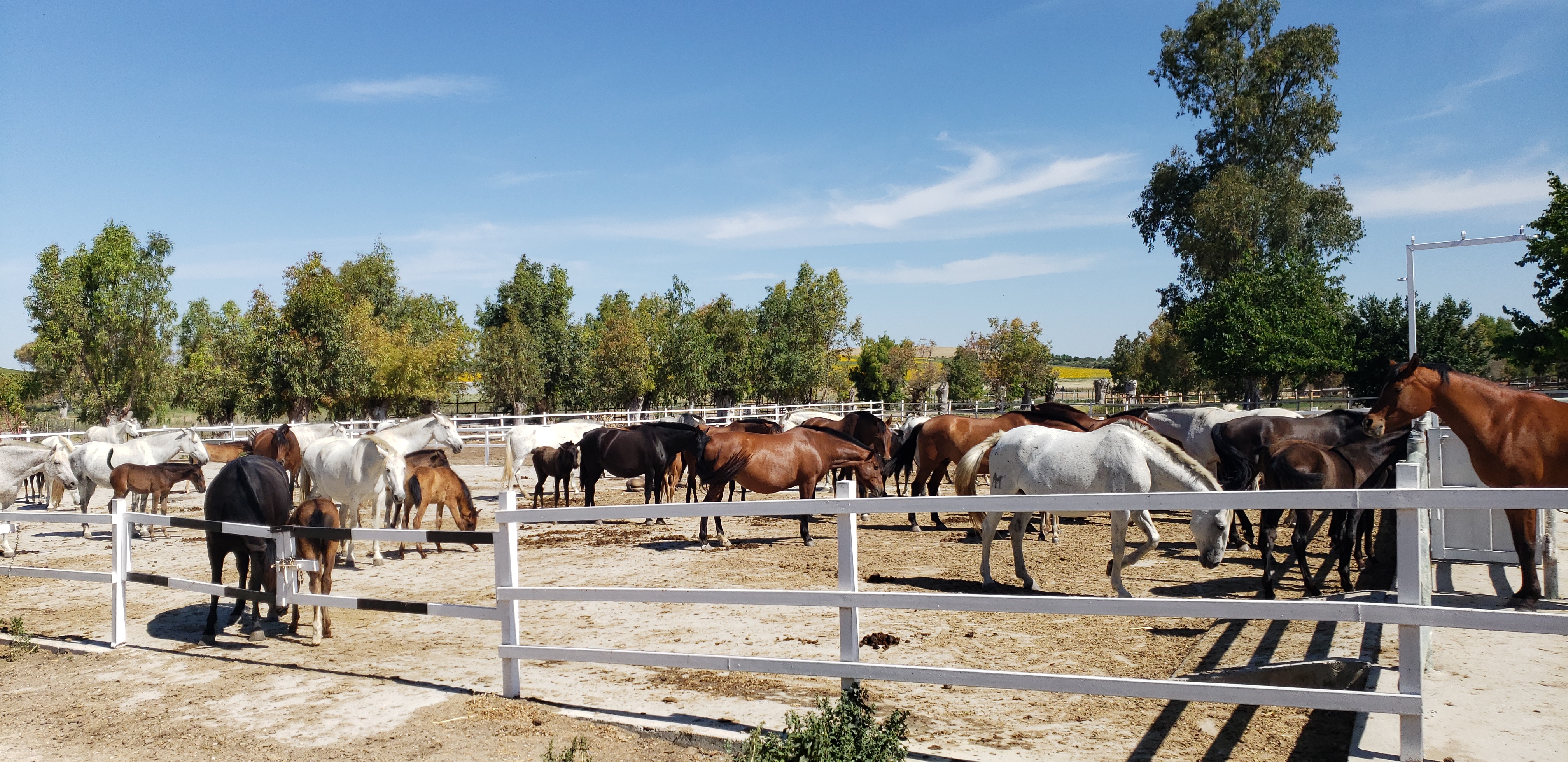
Today we started the morning off by heading to Yeguada De La Cartuja.The most important reserve of Andalusian Horse, Cartujano lineage worldwide. The essential aim of this breeding farm is to preserve the genetic heritage that holds this lineage and to contribute to the improvement of the Andalusian Horse. This is a breeding facility of the Cartuja horse which is a cousin of the famous Spanish Andalusian horse breed. The operation is mainly used as a stud farm and the operation is controlled by the government.

On the farm there are about 280 horses, including mares, stallions, and foals. Although many know the Cartuja breed as being the famous grey and white colors, but many consumers are seeking bays, chestnuts, and black offspring as they are easier to maintain on a day to day basis. Horses are bred to be compact, have a straight top line, a round neck and long movements making them the ideal dressage horse. The Cartuja breed are most known for being used for dressage, but since they are such a hardworking and willing breed they also excel in jumping, eventing, and working cattle.

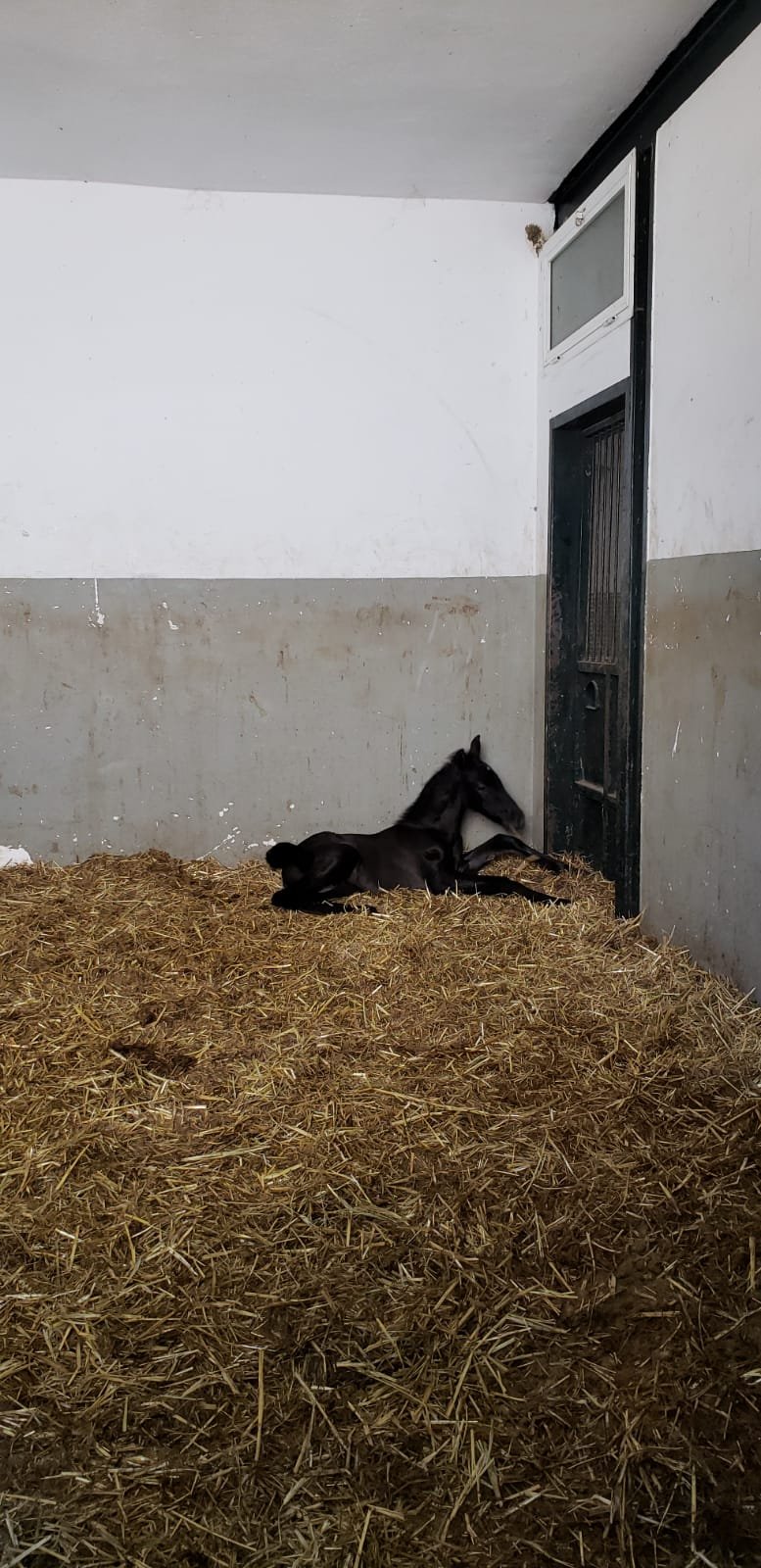
They begin weaning the horses around 8 months, which is usually a little later than other farms. They breed to have about 20 foals each year. Mares are ultrasounded at 15 days, Around 25 days after birth the foals begin being separated from their mothers for a few hours a day to allow them to socialize with humans and make the weaning process easier. The horses are given the time to mature and grow without being pushed. The colts and fillies begin training at 4 years old. This also depends they say on the personality and character of the horses. Some horses need more time and some are ready to begin training at a younger age.

In the U.S. we are used to gelding all of our male horses for the safety of the people handling horses and for unwanted breeding. Here in Spain it is very popular to keep horses as stallions because they believe that it is important to keep the males intact so they can remain pure and produce offspring. At the Yeguada De La Cartuja stud farm, they believe that with the proper upbringing and training they can produce stallions that can be ridden by children and those with little riding experience and that they can function and be handled.

Overall the tour was very informative. It was great to see another aspect of the horse industry and to see stallions that were able to work and breed but also able to be safe to be around.

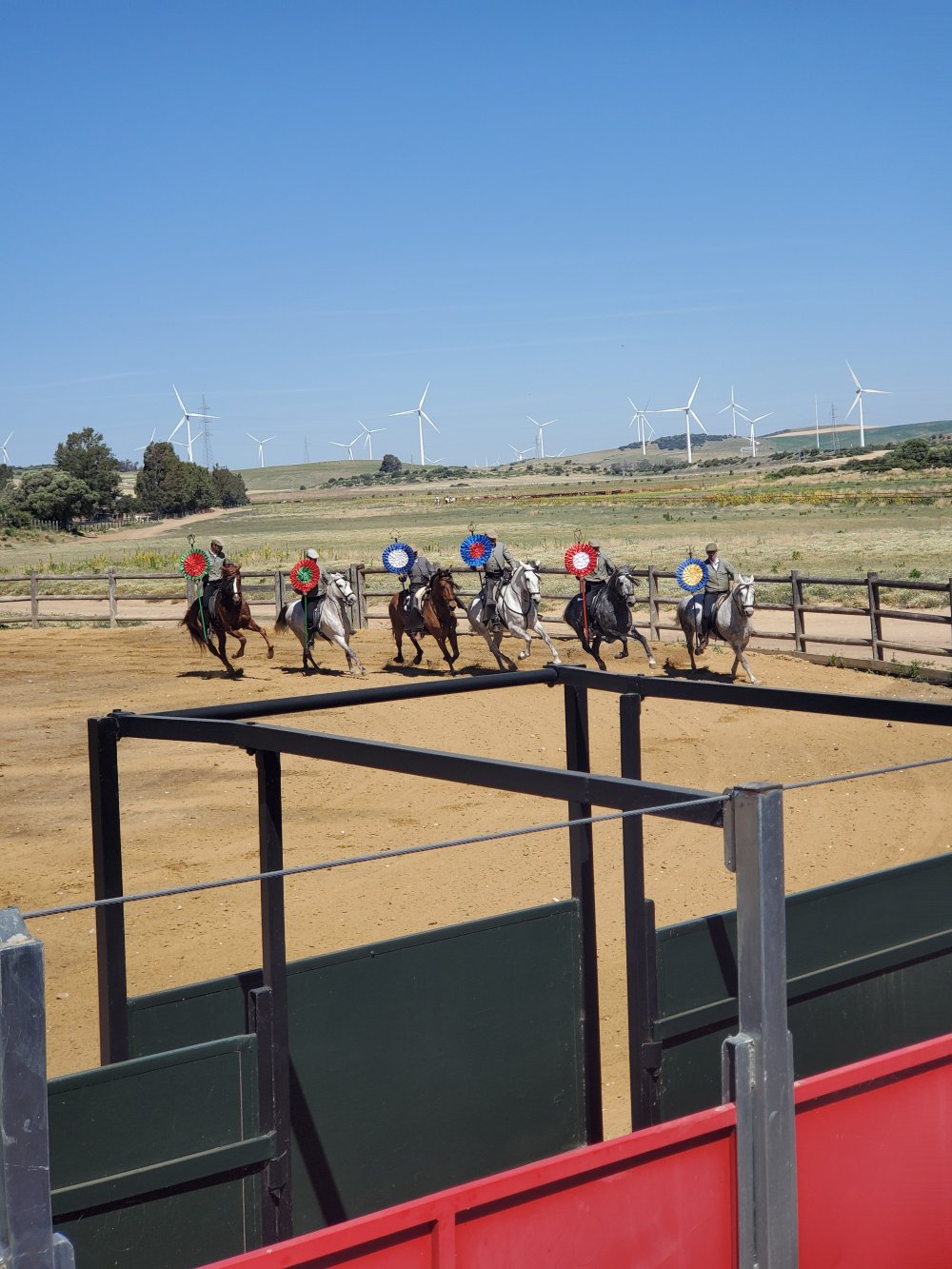
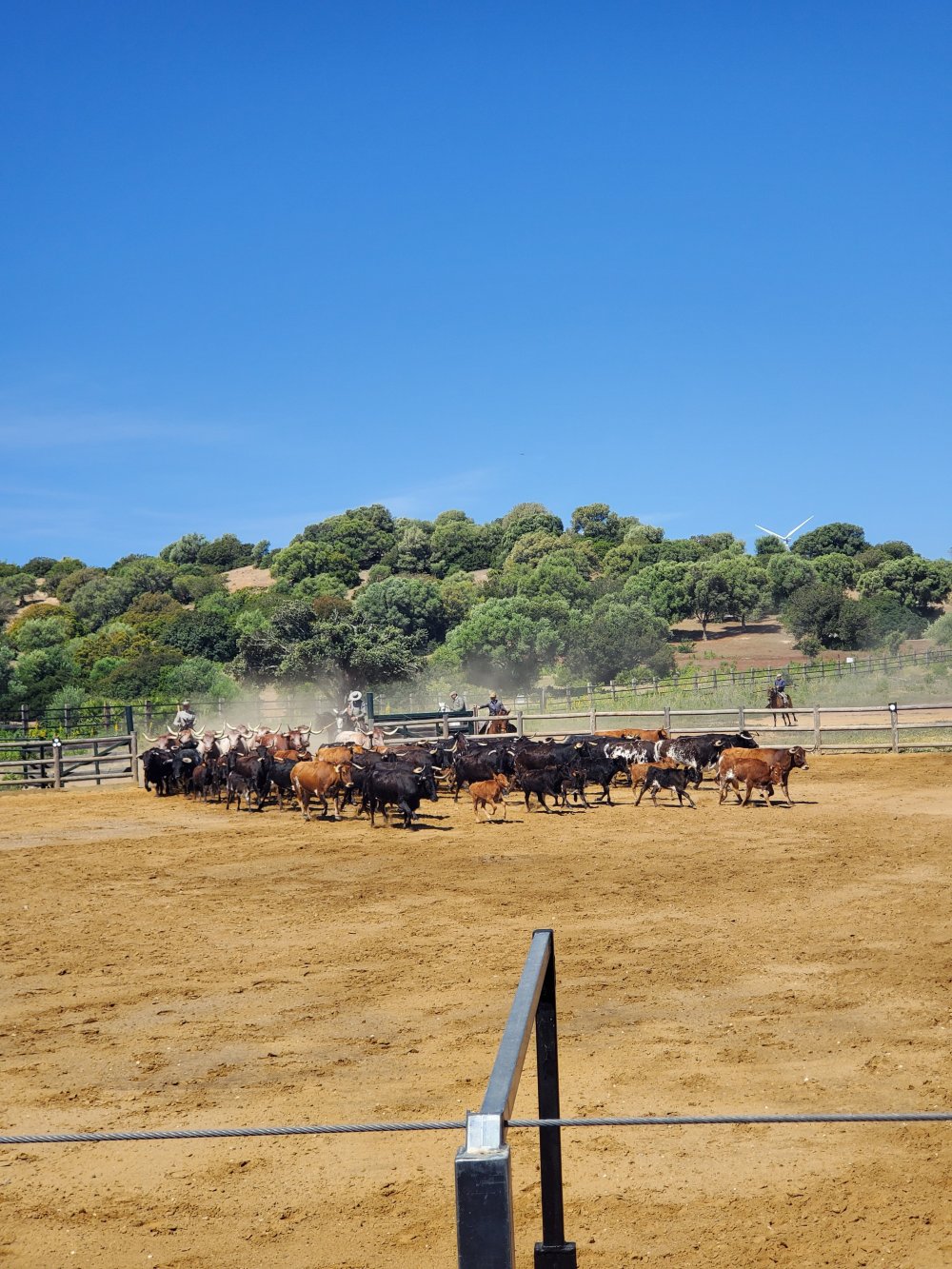
The second stop of the day was Acampo Abierto. This show walked us through the life of the fighting bulls, the horses used in bullfights, and the people. The bulls start their lives on the wide open range and live there for their whole lives. The breeders use 3 methods of branding: the traditional liquid nitrogen brand, an ear tag, and an emblem placed on the bull at the time of his bullfight. The horses are also born and raised on the free range. They are weaned at 6 months and at 3 years of age, it is decided if they will start their training as a dressage horse or a bullfighting horse.

May 26: Final Day


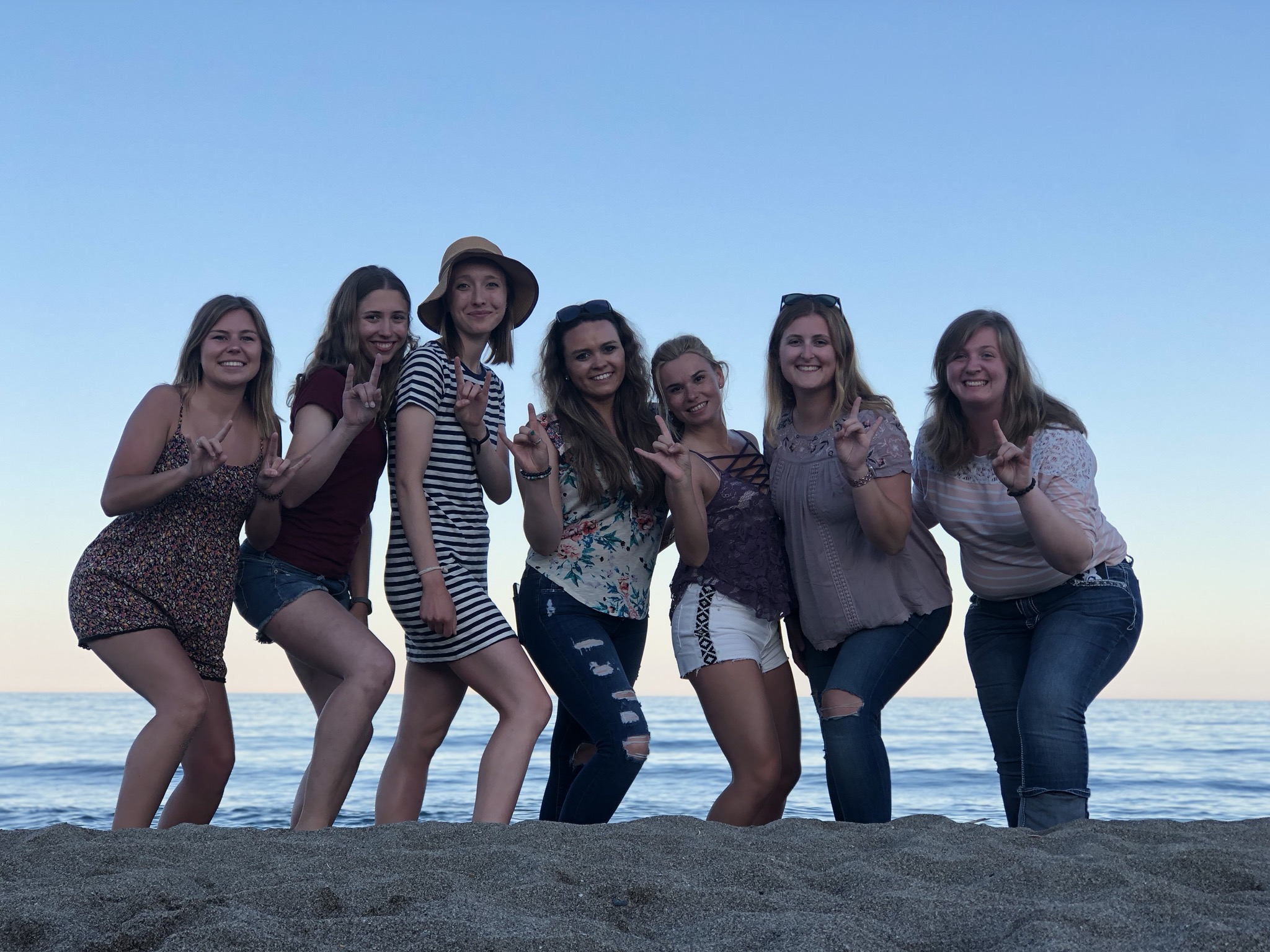
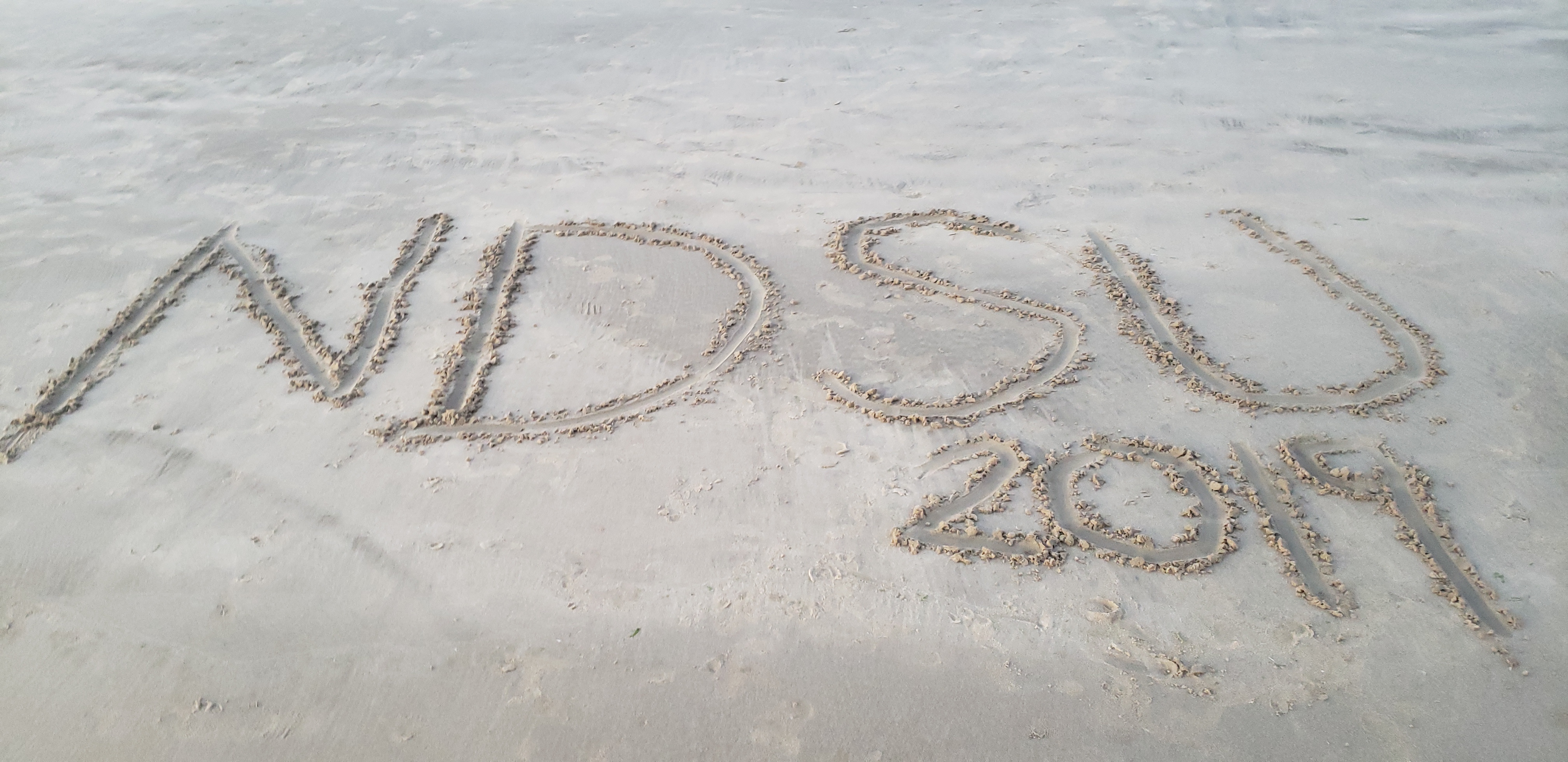
Our last day in Spain was spent relaxing on the beach and packing things up to go. During this time we were able to reflect on some of the highlights of the trip. 


Some things we saw in Spain were quite comparable to US agriculture while some things were different from typical American agriculture. For example, our group toured a farm that milked around 200 Florida dairy goats and farrowed around 700 Iberian sows. The farm made cheese from the goats milk and sold pork from the pigs. This farm was quite different from American farms as it was very diversified. Our group also had the opportunity to tour a dairy farm. The dairy farm was very similar to dairy farms in the USA. This farm milked around 240 registered black and white Holsteins three times a day in a double 8 herringbone parlor. The farmer utilized sexed semen, genomic testing, and cross-breeding with beef breeds to breed better Holstein cattle as well as to produce better beef calves. 


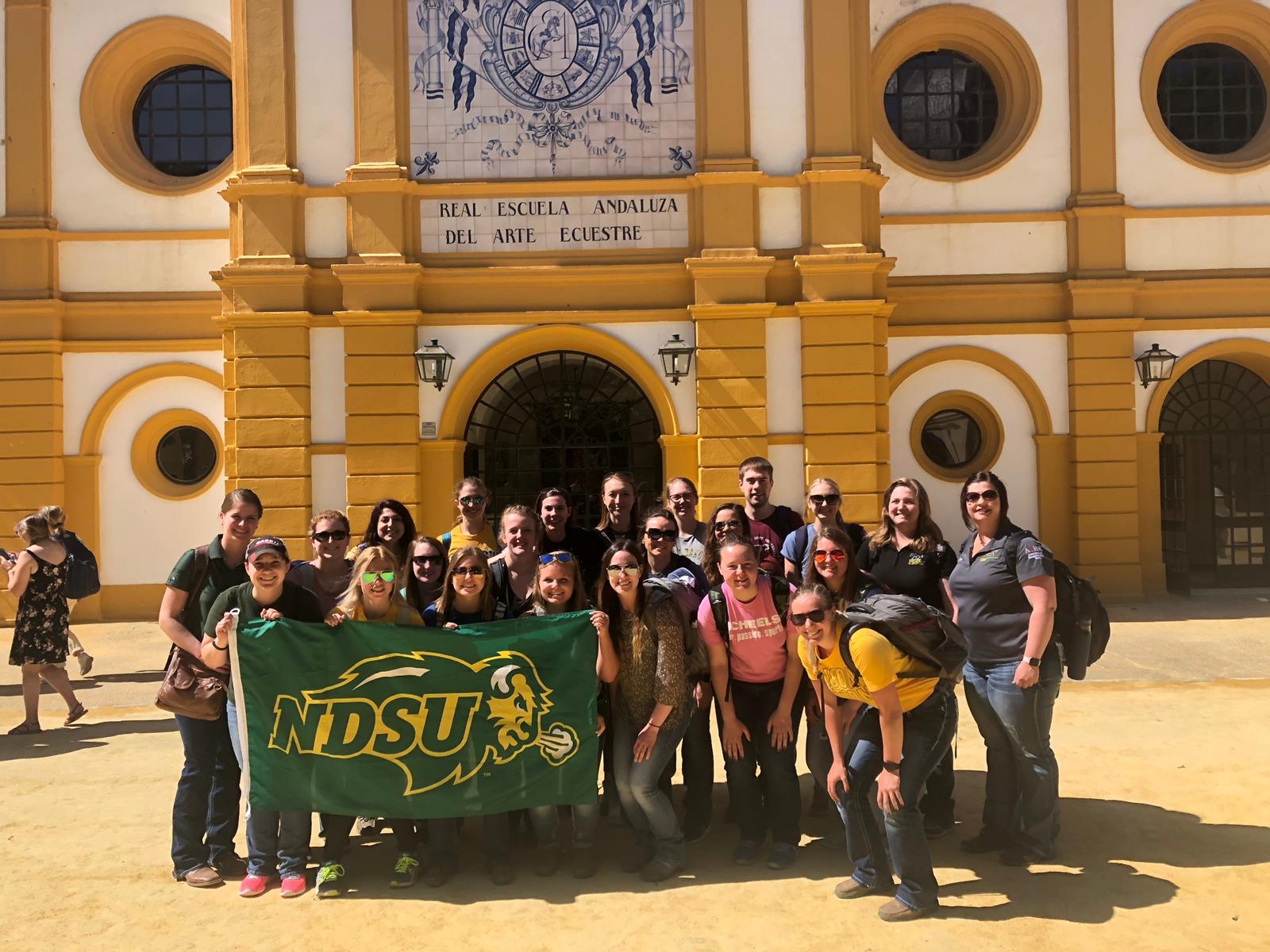
We also got to tour some amazing places that showcased what the Equine industry is like in Spain. Our first excursion was to the Yeguada De Militar, where the military is working hard to improve the genetics of the Andalusian and Arabian horse. We even got the opportunity to witness a semen collection using a tease mare. That same day we visited a center where they use therapy horses to help kids with disabilities. That excursion was one of our favorites because we got to lead and ride the horses. The coolest part of all is that we got to take part in helping with a real child’s therapy session! Spain is well known for the Andalusian horse, because ever since the Andalusian population fell to drastically low numbers, around 500, the breed has been slowly repopulated. Since the return of the Spanish horse the Royal Andalusian School of Equestrian Art was created. Watching the school preform was another experience that everyone absolutely loved. It just so happened that when we were in Spain the annual horse fair was going on in Jerez! This was a great way to experience true Spanish culture while also learning about the Equine industry. Another favorite was the trip to El Refugio Del Burrito, a donkey sanctuary. At the sanctuary we visited they had about 100 donkeys and 200 more at another site. Learning about their mission was very heartwarming and we all fell in love with the donkeys. If home wasn’t so far away I think many donkeys would have been adopted that day.


Overall these last two weeks have been wonderful and I feel like we will all walk away from this trip with memories to last!


Where do we go from here? Most of the group is taking a plane from Malaga to Madrid, Madrid to Chicago, and Chicago back to Fargo early Monday morning. It’s sad to leave Spain as many of us have fallen in love with this country, but everyone is excited to take home all the new knowledge gained from this study abroad experience!


Not everyone is headed straight home! One group of three is going to Barcelona Spain for a few days. Since the study abroad trip was focused on Andalusia, southern Spain, they wanted to experience northern Spain as well. After that they are headed over to London! They will be having a few more adventures in another country and finally will return back to the States June 8th.One more group of three is going to Munich Germany for 3 days, Salzburg Austria for 2 days, and Venice Italy for 3 days! They will be seeing much more of what Europe has to offer before heading home.

May 24th & 25th

The past two days we were able to do alot of relaxing and free time. It was the best way to end our very busy but fun trip!

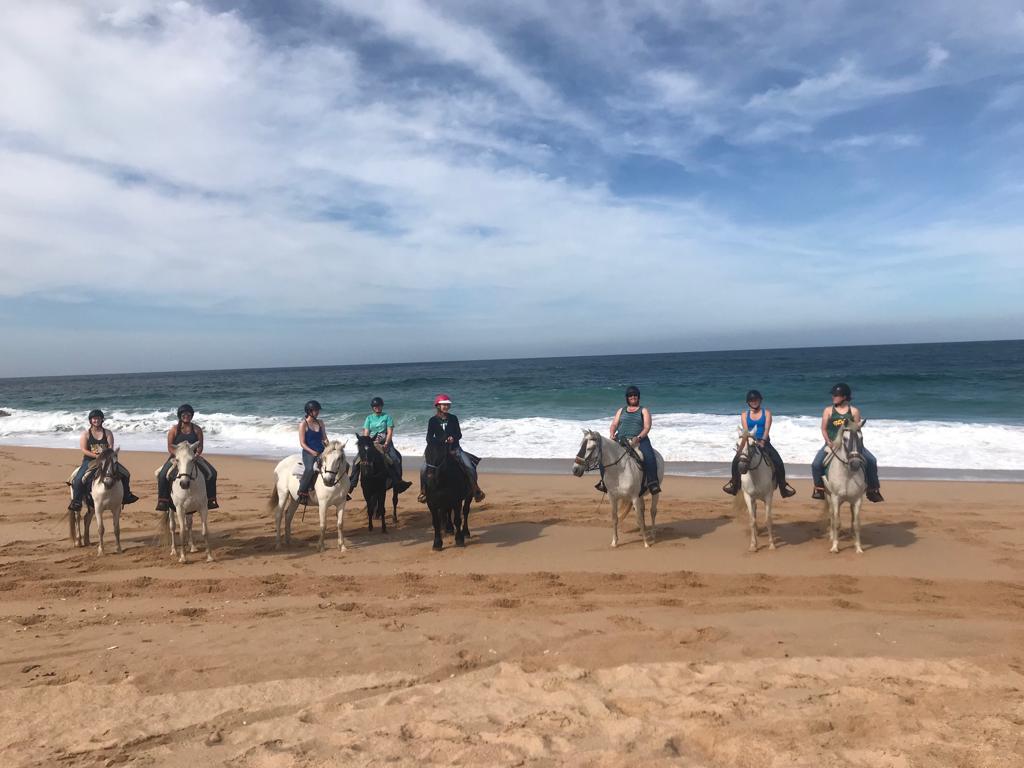
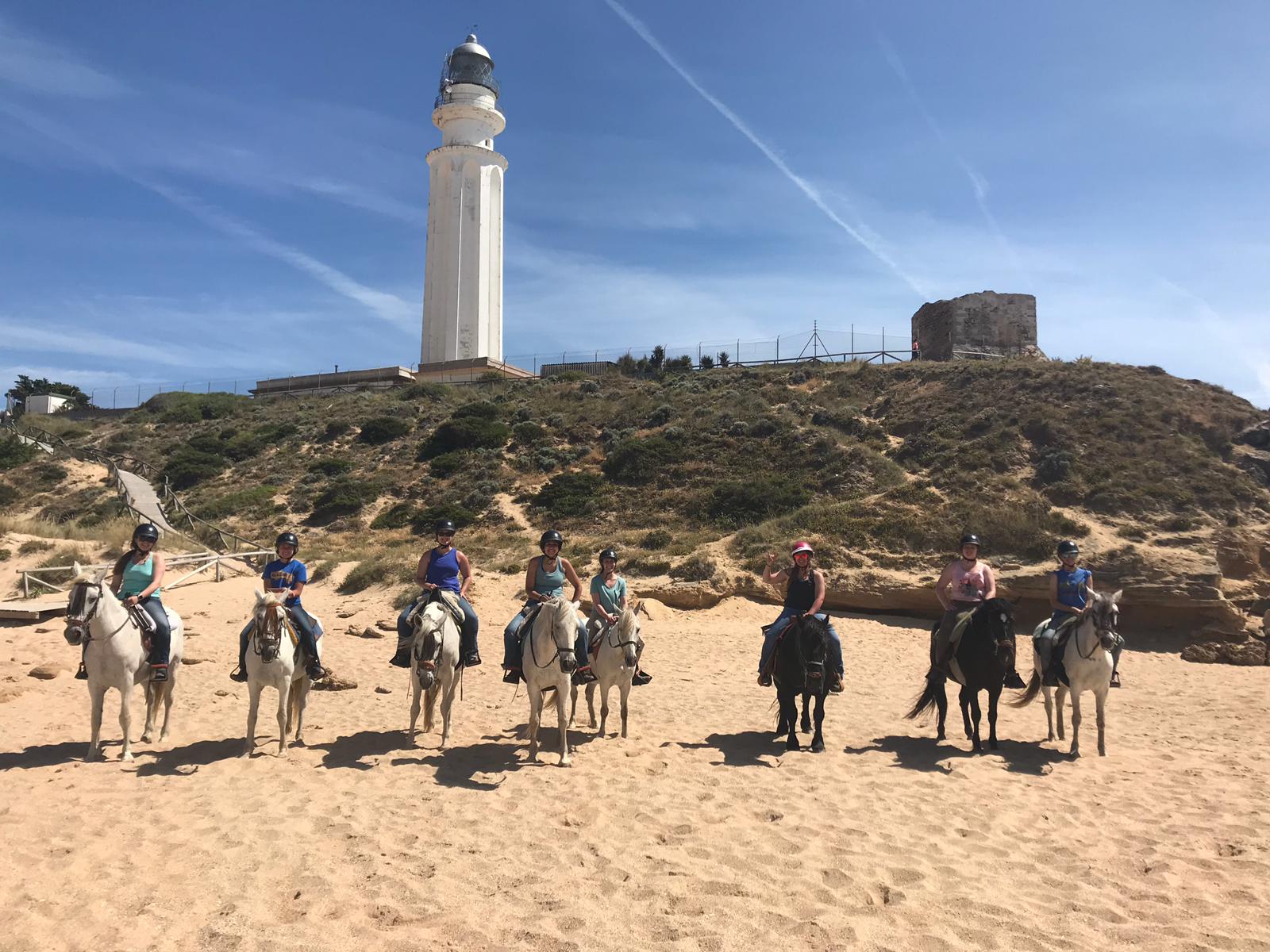
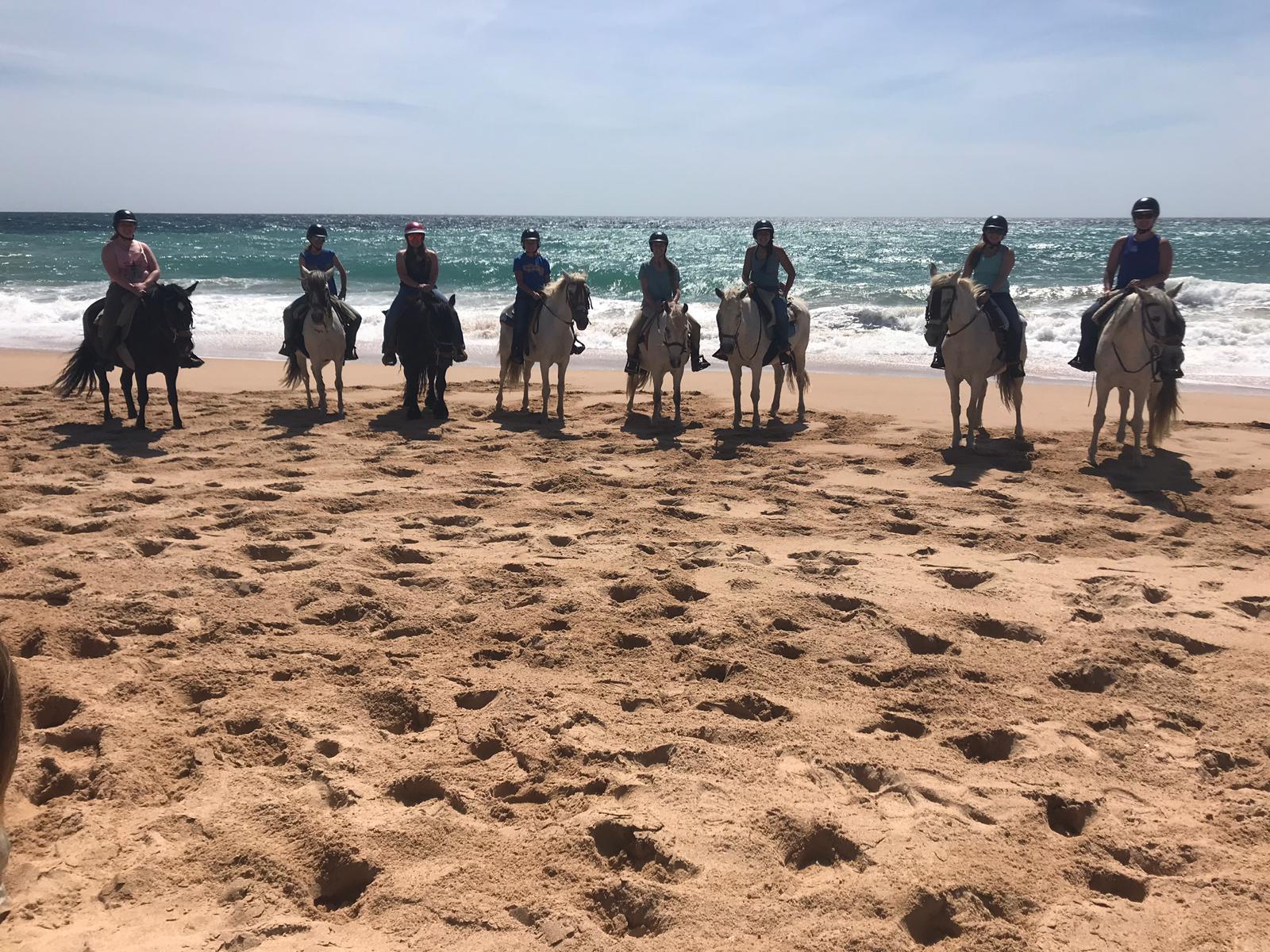
Friday May 24th, This day was probably the biggest highlight of our trip to Spain! We traveled to Caños de Meca. We were able to saddle up and ride some Spanish Bred horses on the beach!

Due to our group size being so big we had to split up into 3 different groups. So in-between our designated riding times we laid out on the beach to work on our tans. Although, we all got a little too much color and ended up turning into lobsters!😂

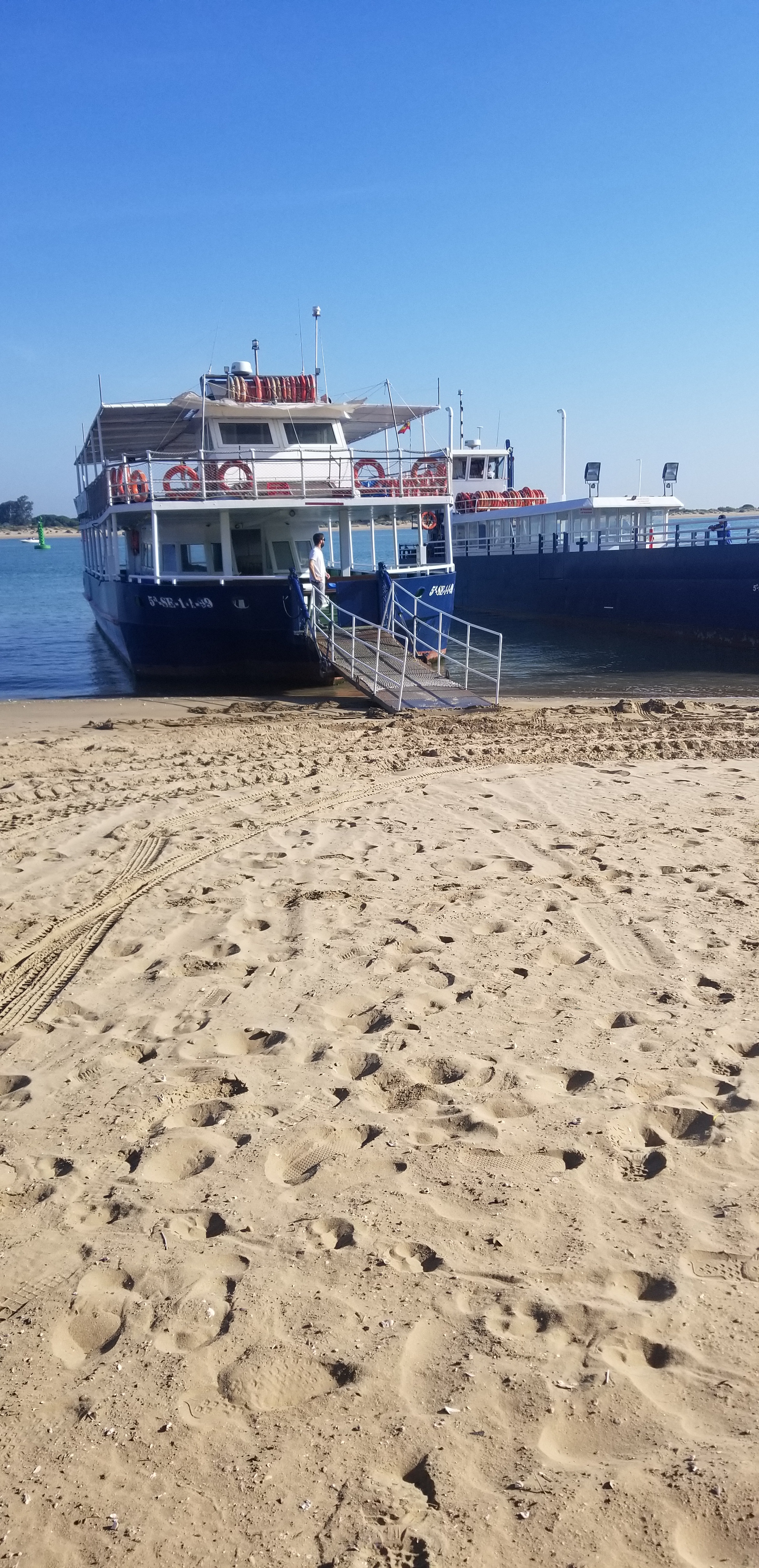
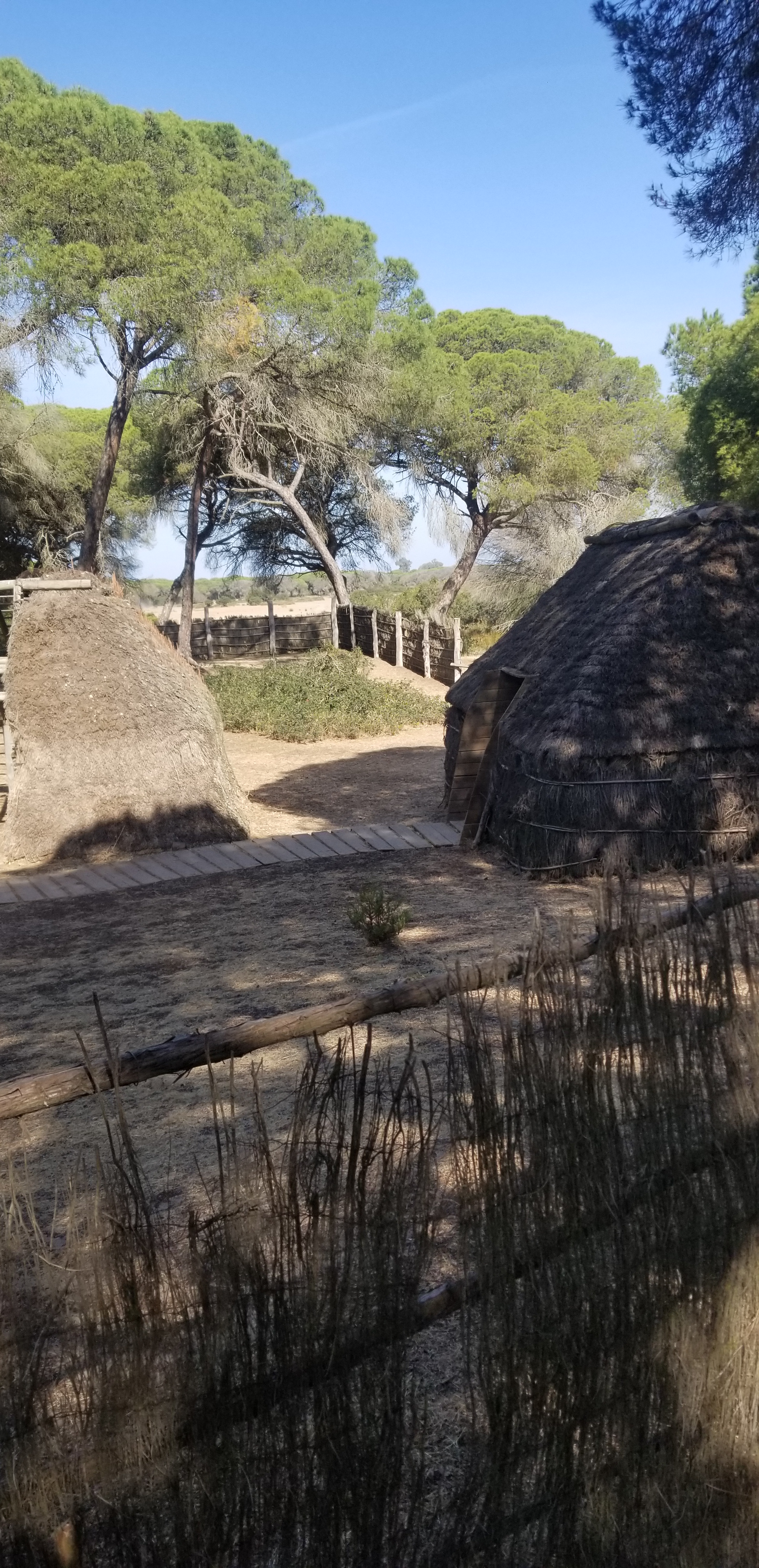
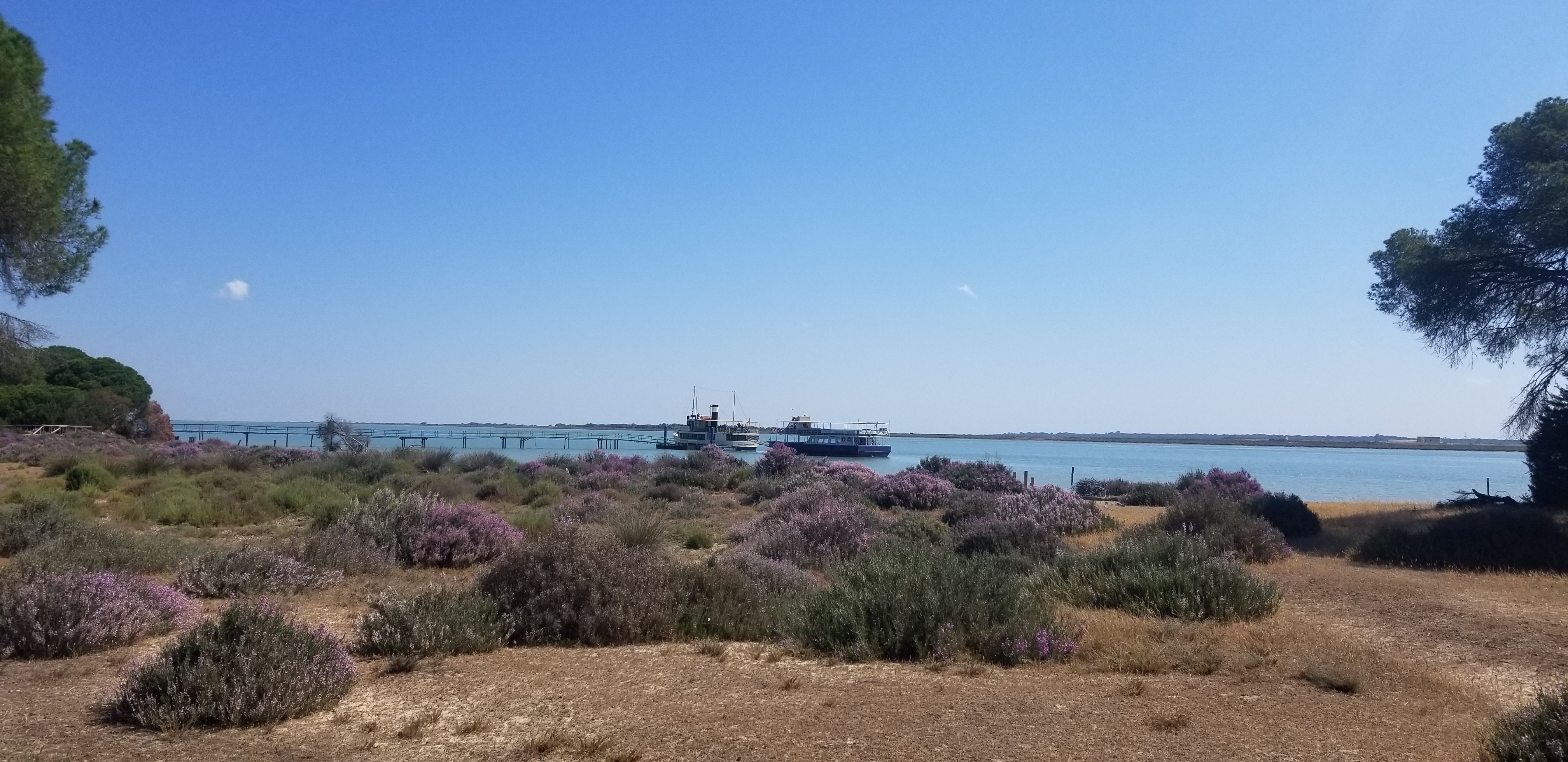
Saturday May 25th, today we started the day off with a boat tour to visit Parque Naturale Doñana (National Park in Spain). The park was established 50 years ago. Within in the park, there was a village were approximately 200 people use to live.


This is the only national park in Spain with 4 different ecosystems. They include the forest, wetlands, beach and dumes.

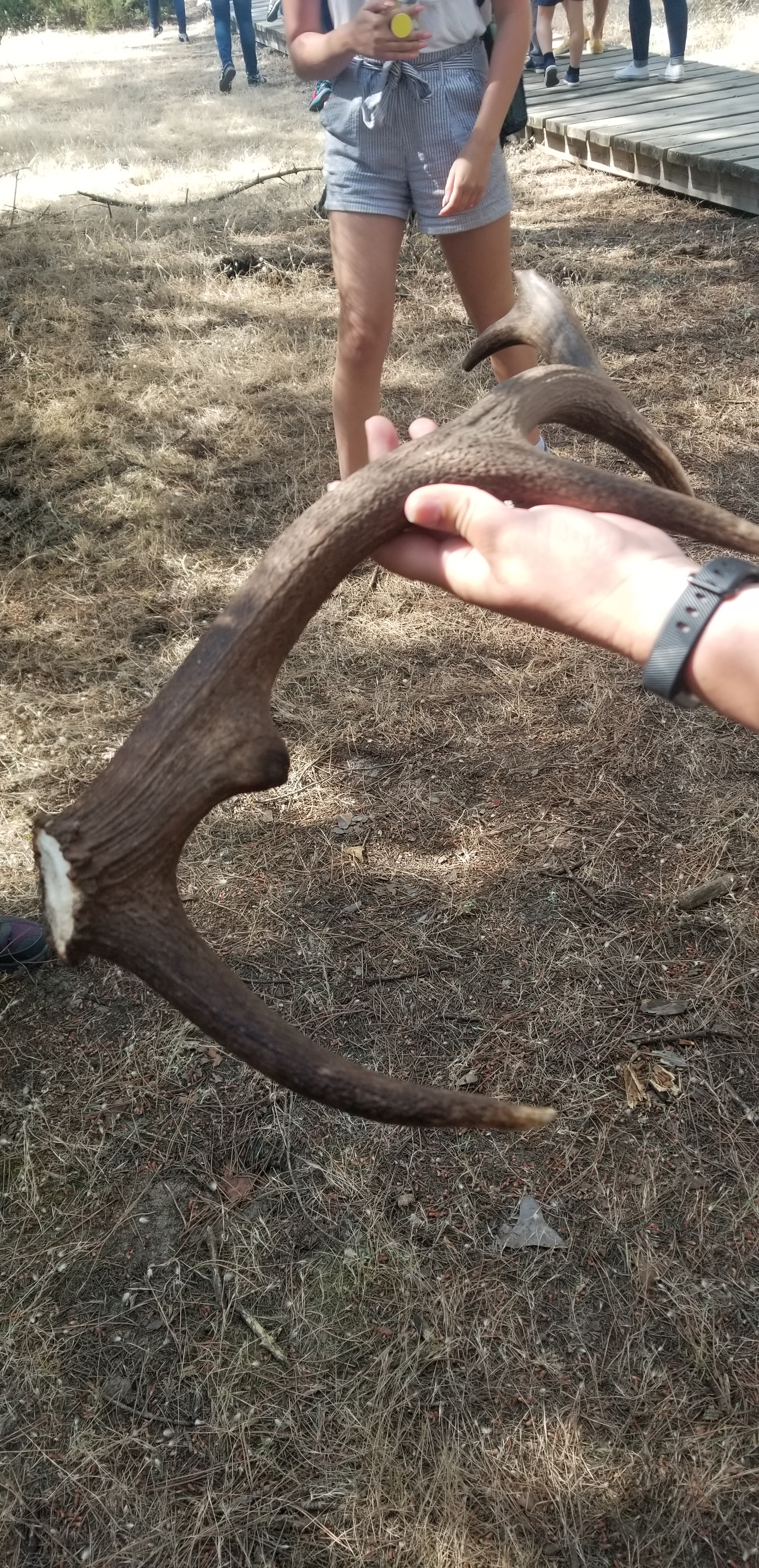
Some animals also call this park home. Common animals to see would be Red deer, black kite and the impereal eagle.

After visiting the park, we had free time in Sanlucar to shop, explore and find lunch(:

We then hopped on the bus and head back to Jerez. We were treated with a very delicious farewell dinner. They did not fail to fill us full.

We then packed our suitcases to be moved to the new hostel located in Torremollino in the morning!

May 23rd: Border Inspection Post and Dairy Farm

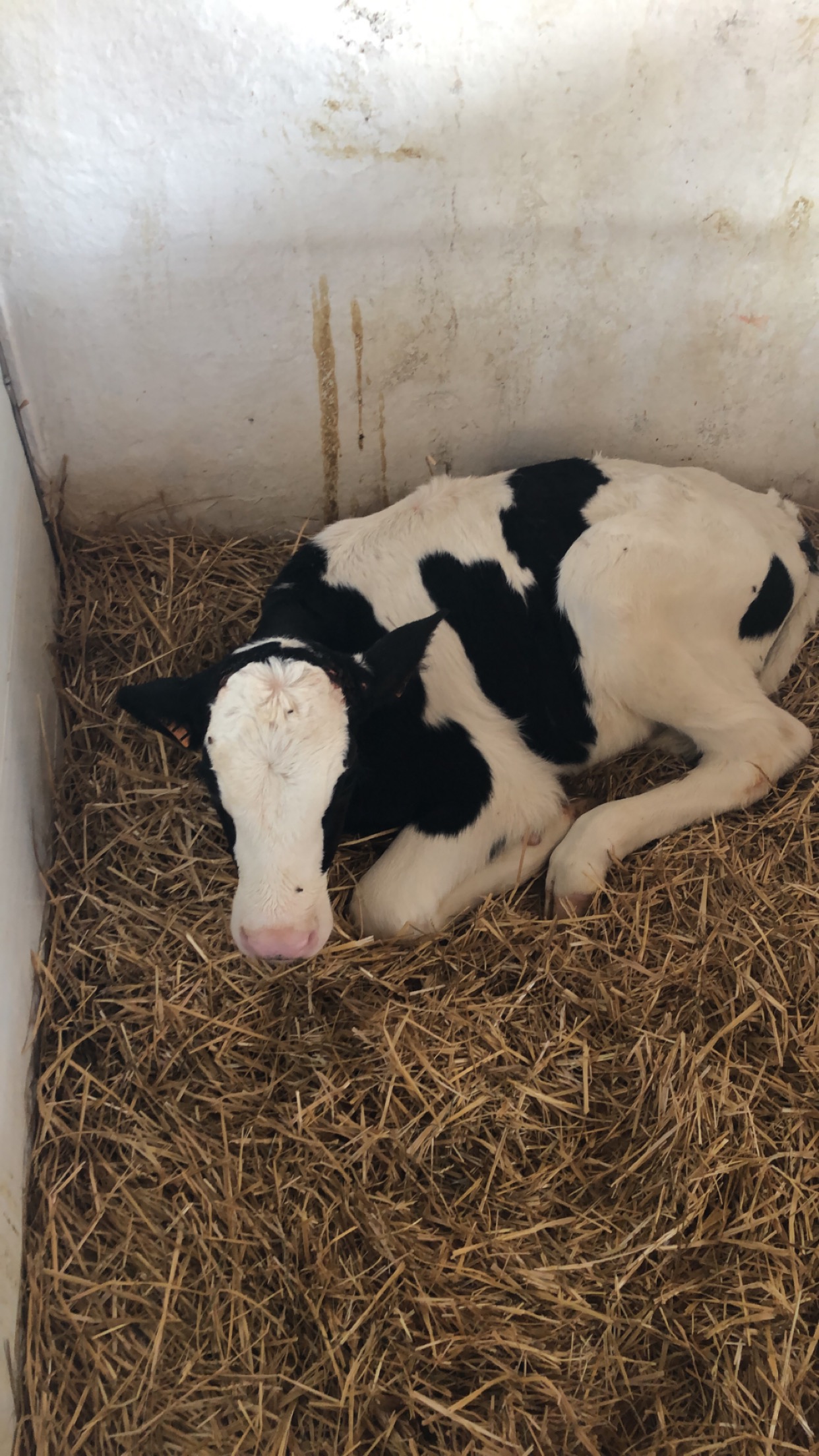
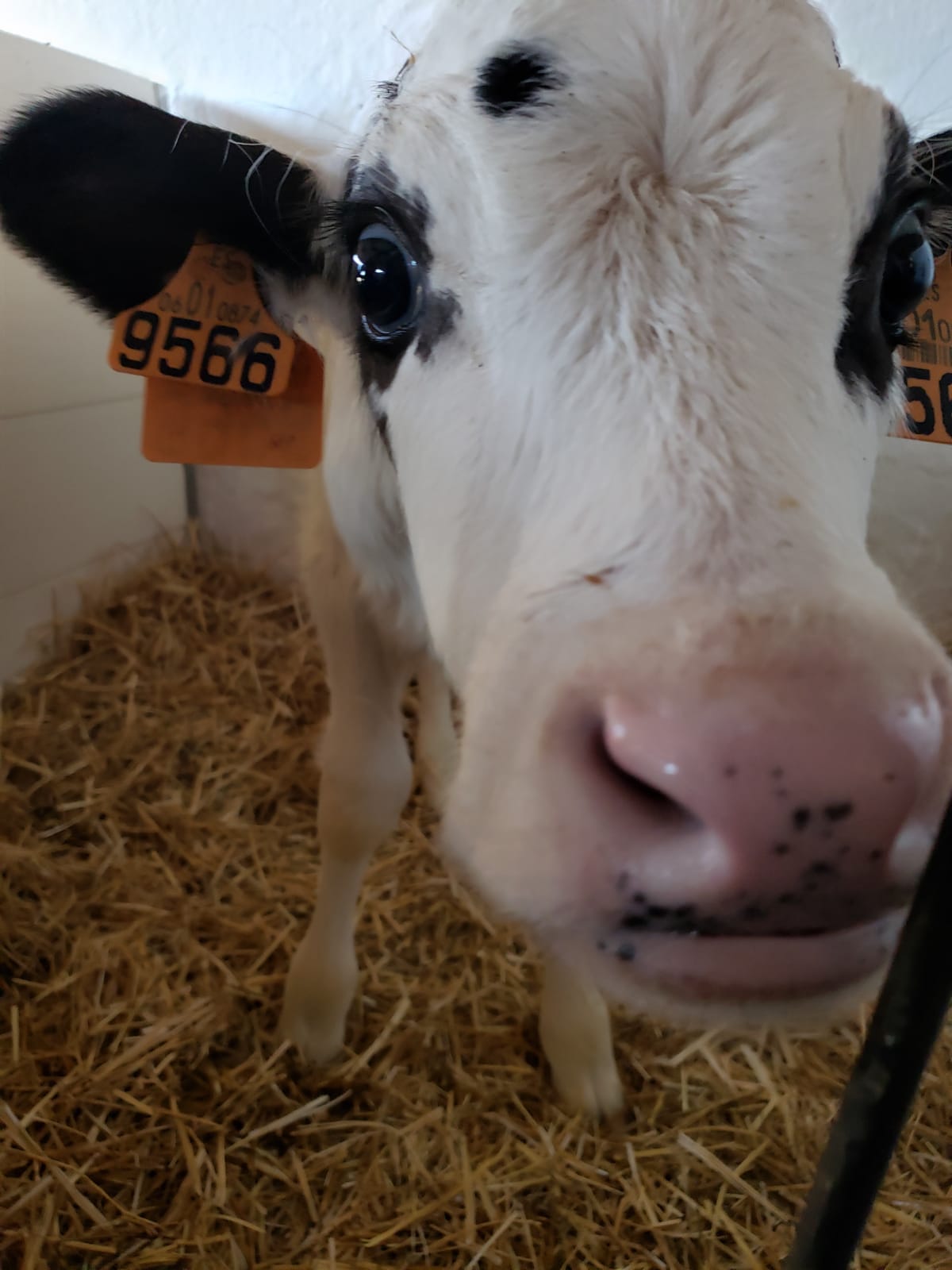
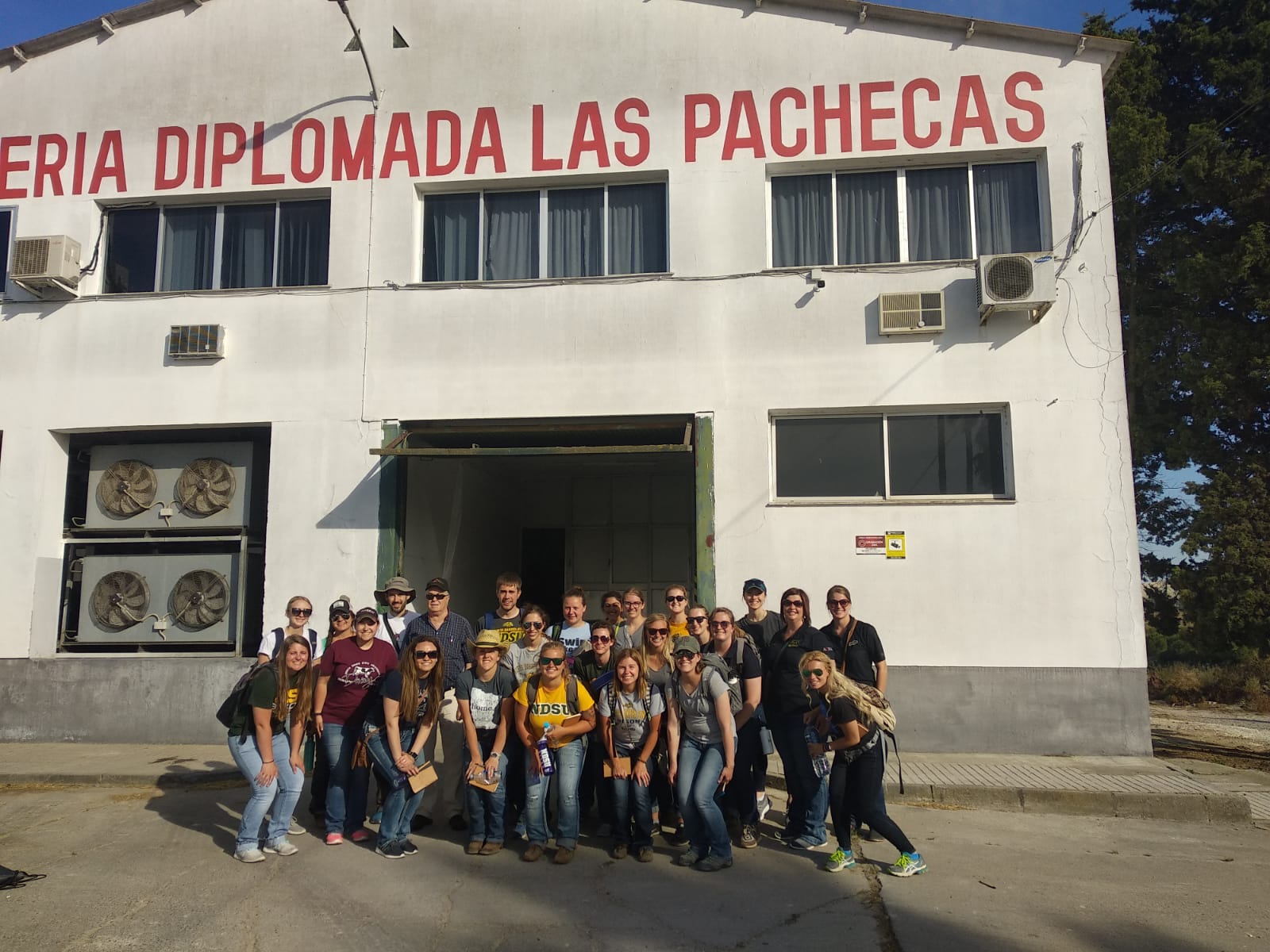
Hola from Kat and Jenny!For our final full tour day we started the morning off by visiting the Algeciras Border Inspection Post or BPI. Unfortunately, we were not allowed to take pictures so my beautiful narration will have to suffice. The post is located on the Mediterranean coast in the south eastern part of Spain by Morocco. It is the largest border inspection post in Spain due to the number of imports and exports traveling between Spain and Morocco.The BPI has different inspection areas depending on the goods leaving or entering the country. The first area we toured was where they check fish being imported or exported from the country. Most of the fish processed from exports are from Morocco, but they receive fish from all over the world. Our guide went through some of the visual tests they use to examine the fish. For exports this is enough, unless the country they are being exported to have more requirements on testing for imports into their country. For example, the U.S. requires more tests than Morocco does. If fish are being imported, however, there are several tests that are required around the EU before the product can enter the country.Next we went to where they process fruits or vegetables. It was a similar protocol to that of the fish. Fun fact though, in Spain veterinarians check the food. While we were there they had watermelons from Africa and Mangoes from Brazil coming in and Melons being exported out of Spain.Next we toured where they process animal byproducts or feed coming in. This area had to be physically separated from all the other inspection locations for health reasons.Our inspection area was where they inspect animals coming in or out. Unfortunately there were no animals there while we were touring. They do get all kinds of different animals though. It’s not uncommon for them to get Giraffes or Elephants that are used as circus animals. They mainly get cows and horses, however. Horses have different levels of inspection based on their registry and worth. If a horse is a well registered animal they usually allow it to enter the country and head to its destination with little inspection as usually owners take good care their animals. However, if the horse is worth less it has more inspections that it must go through.Ganaderia Diplomada Las Pachecas is the Dairy farm we visited today. The owner did not speak English but our guide Eduardo translated for us so we could still engage in conversation and ask questions thought the tour. We started off learning about the farm, basic operations, what the cows eat and some statistics on their milk quality. They have 540 Holstein cows on the farm but only 270 are currently being milked. Something that was different from North Dakota dairy producers was that they use cottonseed as part of their feed, we all got to see the cottonseed which was quite soft. About half of the cows diet is water, especially in the summer which is quite hot here in southern Spain. We learned that they are very careful with their feed to ensure the milk quality is good. Part of this includes only purchasing feed from registered suppliers, as they do ot use their land for growing their own feed anymore.At this dairy they milk three times a day in a herringbone parlor. They use sand for bedding the cows in milking to help keep them clean and cool in the heat. The dry cows, or cows not being milked, are on a compost bedded pack that is cool and is raked everyday to keep it clean. A fun fact about Holsteins we heard today was that 54% of meat consumed in the world is from Holstein cattle. We also learned that there are 33 different breeds of dairy cattle in Spain. Spain is home to 13,500 dairy farms. The northern part of Spain has smaller, family farms where the southern part is more commercialized and has larger farms. At the end of the tour we all got to visit the calf pens and we all enjoyed interacting with them. Enjoy our photos from the day!

May 21: Queso Payoyo and Plaza de Torros de Ronda

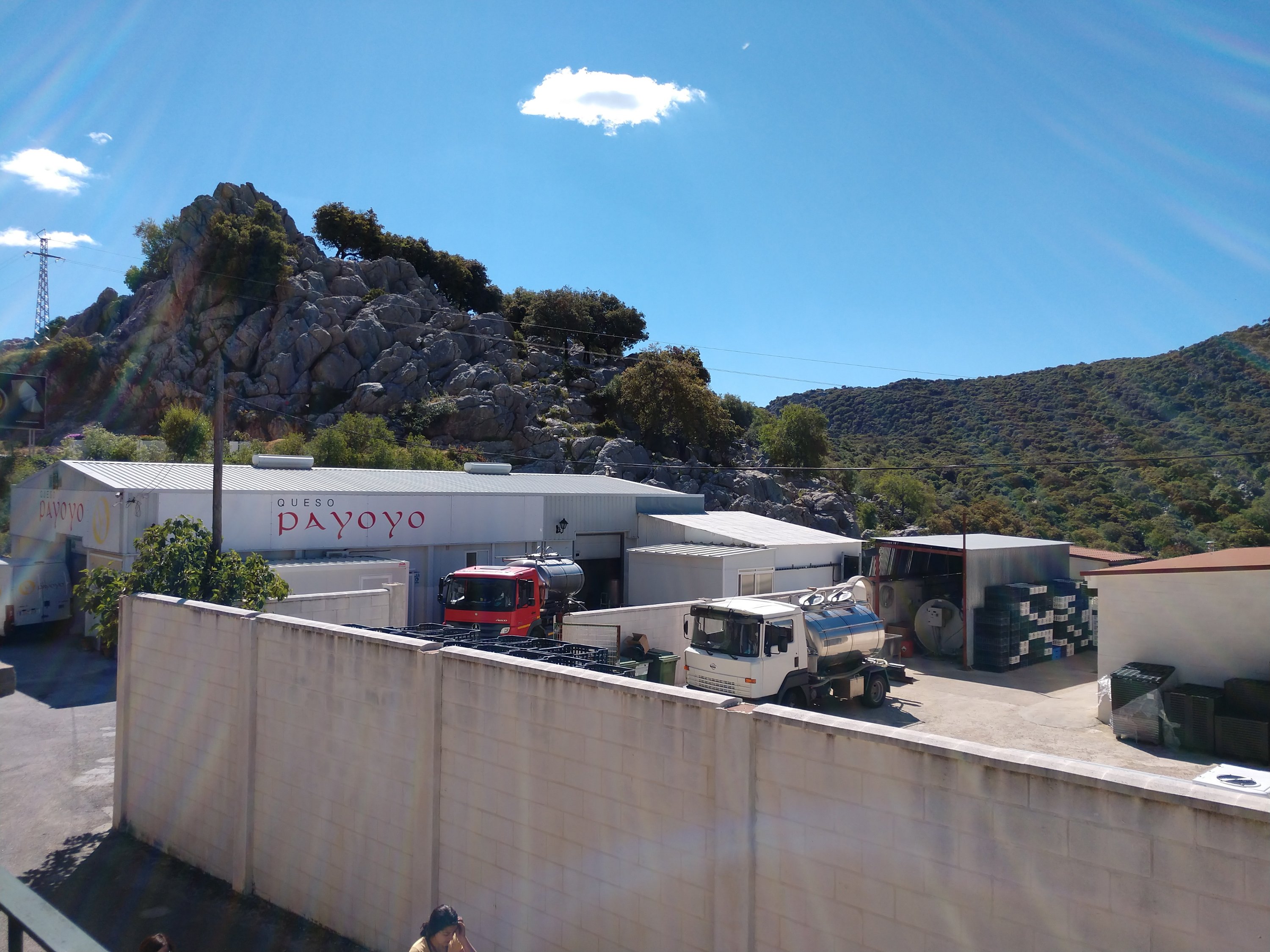
Hola! Today, our group visited a cheese factory and farm and a world-famous bull fighting ring in Grazalema and Ronda, Spain, respectively. Our extremely talented bus driver, Rafael, piloted our tour bus through winding mountain roads and tiny city streets without blinking. The sites and views were absolutely breathtaking.Here are some thoughts about Queso Payoyo from Emily Middendorf:Payoyo cheese factory.This morning we started our day off at Queso Payoyo. It is a cheese plant that uses goat and sheep milk to hand-make cheese. They use 7,000 liters of goat milk and 2,500 liters of sheep milk each day. They pasteurize the milk then add renin and egg whites so the milk curdles and can be made into cheese. It gets mixed together and then cut into small pieces.The cheese is then hand packed into containers before it gets pressed. They make 3 main types of cheese here: fresh, semi-cured, and cured. Some of their cheese is made only from goats milk or sheep milk, and some is a mix of them both. After the cheese plant tour, we went to one of the small farms they receive milk from for a tour. This particular farm milks 20 sheep twice a day, and 22 goats once a day. The goats and sheep are on pasture all day and are trained to come to the barn to be milked to get grain. We learned that goats give about 3 litters of milk a day! This place also had a separate cheese making room. They use it to try new recipes and to train others in the art of cheese making. We wrapped up this tour by sampling some of the delicious cheeses they make.Here is some information about Spanish Bull Fighting from Fallon Ryan:In the afternoon, we toured “Plaza de Torros de Ronda”, a bull fighting arena. It was built in 1572 and is one of five bull fighting rings left in Spain.
Our group was allowed to wander the facility freely with electronic audio guides. We learned about the holding pens and chute systems, horse stables, the fighting ring, and general history of bull fighting.The Holding Pens and Chutes:Bulls that arrive at “Plaza de Torros de Ronda” are put into one of two holding pens. Matadors then pick the bull they will fight by random draw. Senior matadors get to draw first followed by less experienced fighters.After the bulls have been drawn, they are put into individual stalls underneath the fighting ring. To move the bulls, there are concrete chutes with gates that move vertically via pulley system.The stables:The stables were established in 1804. These Spanish Horses are bred and trained specifically for bull fighting. Piccadores (mounted bull fighters) train extensively on horseback before they are allowed to participate in a bull fight.The ring:The fighting ring is separated into four seating areas: Sol, Semi-Sol, and sin Sol (Sun, half Sun, or shade). The last seating area is reserved for royalty and distinguished guests. This ring is different from all others in Spain because the bulls enter directly underneath the royalty booth. Usually, the bulls enter the ring directly across from the royalty seating.General history:
Our group visited the museum underneath the fighting ring and learned more about the rules of bull fighting as well as the attire and equipment.
Here are a few of the most interesting facts:
1. Napolean and his troops occupied the facility in 1810 for a short period.
2. There are multiple human remains of past matadors buried under the ring.
3. This was the first bull fighting arena to be built on stone.
4. This is the first documented arena where matadors fought bulls from the ground instead of on horseback.
5. Bulls are bred specifically for agility and aggression and are typically not used for meat.Today, bull fighting is under a lot of scrutiny in Spain because of some animal welfare concerns. Thanks to our tour today, students were able to educate themselves about this ancient tradition in an unbiased atmosphere.We are so grateful for the opportunity to visit these amazing places today. Spain is beautiful!

Spain: Day #7

Hola amigos!

Today we toured El Bucarito – a goat and pig farm as well as a cheese and meat production facility. They make 2 different types of cheeses at El Bucarito – types with raw milk and types with pasteurized milk.
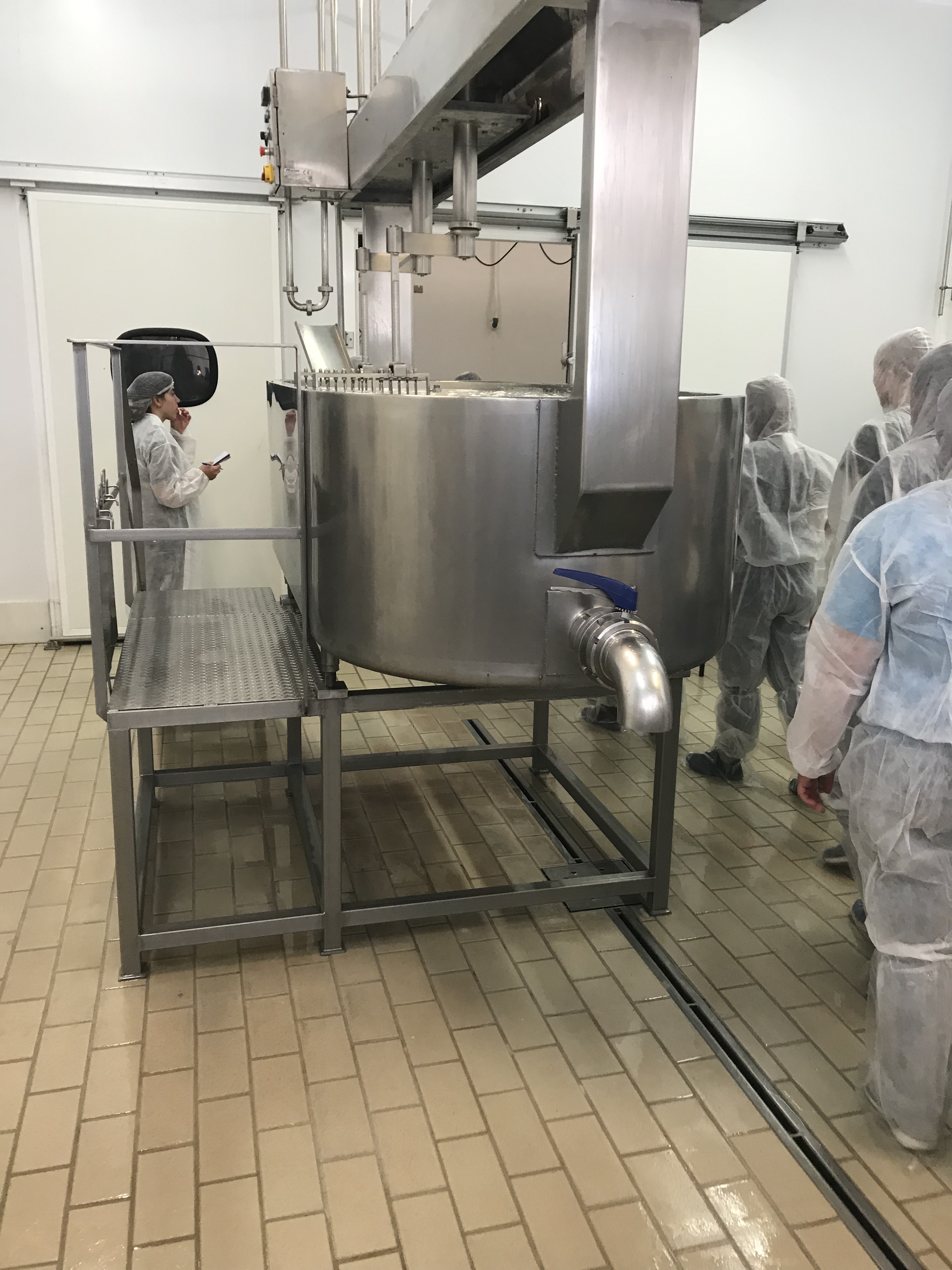
During the tour of the cheese production line, we were able to see the equipment used when producing their types of cheese. This was interesting to see as it seemed pretty similar to how the US would produce cheese. There is the main line where the goat milk enters at 70 degrees Celsius and rennet gets added. Then, the cheese gets separated from the whey so the cheese can be sent to a salt water mixture to sit for 17 minutes to 1 day, depending on the cheese.
The cheese then gets pressed and moved to a drying room to sit until the first mold starts to appear. Then, the product is moved to the maturation chamber to mature at 11-13 degrees Celsius for a predetermined length of time, again depending on the cheese.
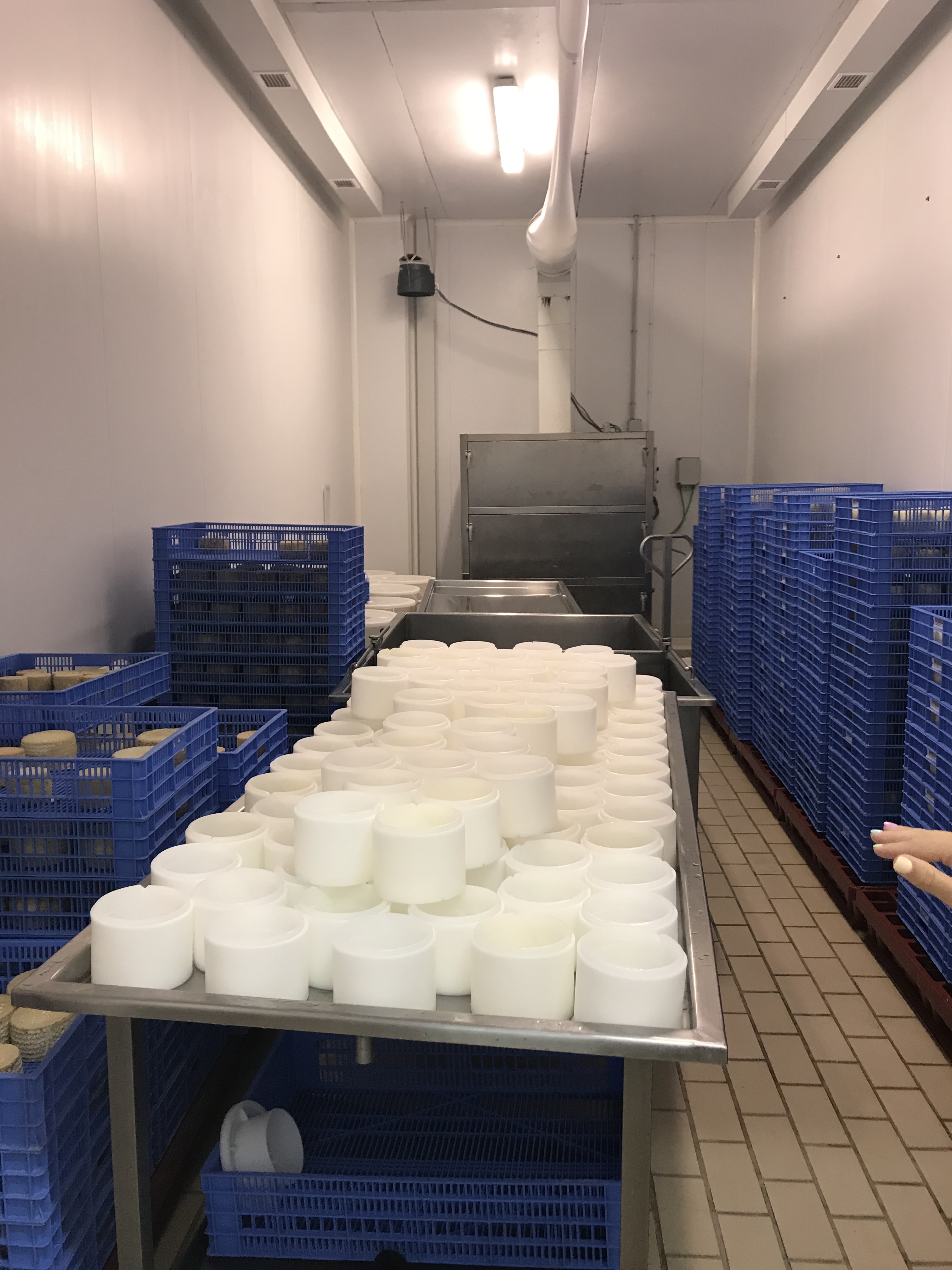
A fun part of this little tour was being able to make our own samples of cheese to take home with us!
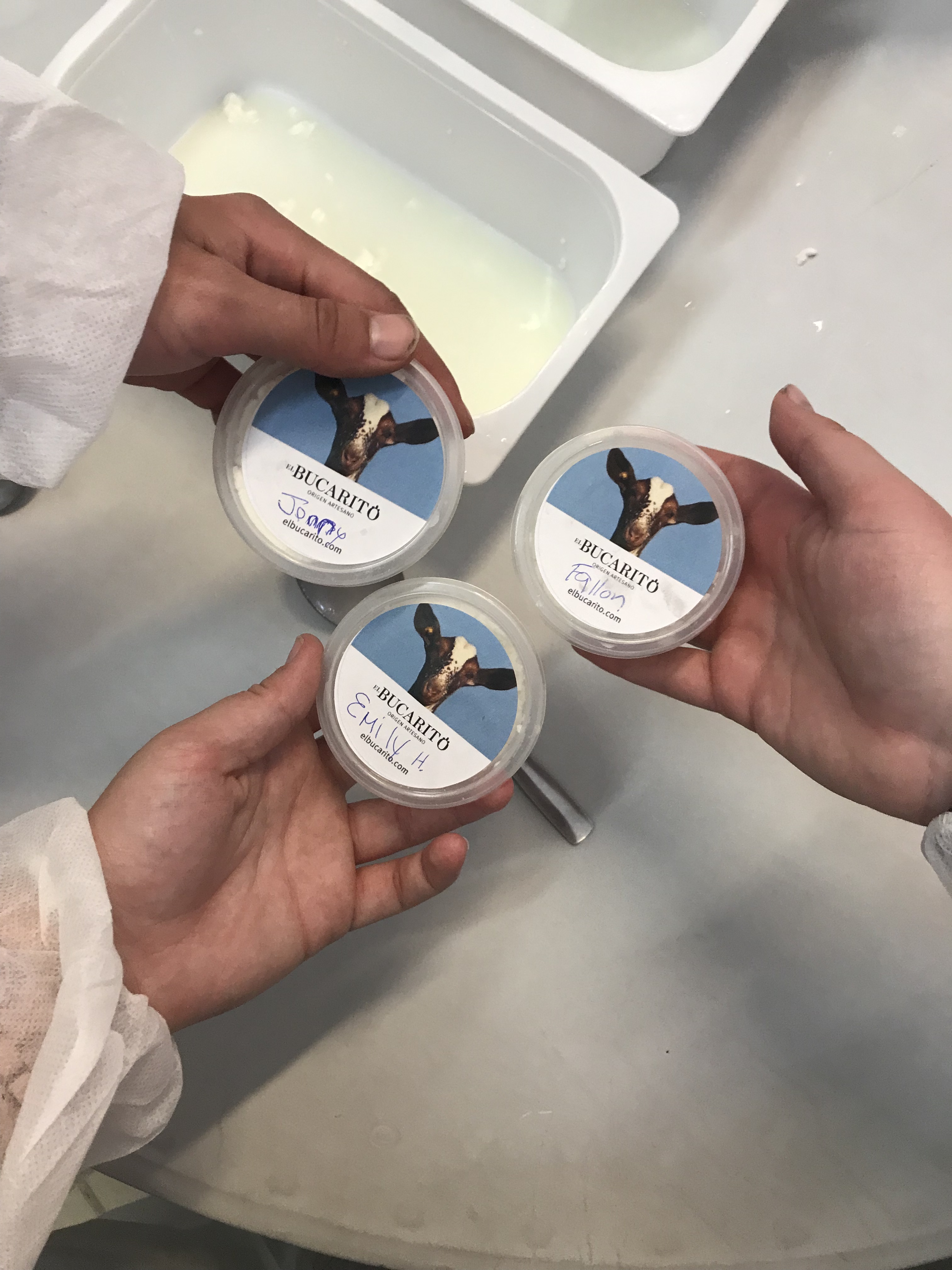
Afterwards, we then got to move on to probably the most exciting part of the day – seeing all of the goats and pigs! There are about 700-800 goats as well as 700-800 pigs at this facility.

Before seeing the live animals, we got to tour the facilities that they keep the animals in. For the goats, we got to see the milking parlor where there are 48 spots for each goat to be milked. This process takes about 10-15 minutes per goat, and they have about 240 goats to milk a day. Overall, they produce about 4000 Liters of goat milk per day!

The best part about seeing the goats, was the fact that some of them were babies! Goats can have anywhere from 1-4 kids at one time.
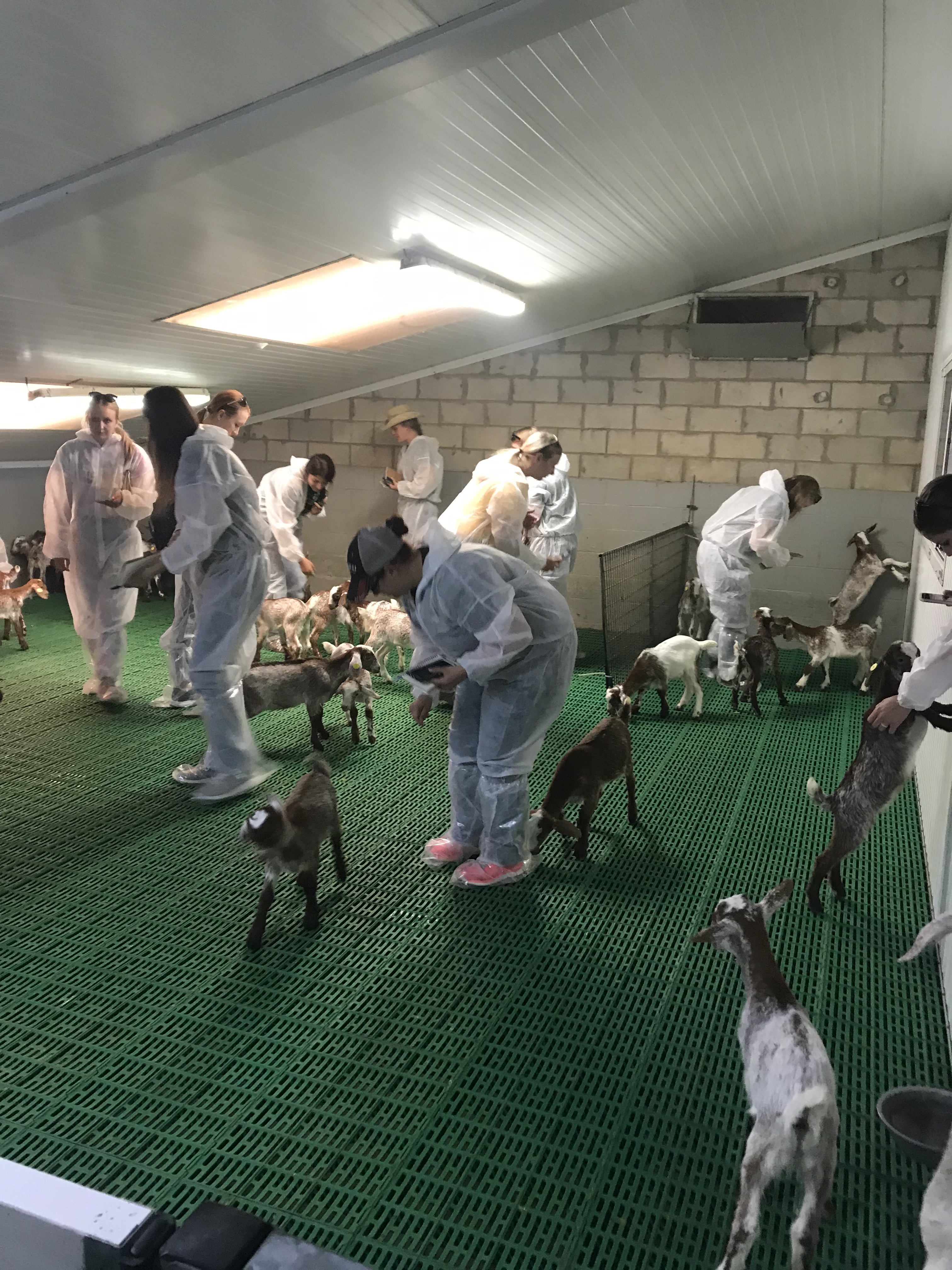
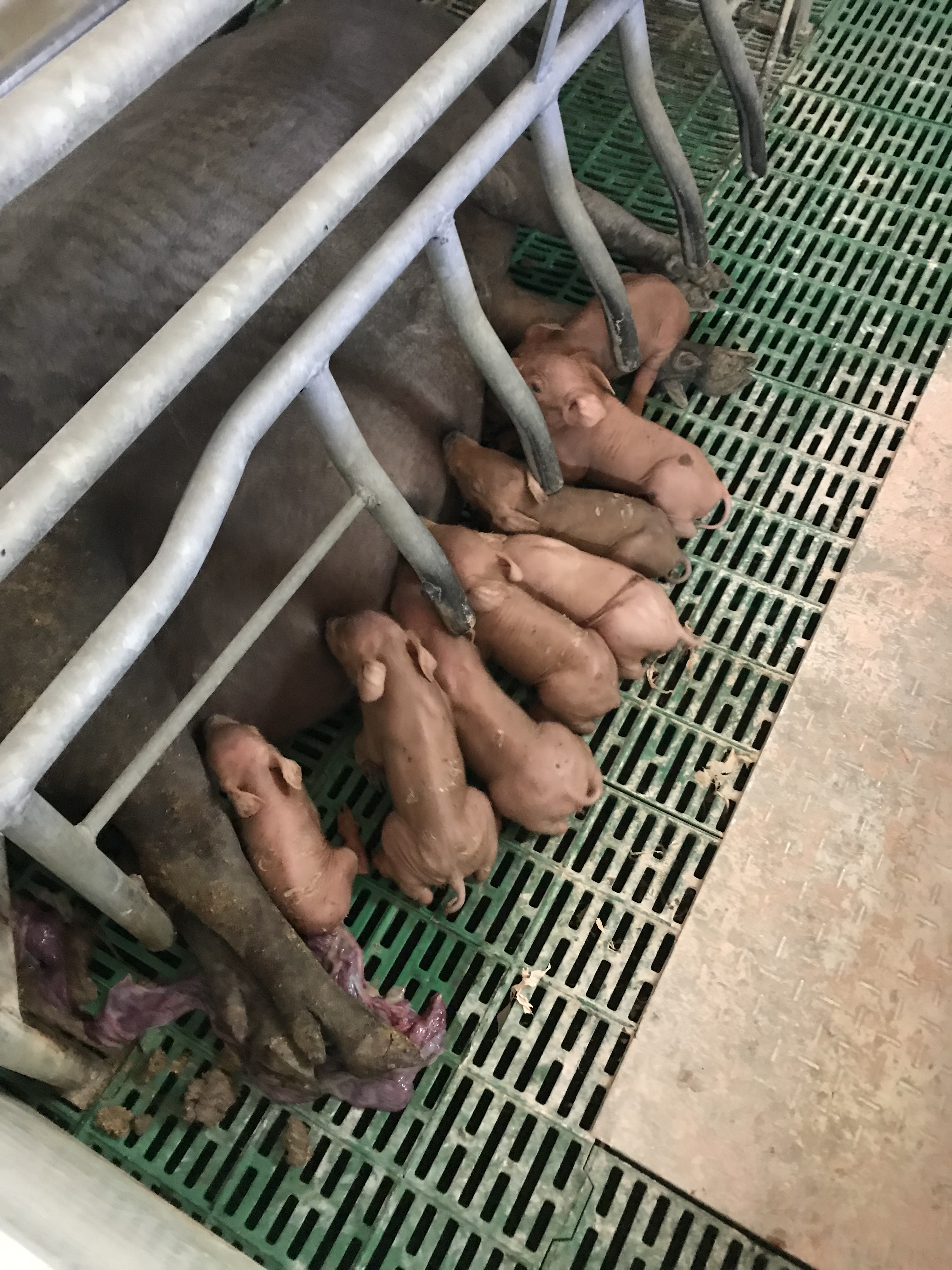
After the goats, we got to move on to seeing their pigs. Their pigs are a mix between the Iberian and Duroc breeds, because this gives them a specific meat that they desire. The piglets that we got to see were so cute!

Sows can have anywhere from 5-13 piglets after their gestational period of 3 months, 3 weeks, and 3 days. The piglets at El Bucarito stay with the sows for 25 days before being weaned.
Once the tour of the main facility concluded, we were able to taste test different cheeses that are produced here. Most of the students then went in to purchase some of the cheese to take home for family and friends to try!

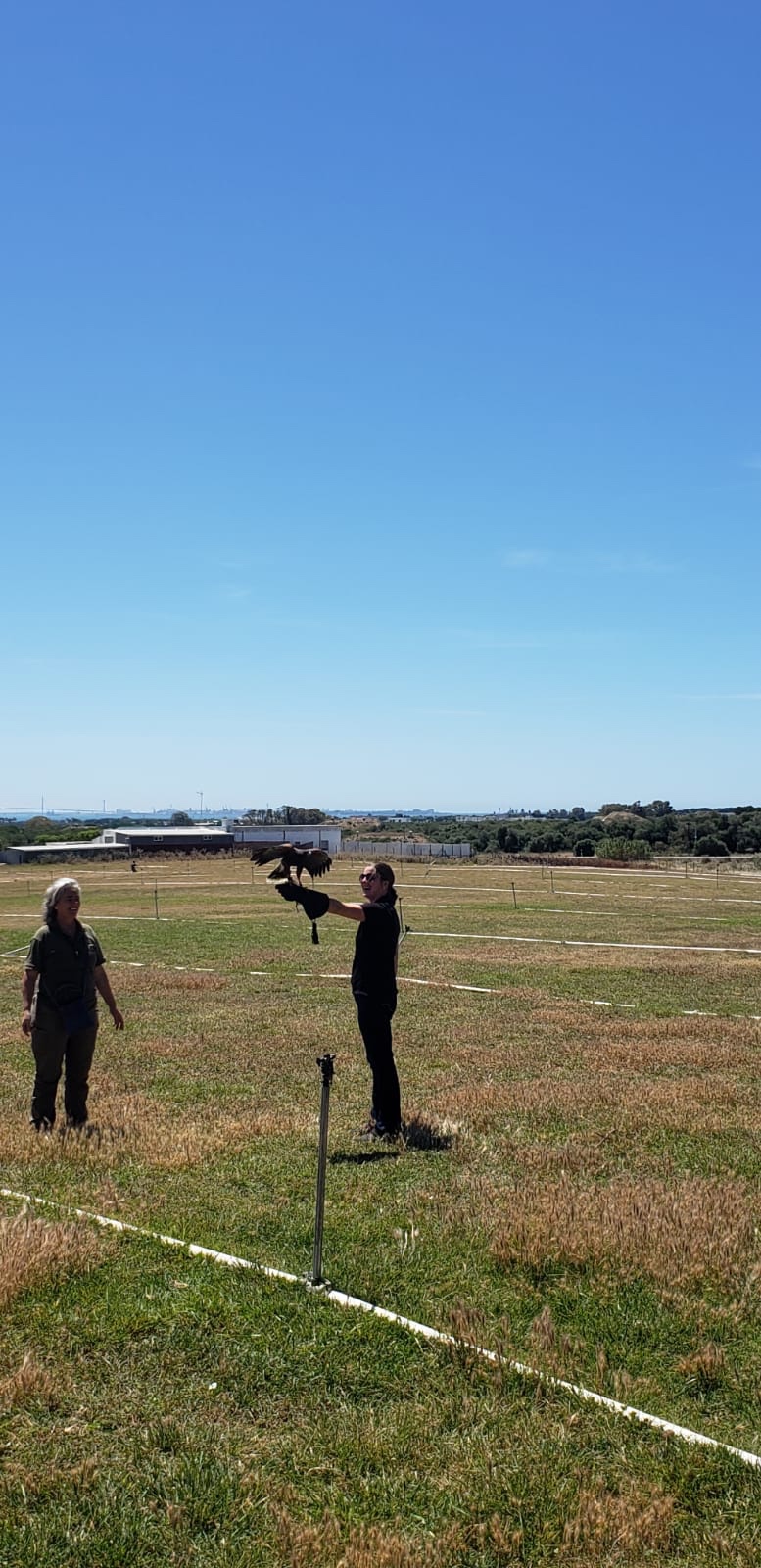
One interesting thing about this tour is that they also have birds of prey on the property. So, all of us were able to have a falcon land on our hands (or heads for those wearing hats), which was a really cool experience.
Thank you so much to El Bucarito for this amazing experience!

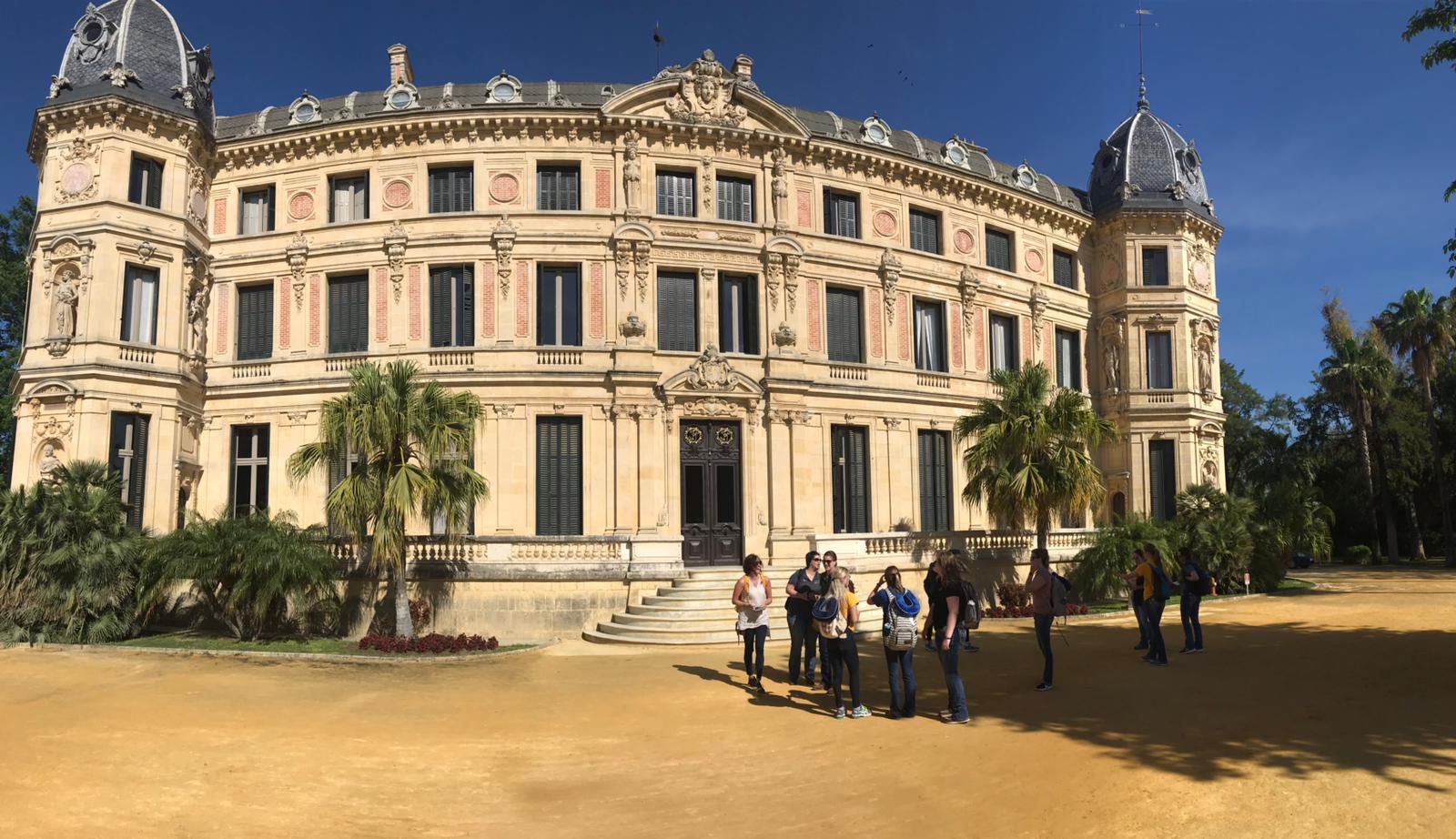
After El Bucarito, we traveled to Jerez where we will be staying for the next week. Since we had quite a bit of free time, a lot of us took a siesta for the afternoon, which is a common tradition here in Spain. After our siesta, we got to tour the Palacio del Virrey Laserna.

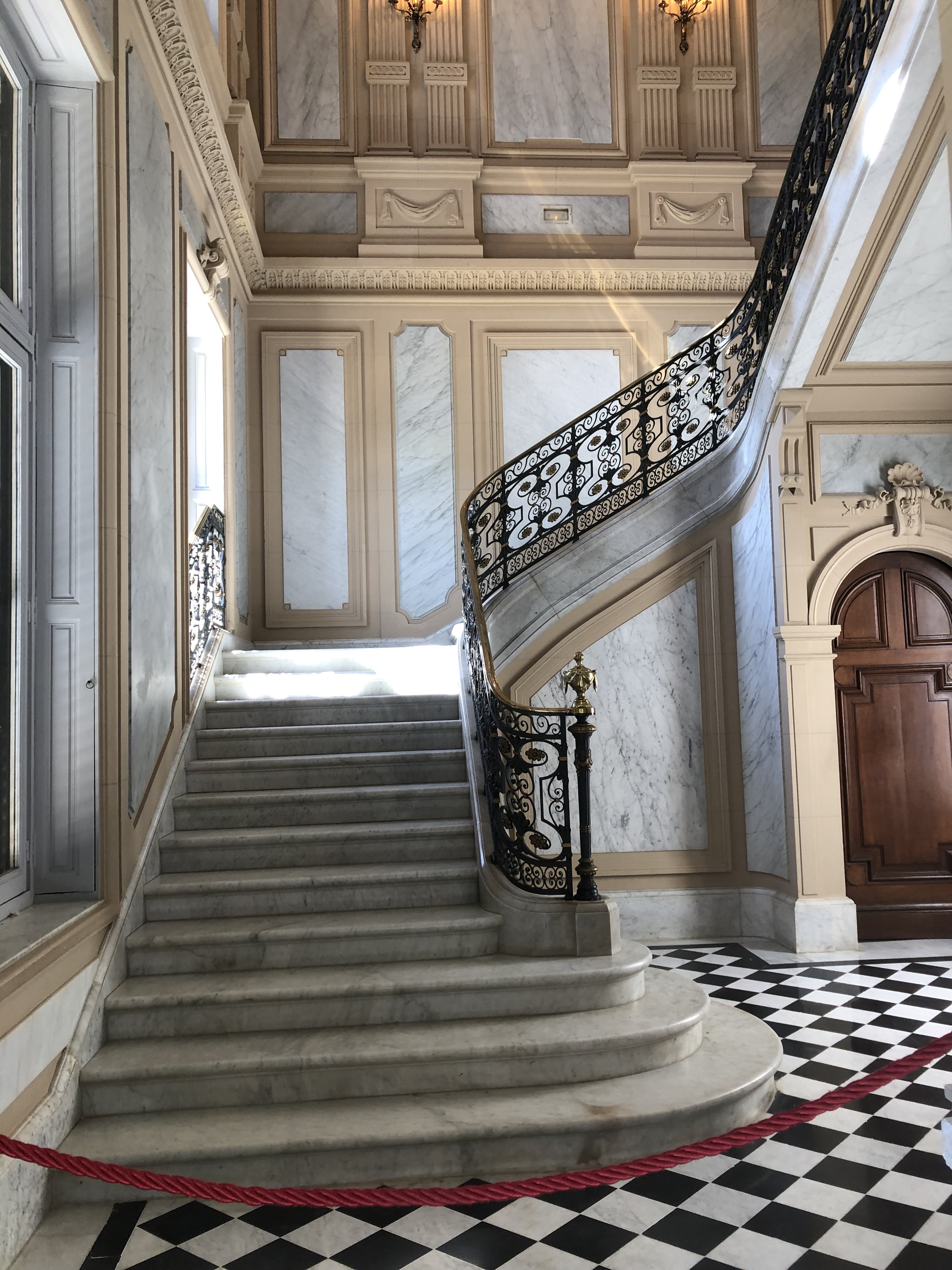
Unfortunately, we were not able to take any pictures of the inside of the palace due to privacy, because the owner still lives there.

The palace has been in the owners family since 1268. They have many paintings, tapestries and artifacts decorating the entire house, including ceramics from the 16th – 18th century.

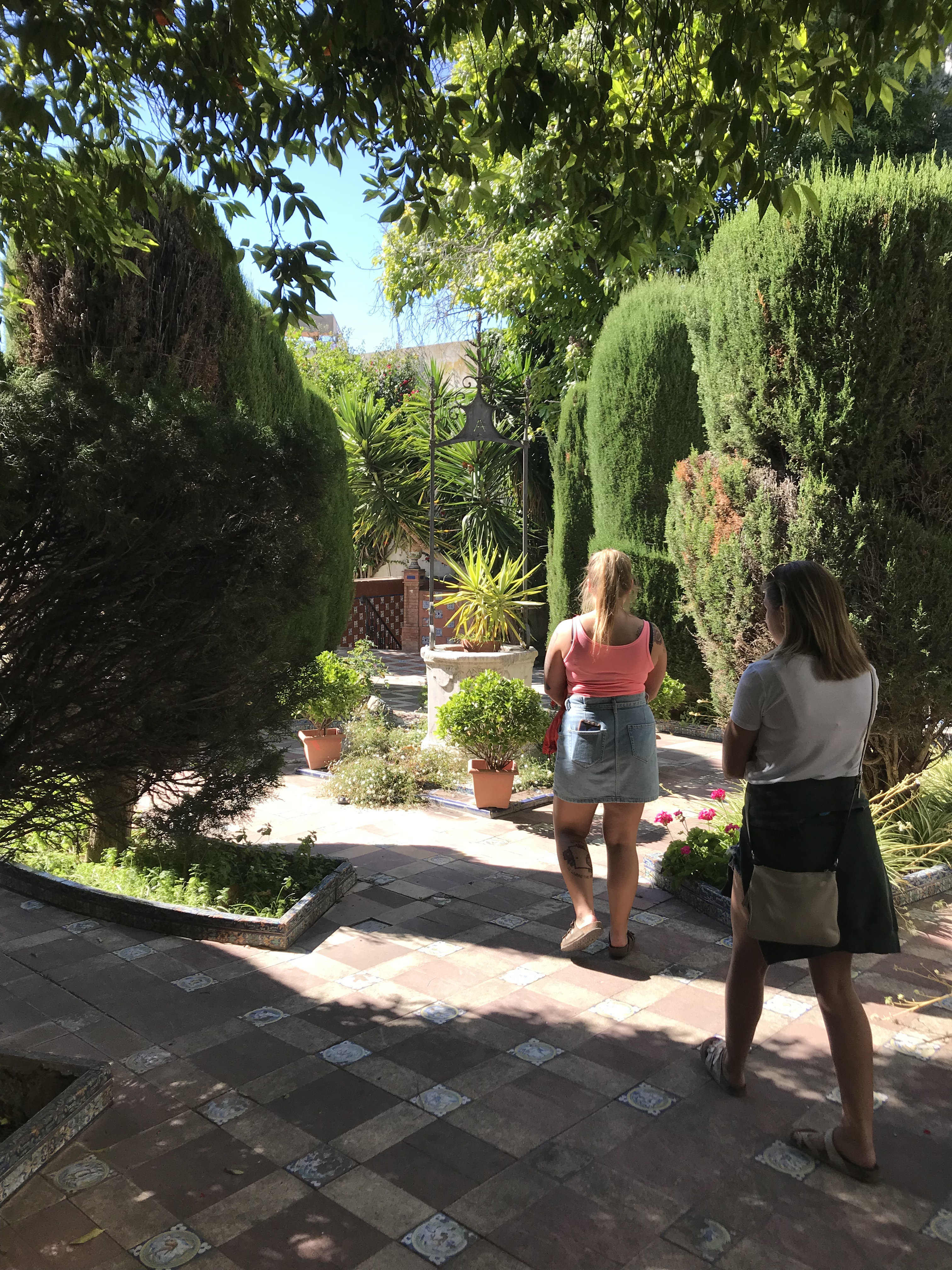
We were able to take pictures of the garden behind the palace! The garden included an avocado tree, which is unusual for Jerez. There was also a lemon tree that was over 100 years old.
Probably the coolest part of this tour, was the dining room. There were beautiful tapestries and silver dishes lined along the walls. Also, the owner stated that all of Spain’s king’s have dined there.

Overall, today seemed to be a favorite tour day for most. Thanks for reading our blog, stay tuned for more updates! Buenas noches!
Days 5 and 6

Day 5: Free Day in Sevilla

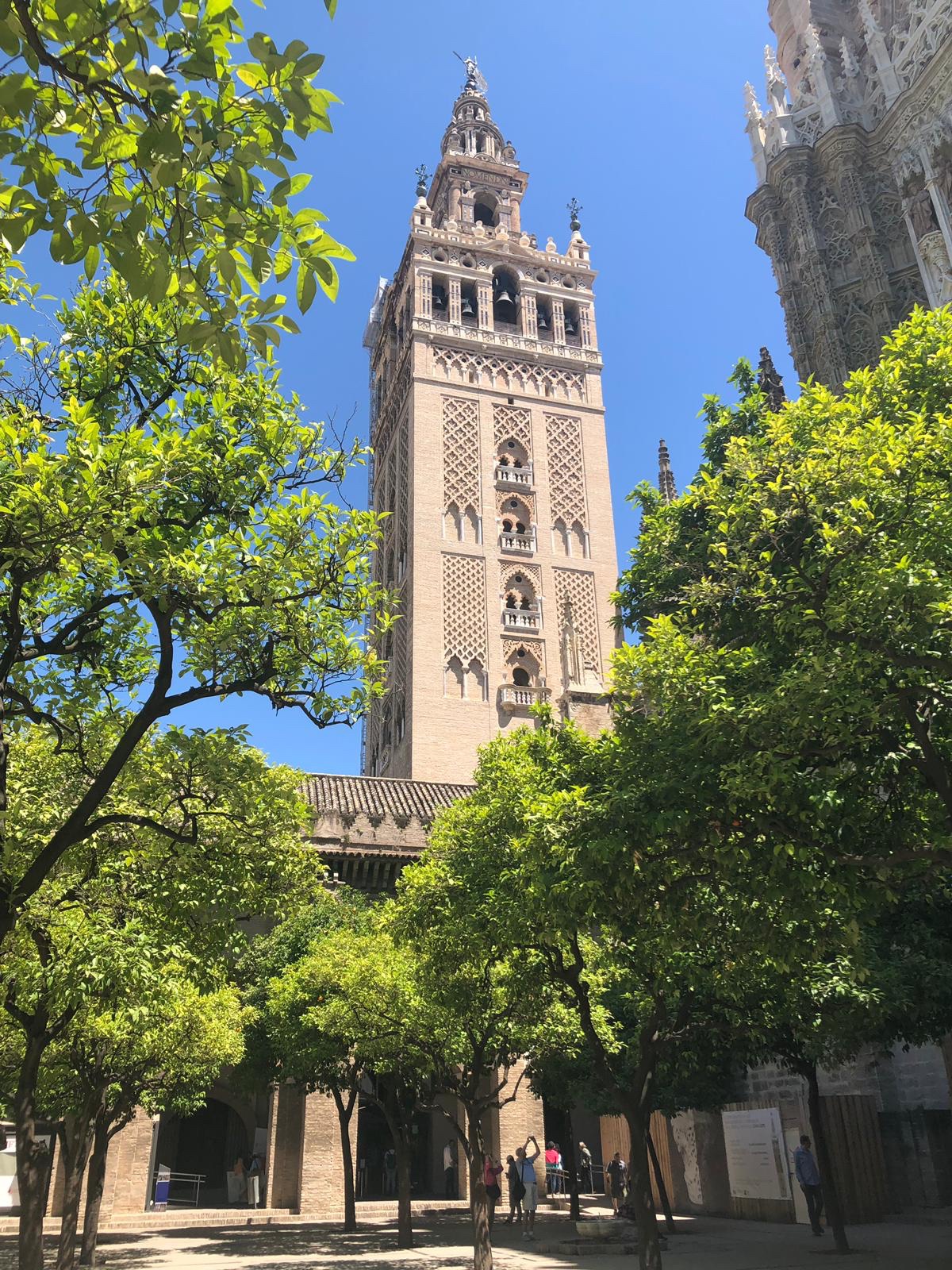
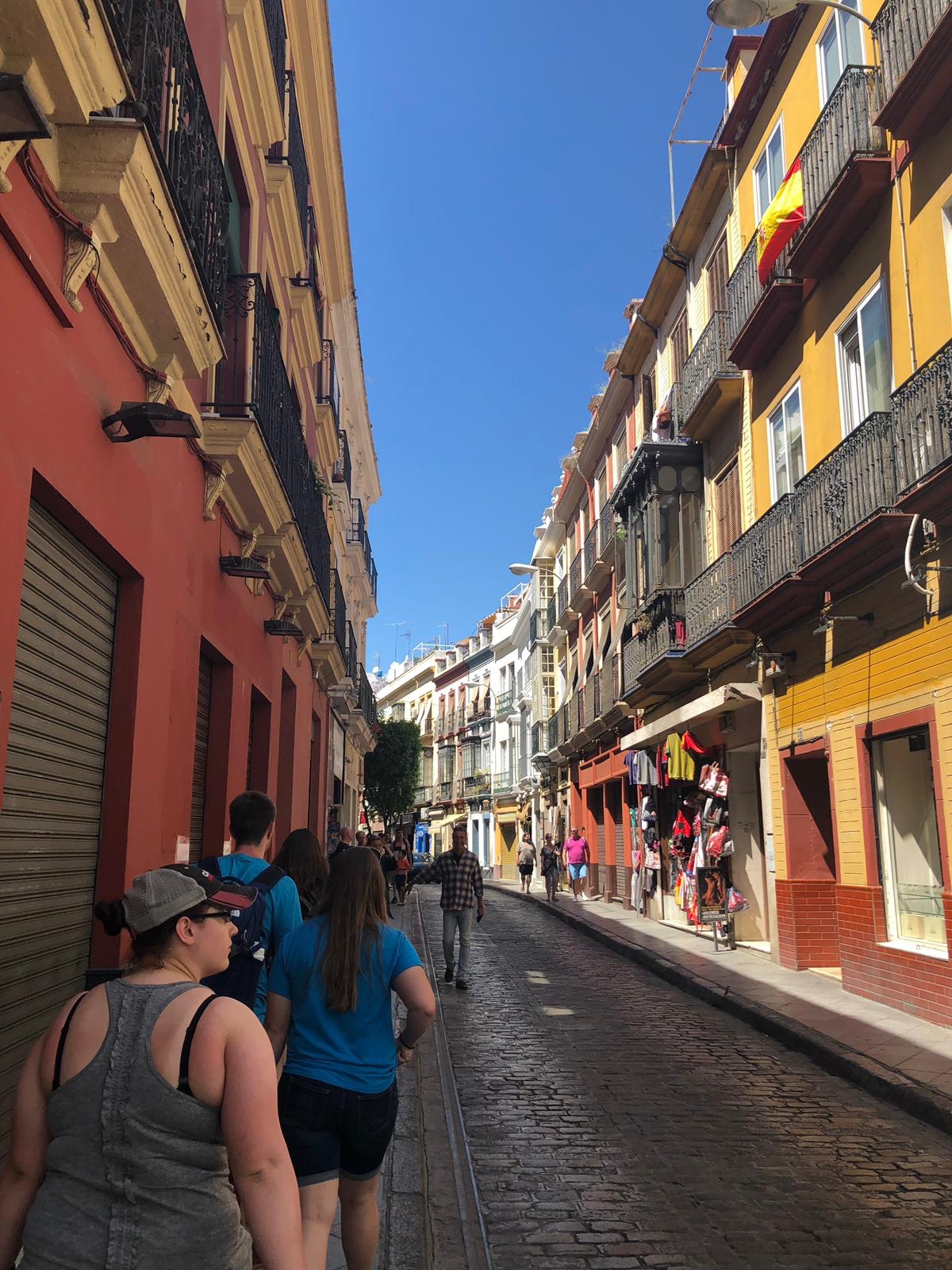
May 18th we went to Sevilla, Spain and had a free day. Some students got a tour of a ‘Game of Thrones’ set, some went to the Cathedral and everyone got to explore the city. There were many shops (most of them being tourist shops) which was great for us to get souvenirs. Street artists were everywhere and it was so cool to see their creativity. Everyone had some great food and we all definitely got our steps in!

Day 6: El Refugio Del Burrito

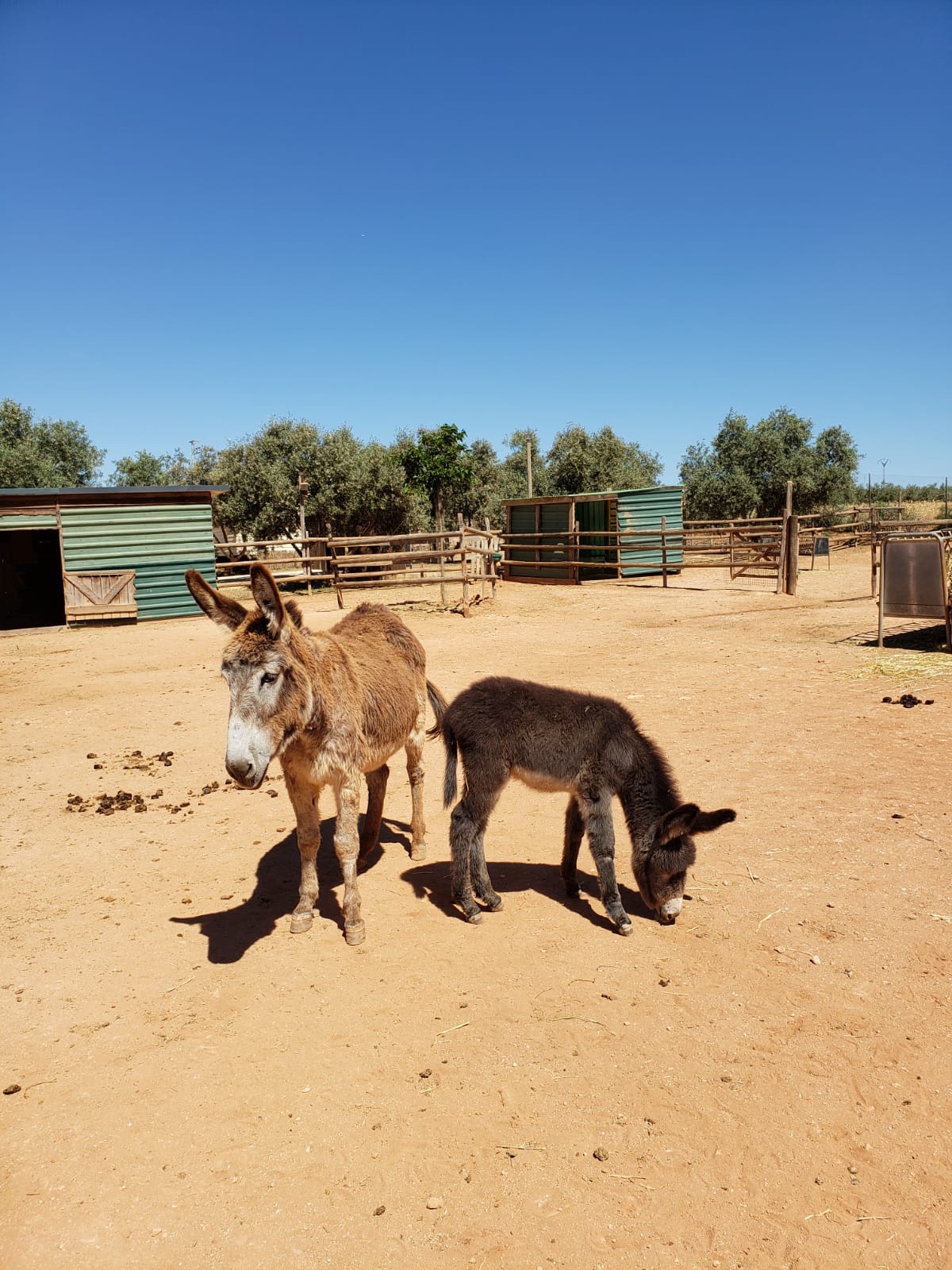
Today was a fun day filled with lots of cuddles from friendly donkeys! We made the 2 hour road trip to Fuente de Piedra where we first visited the El Refugio Des Burrito, a donkey and mule sanctuary housing 100 rescued animals.

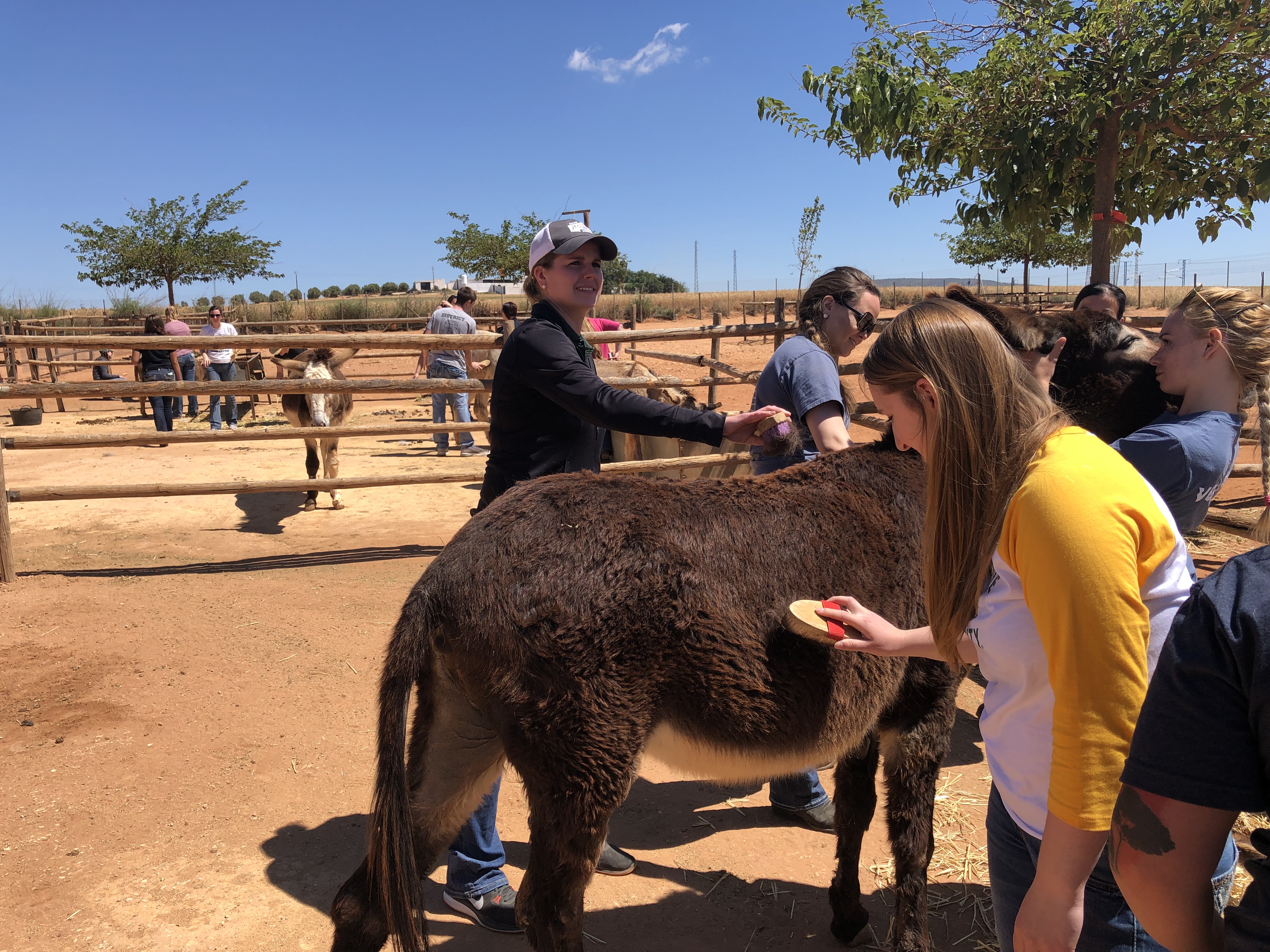
The sanctuary was tended to by volunteers who work to help the animals and raise awareness for the mistreatment of donkeys and mules across Europe. We toured the entire facility and learned how each group of donkeys was housed and tended to. After touring the facility we were given a chance to interact with the donkeys which all of us enjoyed!

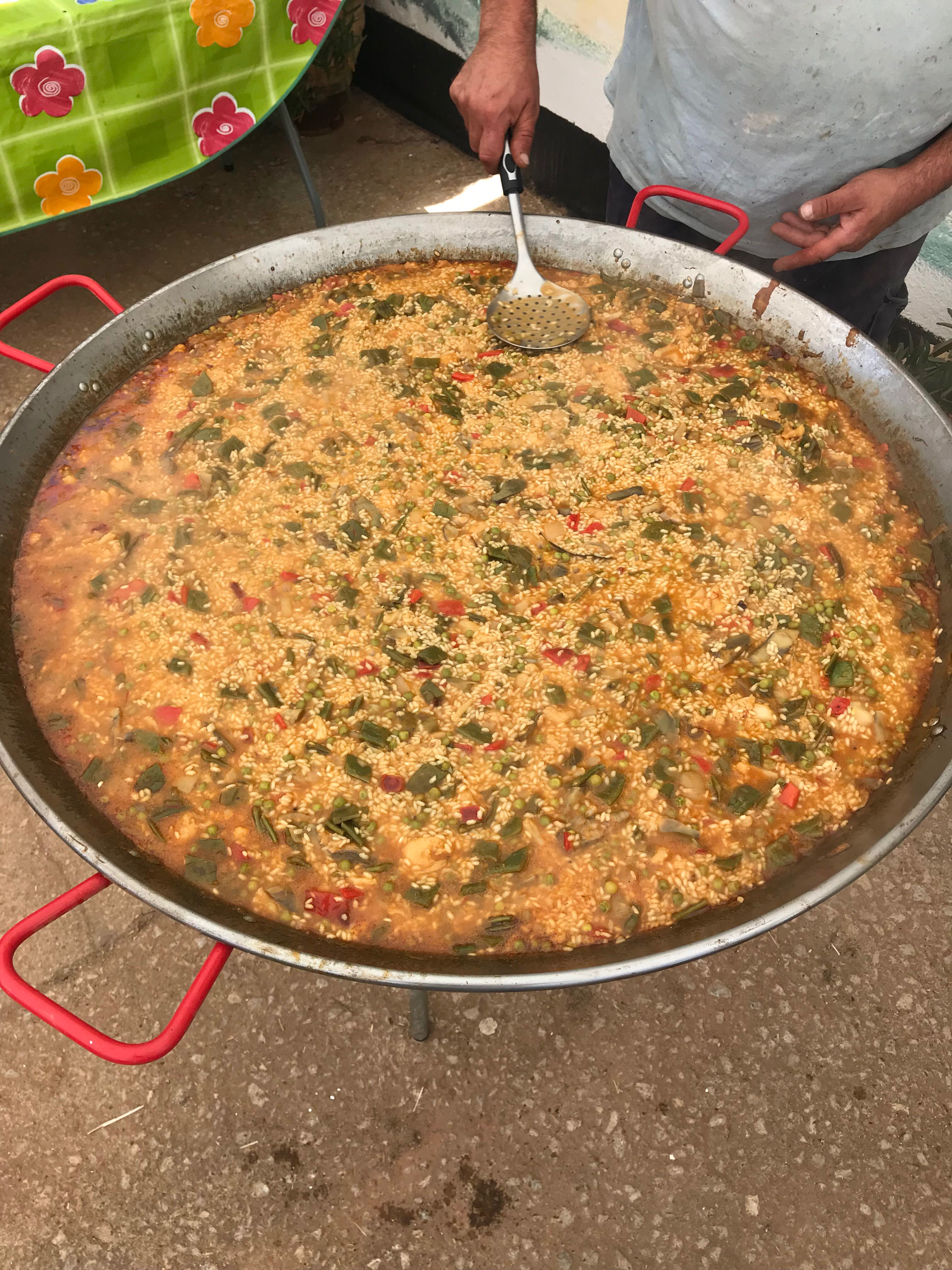
When we were done brushing the donkeys we sat down for a traditional Spanish lunch of Paella. After finishing up at the sanctuary we drove to Laguna de Fuente de Piedra. At the lagoon we were able to see flamingos and other native birds. Today was an extremely fun day that was the highlight of the trip so far for a few students. Tomorrow morning we will be moving to Jerez to spend our second week learning more about livestock in Spain! Adios Chipiona!
Day 4: Hacienda dos Olivos y Feria de Jerez

By Brittany Redemacher and Anne Brien

Hacienda dos Olivos:

Today we started an early morning off and traveled to “Hacienda Dos Olivos”.
This is an old style farm in Spain that focuses on natural horsemanship, training, and modeling authentic Spanish culture. The farm works as a bed and breakfast and also hosts working students. Walking up to the house we were greeted by a small pack of friendly dogs along with the owner, Joanna. The house is modeled after a Roman style home, with an enclosed courtyard and the house and other building surrounding the courtyard. As the name suggests, the property has many olive trees which grow table olives, called “little apple” or “manzanilla” in Spanish. We recieved a tour from Joanna. She showed us the property, including the stable, built also with a center courtyard (a style which I love), the horses, paddocks, corral, and outdoor riding space where they keep the horses they are training engaged by working them over natural obstacles such as trees, logs, etc. Like many horse owners in Spain, they own Pure Spanish Horses, all Stallions, and focus on training using the method of “centered riding”; striving to make the connection between horse and rider. They explained to us there horse management, feeding, and training as we received our tour. Following this, Lucy Rees, a renowned equine behaviorist in Spain who works with Hacienda Dos Olivos, came and spoke to us about her methods, ideas, and the research she does studying wild horses and about the knowledge she has on how to connect with horses. It was amazing to see how passionate she is about ensuring horse welfare and understanding. After visiting with Lucy, we were all treated to an authentic Spanish lunch (for all people in the US, lunch occurs much later in the afternoon here than we are accustomed to at home!), with salads, bread, and “Paella” – which is a dish made of rice, chicken, sea food, and a tomatoe type sauce (definitely more fresh sea food than we see in North Dakota and the midwest!) – it was delicious! Visiting the Hacienda Dos Olivos was great, our host Joanna was very gracious and I really enjoyed hearing Lucy speak. I have never been anywhere like it and would definitely suggest it to anyone visiting Spain!

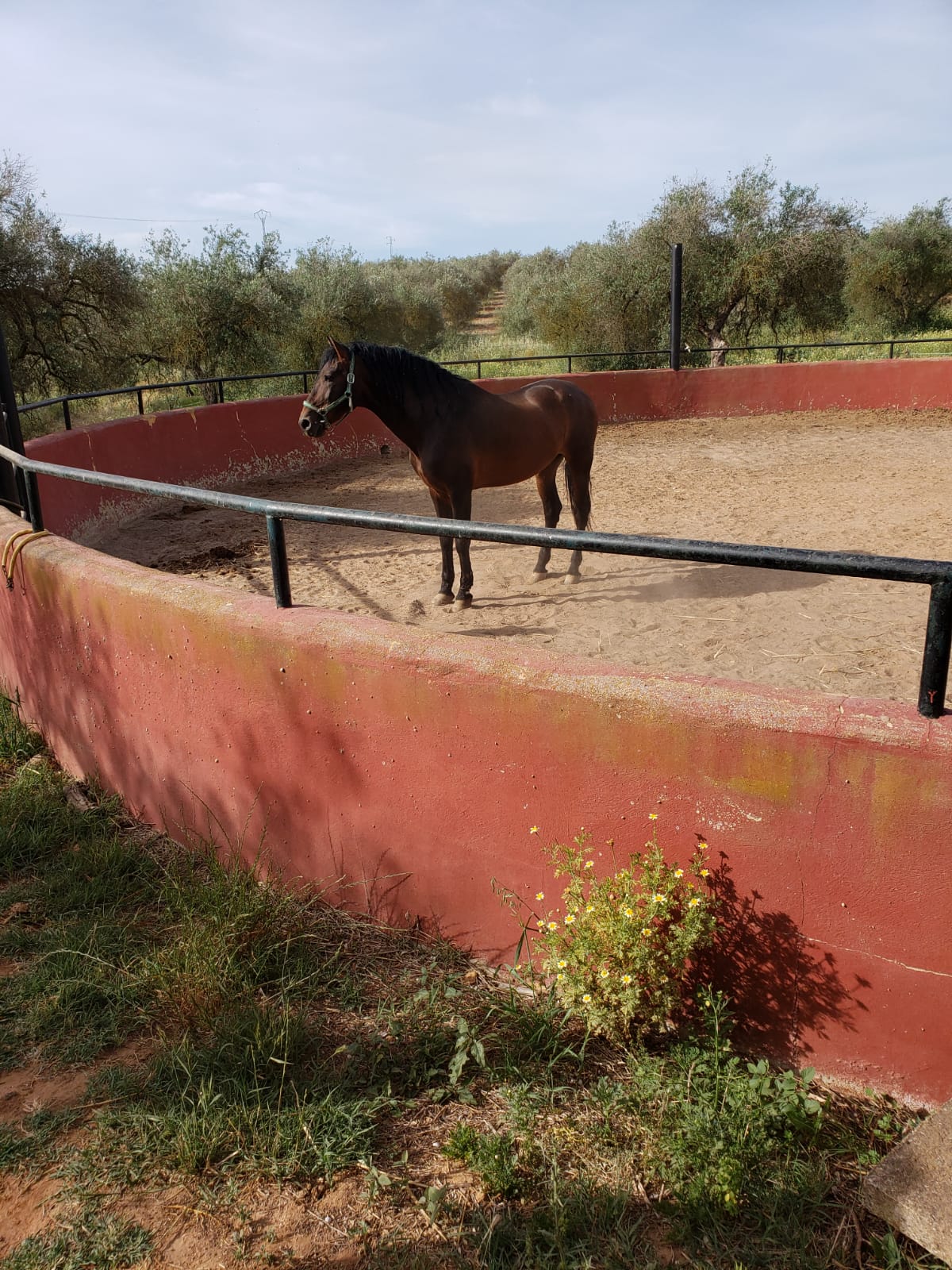
Stallion in the corral at the Hacienda with a few of the many olive trees in the background.

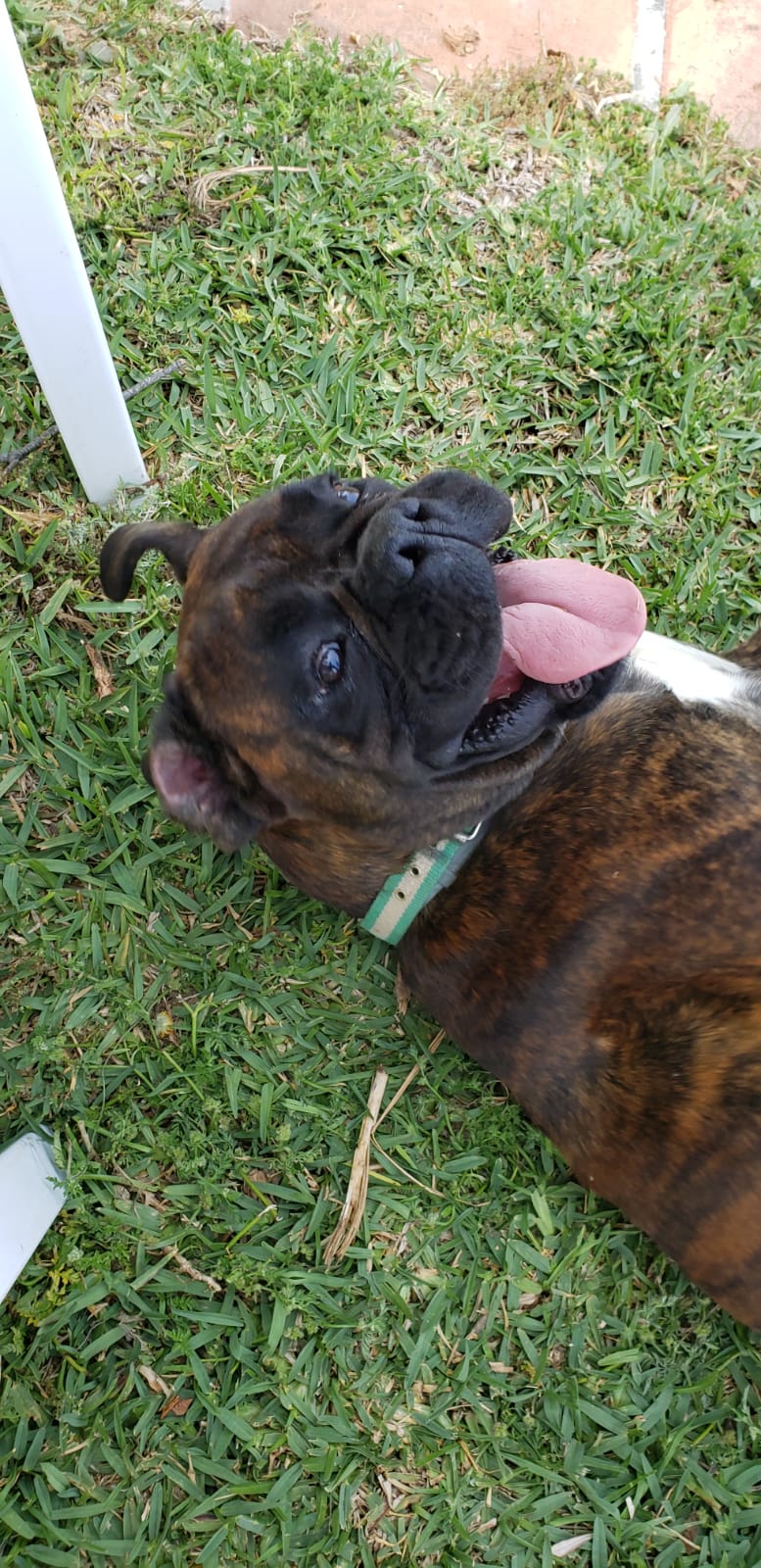
One of the fun-loving boxers that entertained us at the Hacienda!

Feria de Jerez:

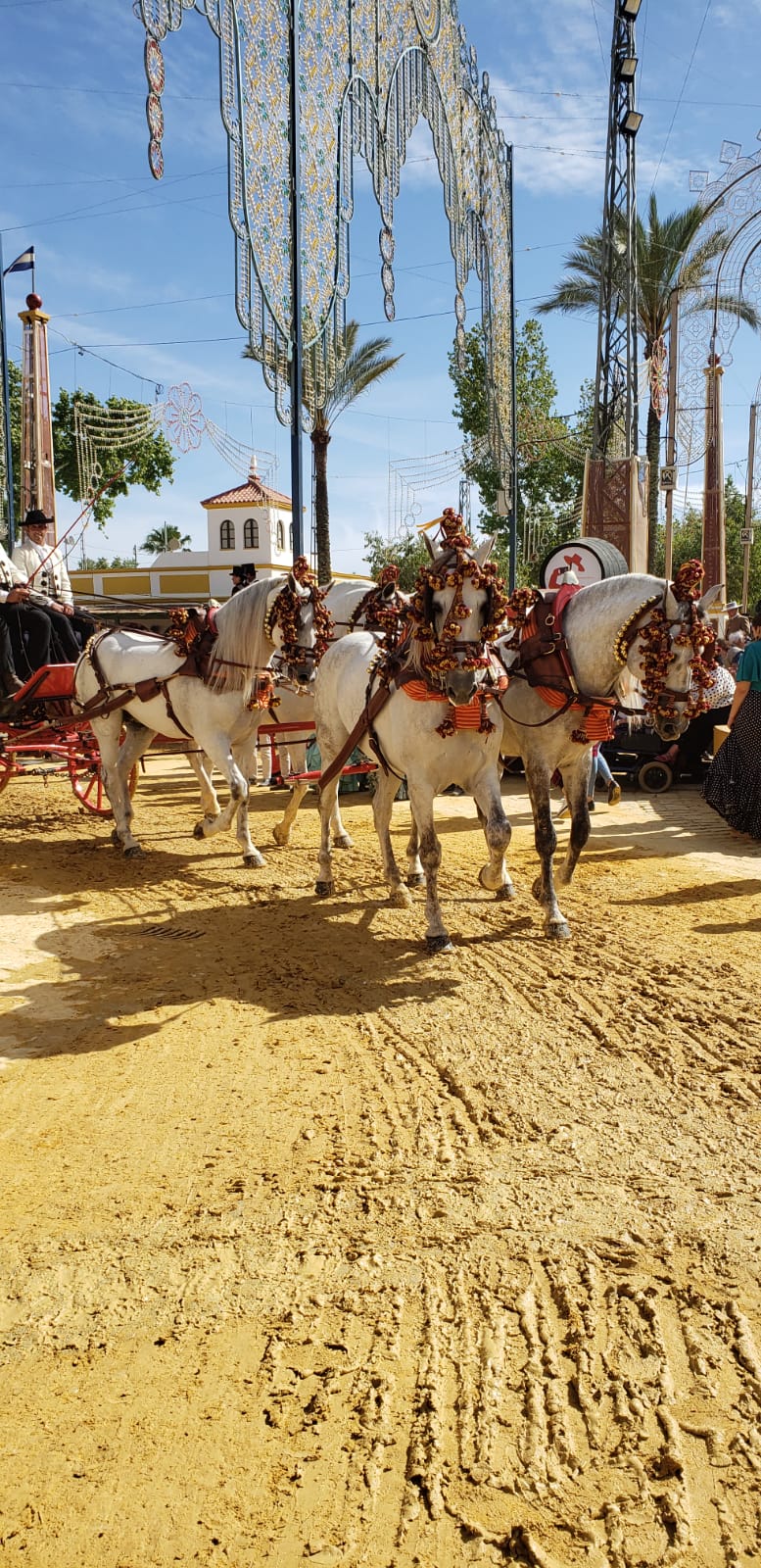
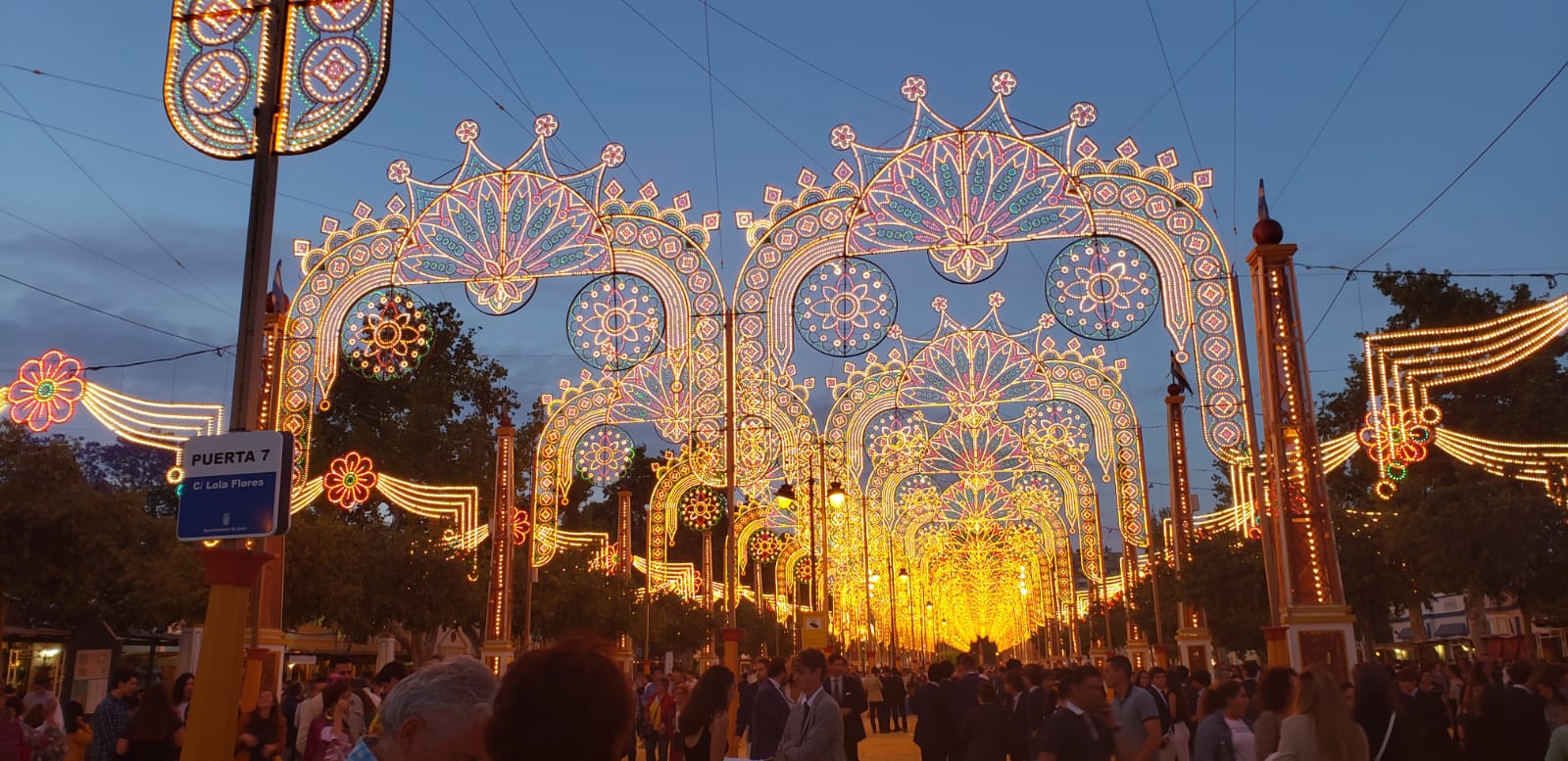
We also got to go the horse fair in Jerez. I thought it was similar to the Minnesota State Fair with all of the people everywhere plus the Minnesota State Hose Show combined into one. There were a lot of horses with single and double riders. There were also many carriages giving people rides around the streets. The streets were lined with bars and restaurants on each side and on the end there was a bigger area for rides that were similar to carnival rides at county fairs. There were also lights lining the streets that looked amazing at night once they all were lit up because they followed all the streets and were in very pretty patterns. Many of the people were very dressed up in suits and fancy dresses and they all looked very professional.

An adorned horse drawn cart at the Feria
Feria lights!

Day 3

First excursion of day three we toured the Royal Andalusian School of Equestrian Art. We started off the tour with a short introductory video outlining the school and the Andalusian’s impact throughout history up until today.

After the video we were allowed to explore the property on our own. The property included: a museum, a palace, a saddlery (all show saddles and bridles that are used in the performances are made here) a gift shop and the show arena.

Although the palace was “closed”, some of us were able to enter and sneak some pictures of the beautiful architecture and majesty of the building.

During our exploration of the property we were able to watch as some students practiced and trained their horses.

All the students are equally parts talented and passionate about making their art here. It was a real privilege to watch them.

Last part of our tour here was a traditional discipline demonstration of 6 separate maneuvers. 1. Passage (high stepping during vigorous trot). 2. Spanish walk (high stepping while stretching front forelimb out infront). 3. Levade (horse places all weight on hind legs and balances at a 30 degree angle). 4. Capriole (horse jumps and kicks hind legs back). 5. Piaffe (high stepping trot in place). 6. Pesade (horse places all weight on hind legs and balances at a 45 degree angle).

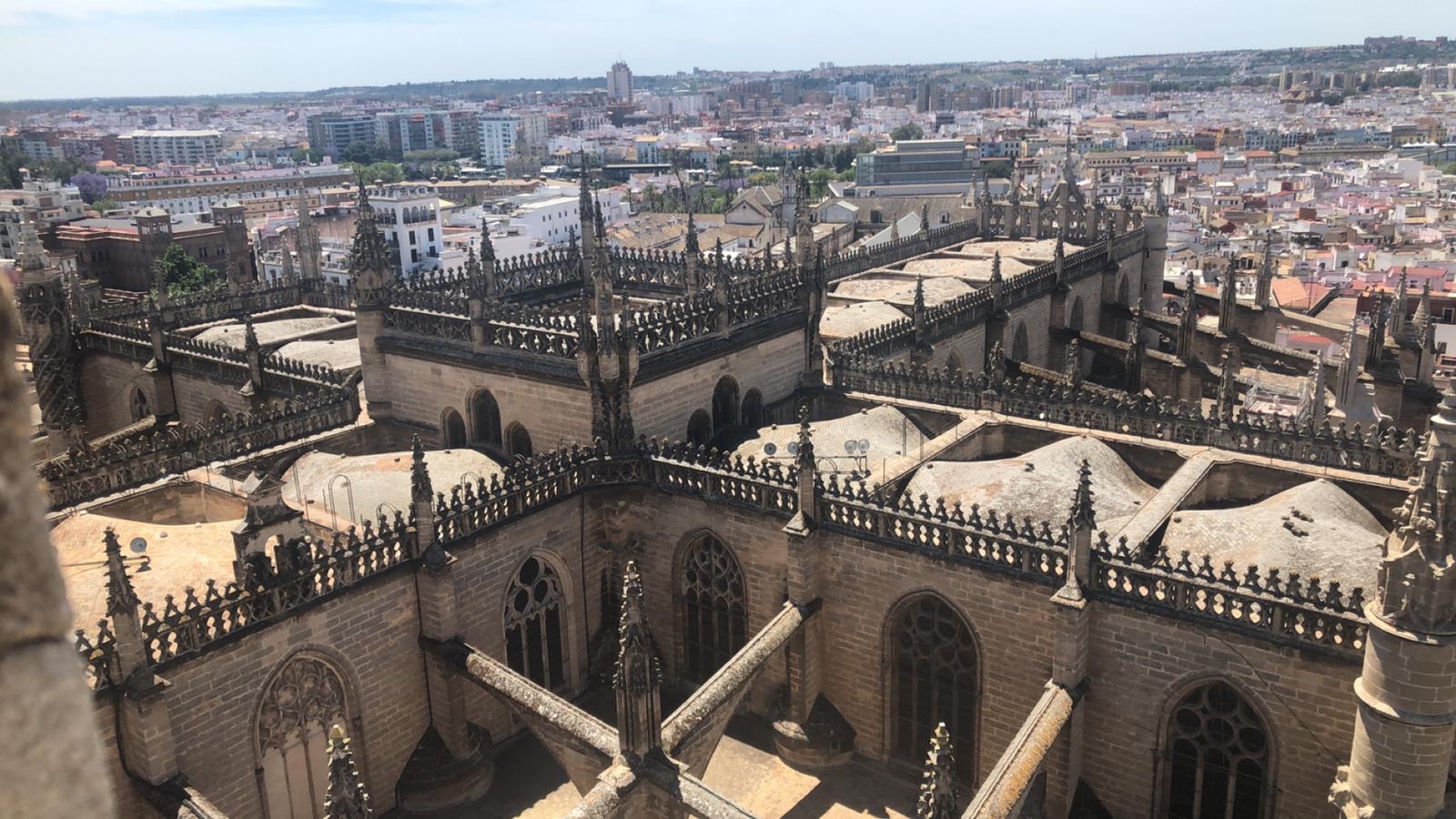
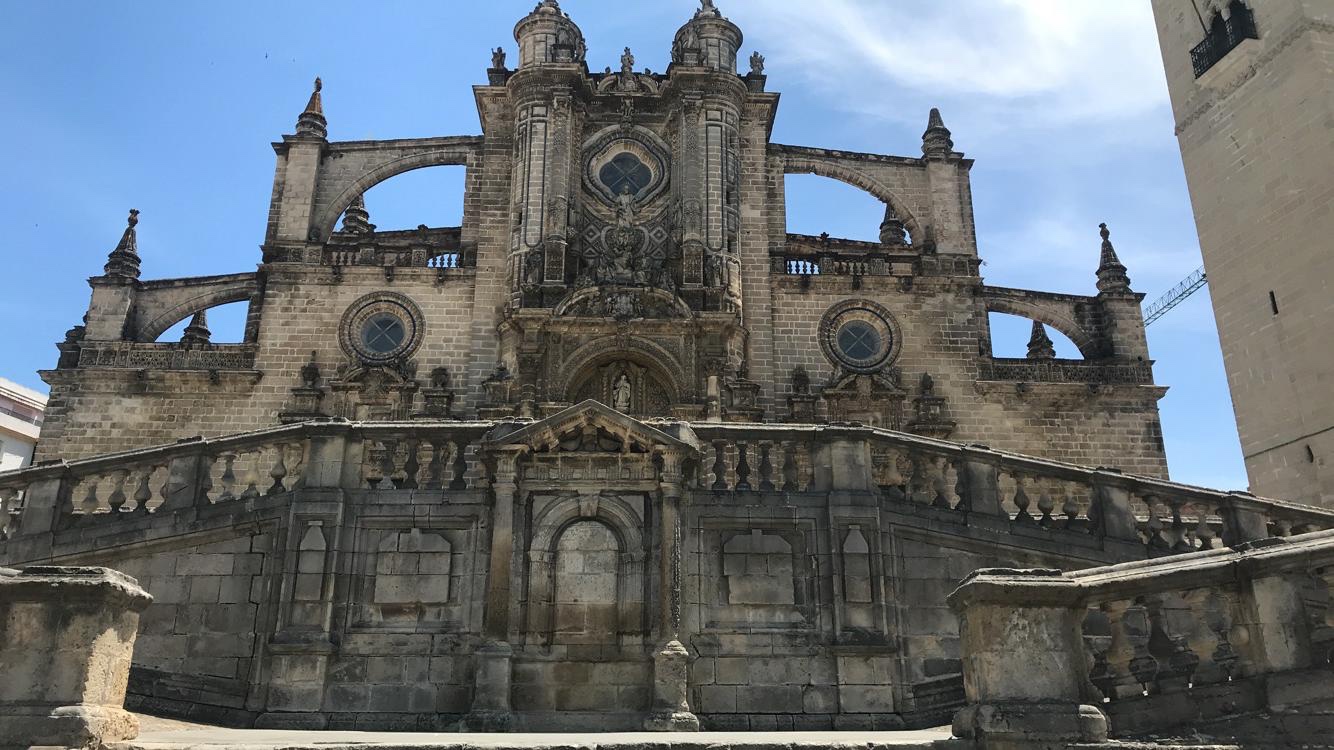
After we left the school and had a nice walk heading to our next stop, which was the bodega. On our walk we saw many beautiful buildings including this 1,000 year old cathedral.

After a quick bite to eat in town we all met up at the bodega where we had our second excursion of the day.

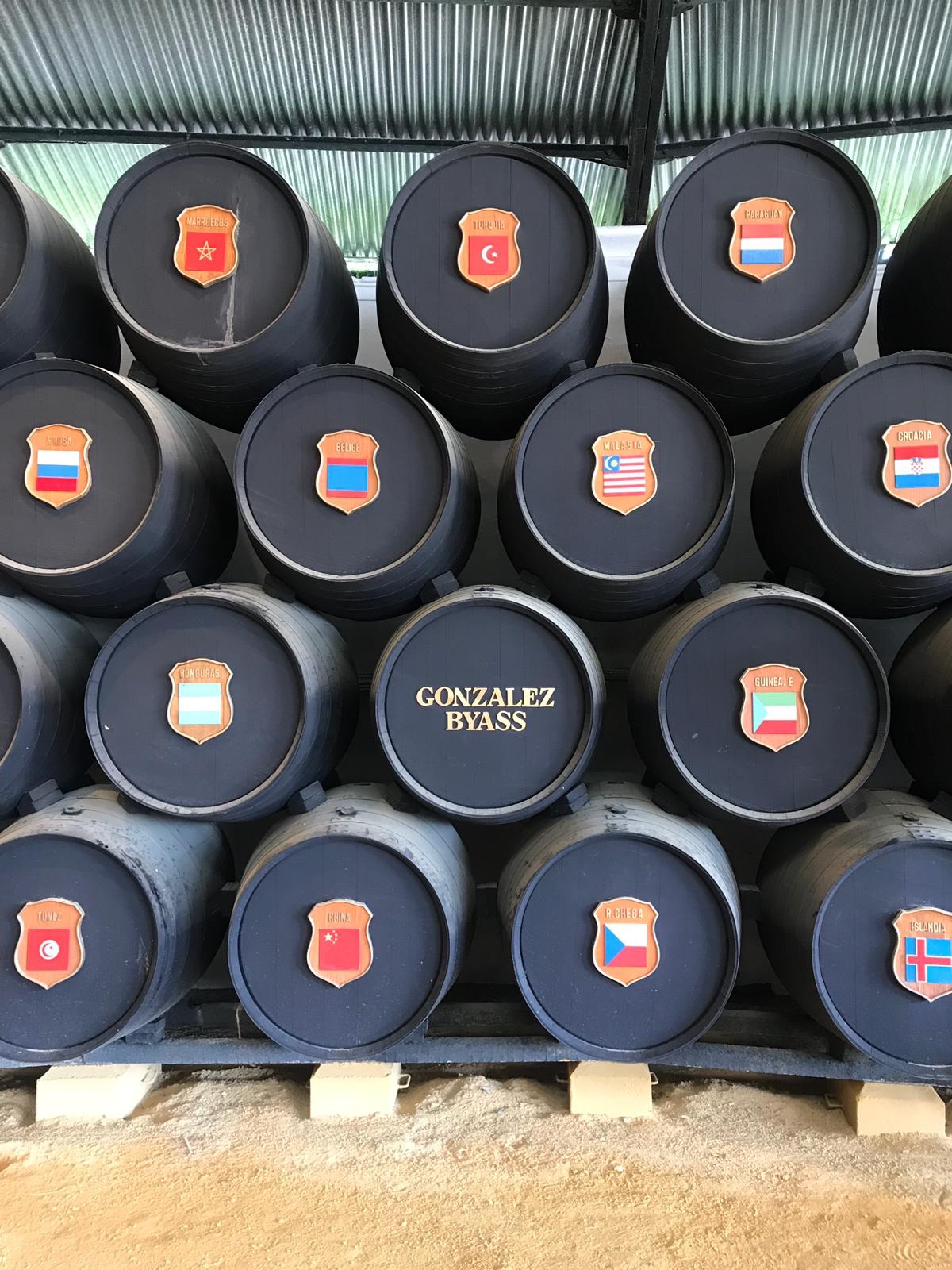
This bodega is owned by two families originally, the Gonzalez family and the Byass family. Now it is only owned by the Gonzalez family.

The wines produced here at the winery are well known throughout the world and famous throughout Spain. The family business has been passed on through many generations and it’s preservation as such is held at a very high value.

We toured the streets and buildings that connect the many different wine cellars. These cellars are filled with black painted American oak wooden barrels, 4,000 to be exact. Something unique about this bodega is the aging process; throughout the life of the wine they mix newer wines with older wines to ensure its taste is perfect and up to code no matter what barrel you choose.

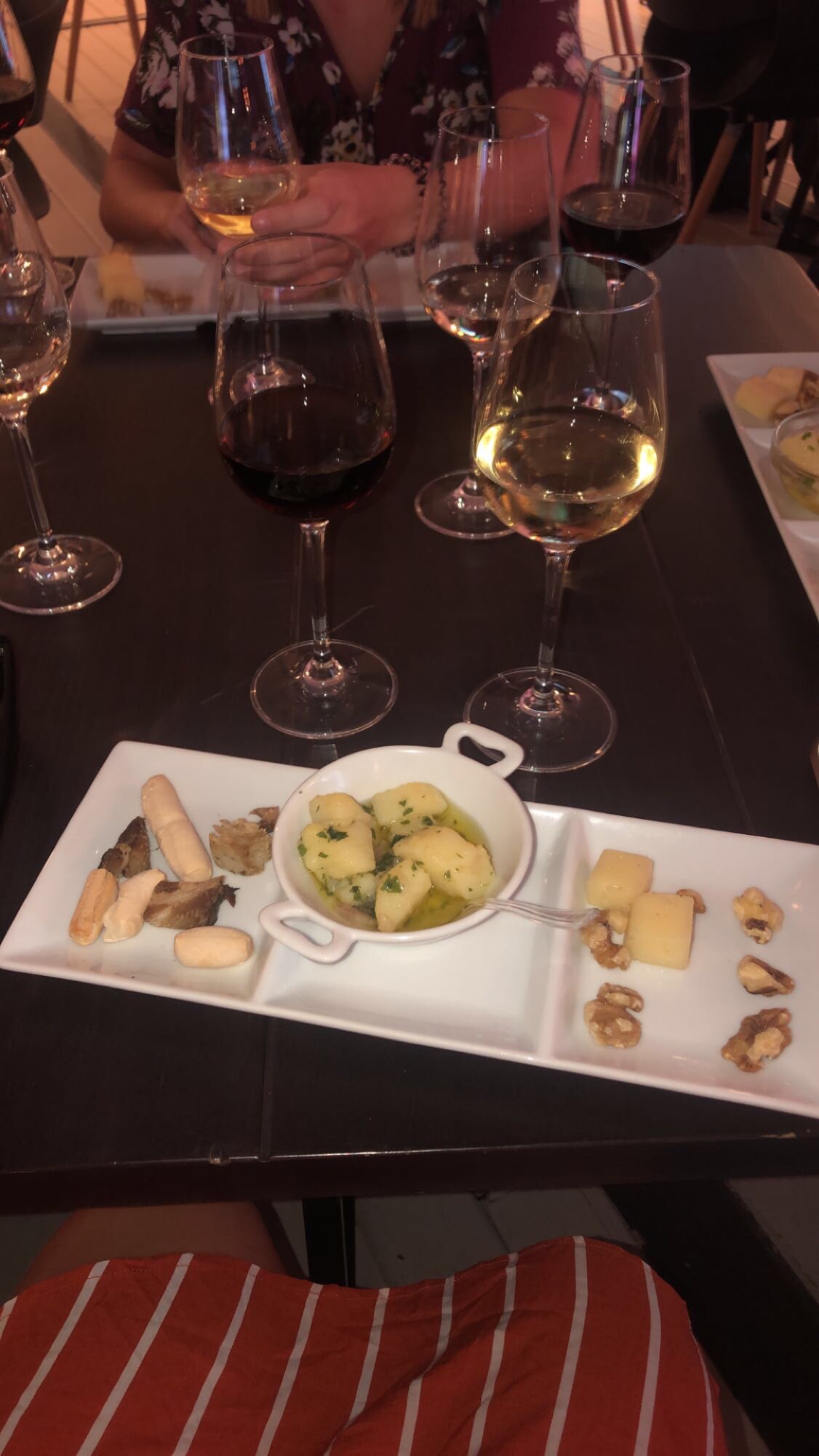
Concluding the tour we were able to partake in a wine tasting. We tasted two of the wines that are produced by the Gonzalez Byass Bodega: a red sweet wine and the most famously known, Tio Pepe (dry, white). The Tio Pepe was voted the favorite of the two amongst students.

After the two excursions we all enjoyed dinner together back in Chipiona.

Only day three and we’ve already experienced so much of Spain. Can’t wait for more!!!

Thank you for listening, Anna and Amber. Adios!

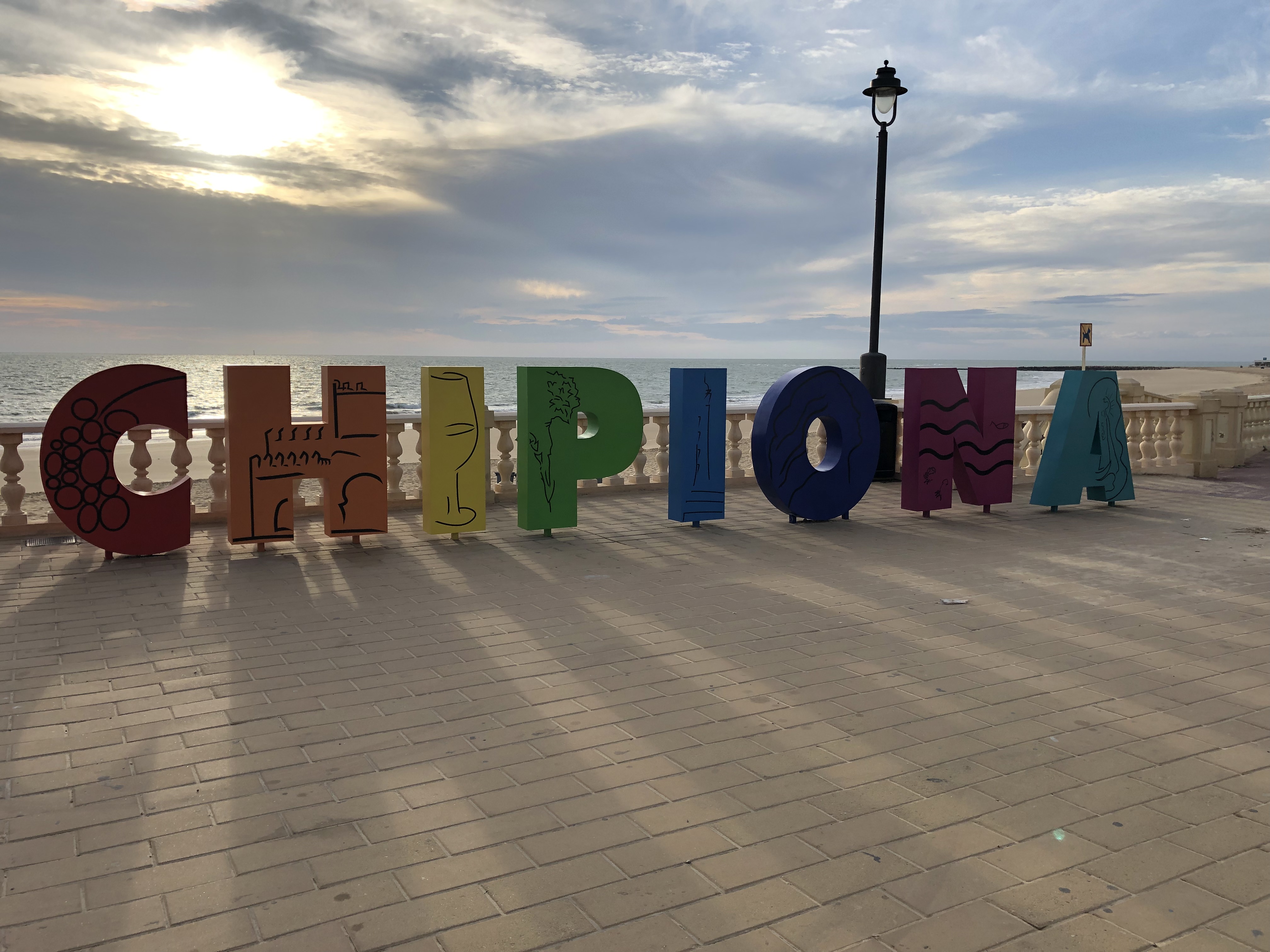
¡Hola Chipiona, Spain!

Day 1

We made it!!!

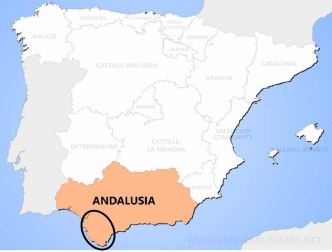
After a couple longs days of traveling (with long layovers in both Chicago and Madrid) we finally made it to our hostel in Chipiona, Spain for the week.Our first day consisted of a short orientation and an introductory Spanish language and culture lesson. I can’t say we are all perfectly fluent yet, but I think we did pretty well.😁After getting some lunch we had the rest of the day for beach time and exploring the area. This gave us the chance to familiarize ourselves with the local grocery stores,shops, and landmarks.

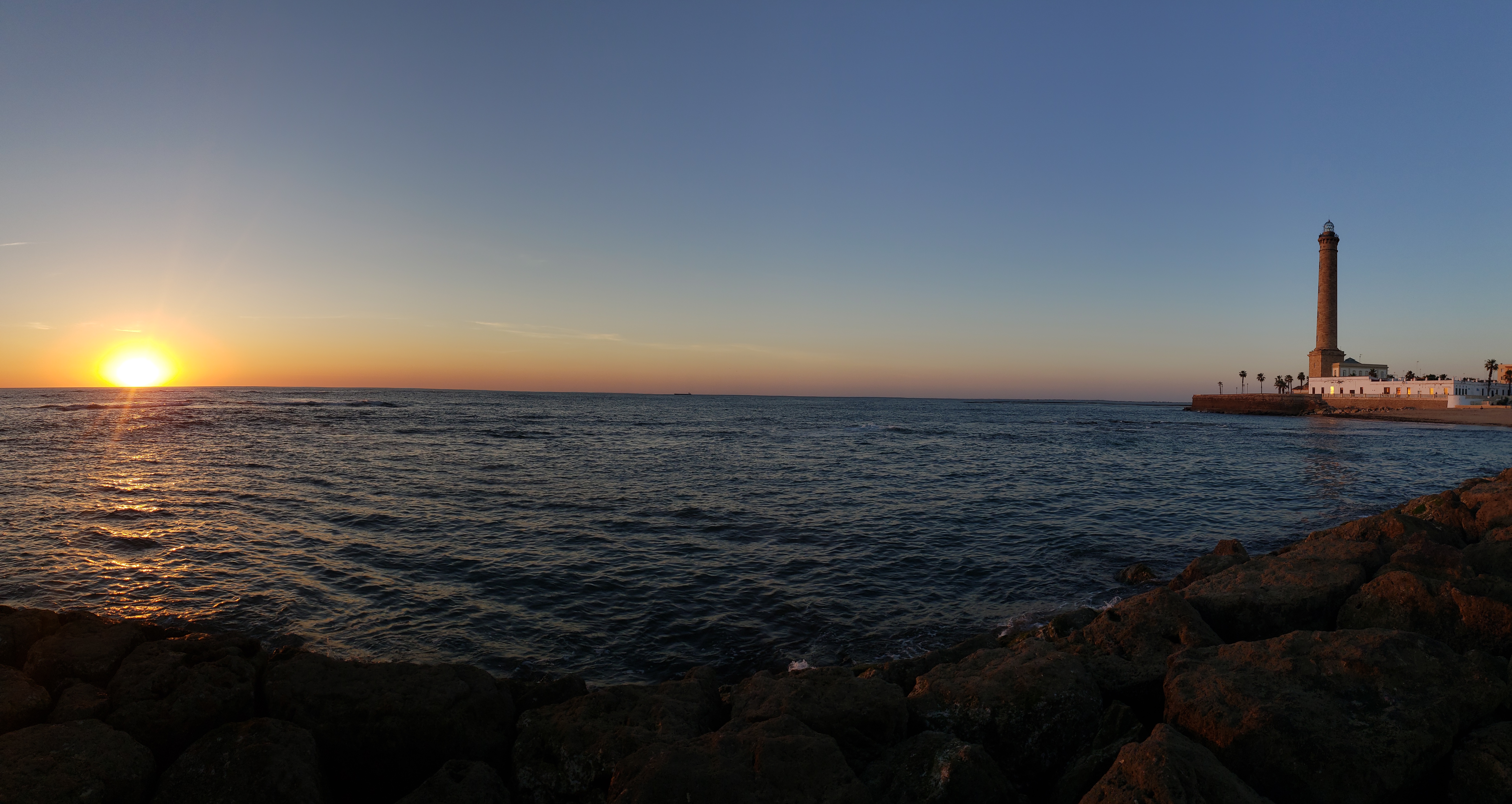
The Faro de Chipiona, is the tallest light house in Spain and is just a quick walk away from the hostel we are staying at.We also had the chance on our first night to have a family dinner at one of the near by restaurants. Everything is just across the street from the beach.

Day 2

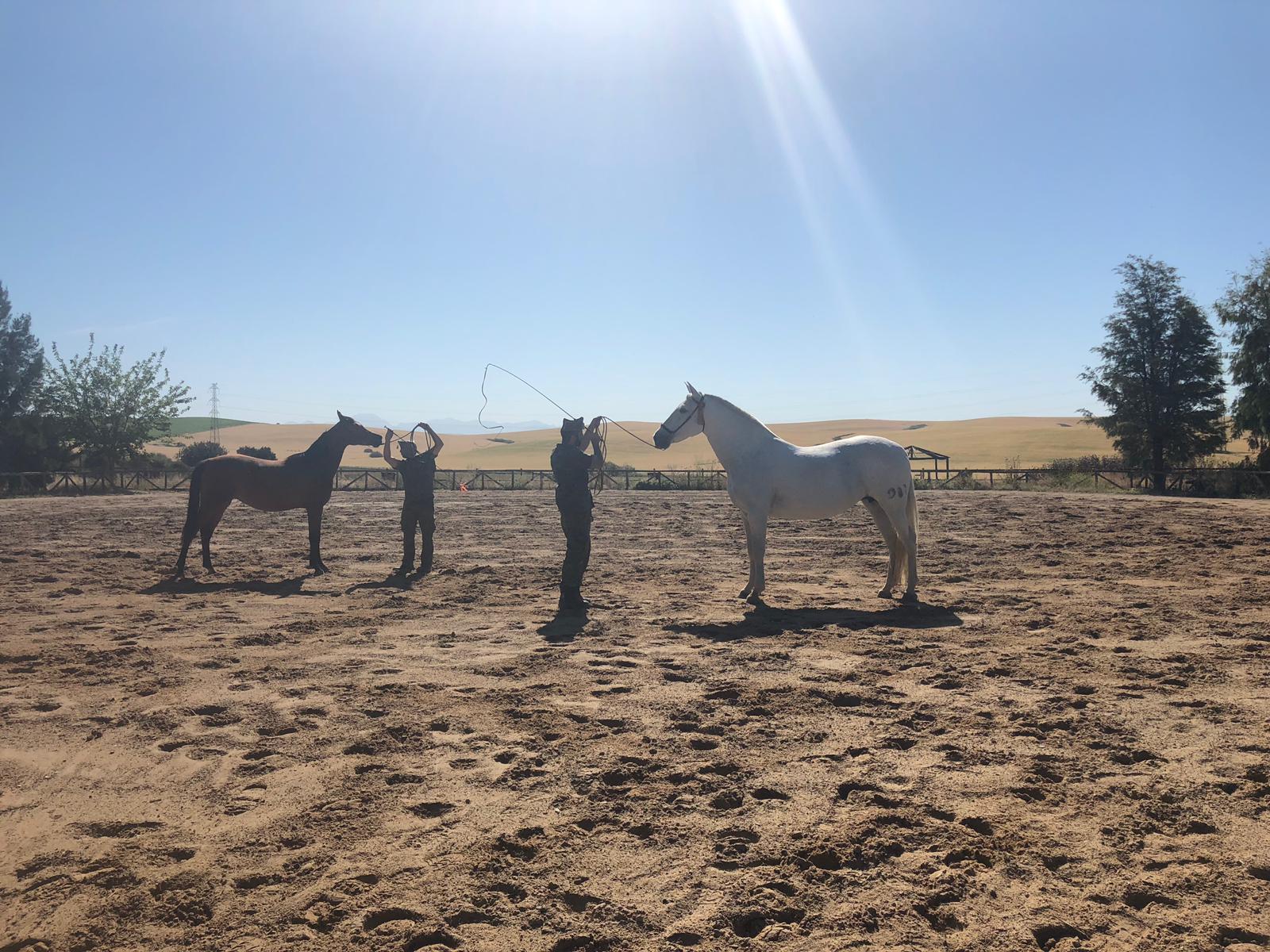
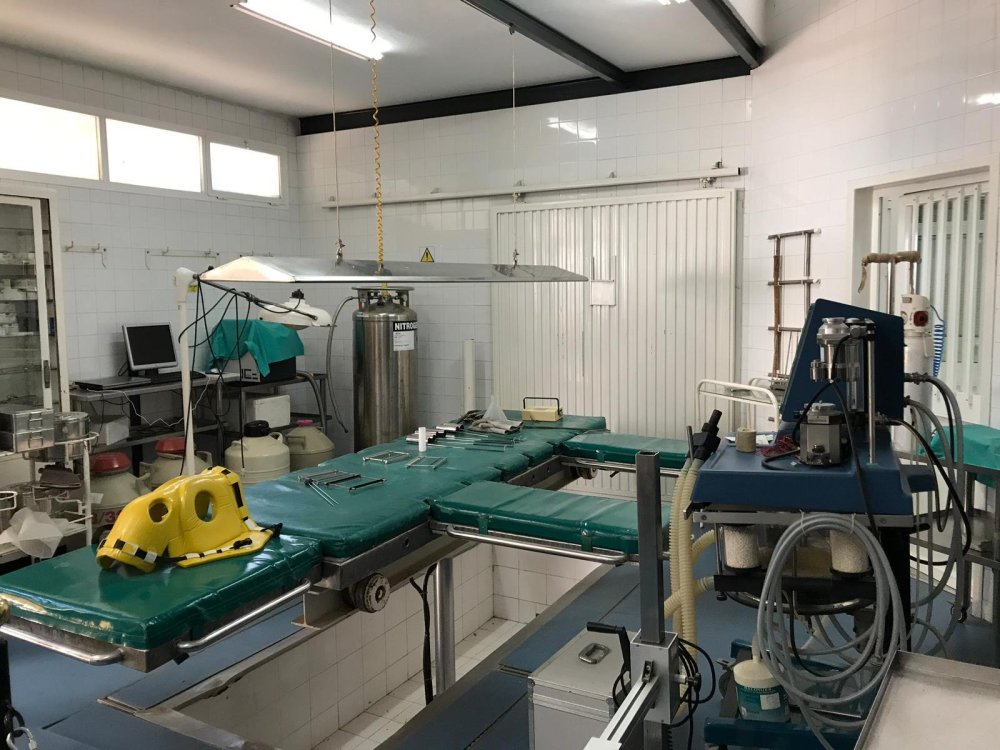
The free time and beach time did not last long. Today was packed to the brim with activities and industry excursions. Our first stop after breakfast at the hostel was the Yeguada de Militar de Jerez. It is a Jerez military base that focuses and specializes in breeding the supply of horses used for the Spanish military and police forces across the country.The two kinds of horses they breed exclusively at the base are the Arabian horse (left) and the Spanish/Andulusian horse (right). The Arabian horse is positioned slightly farther back in the picture, so it isn’t really that small compared to the Spanish horse. But, the Arabian horse is still built significantly smaller when compared to the stockier Spanish horse.This first of the two bases we visited housed aproximately 400 mares as well as their growing foals.While on base we got the chance to witness a few procedures that were being performed on some of the mares. Including an embryo ultrasound.
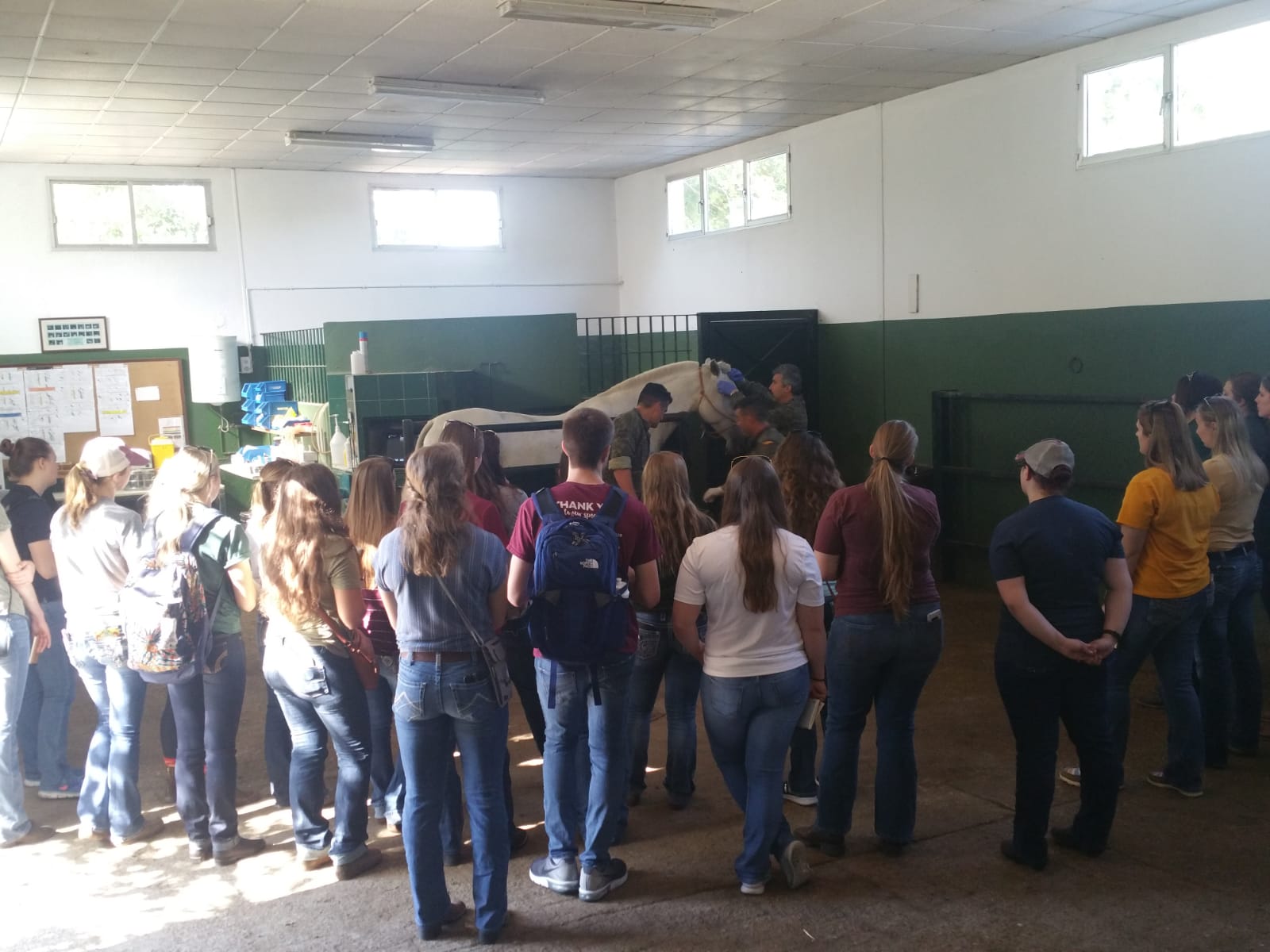
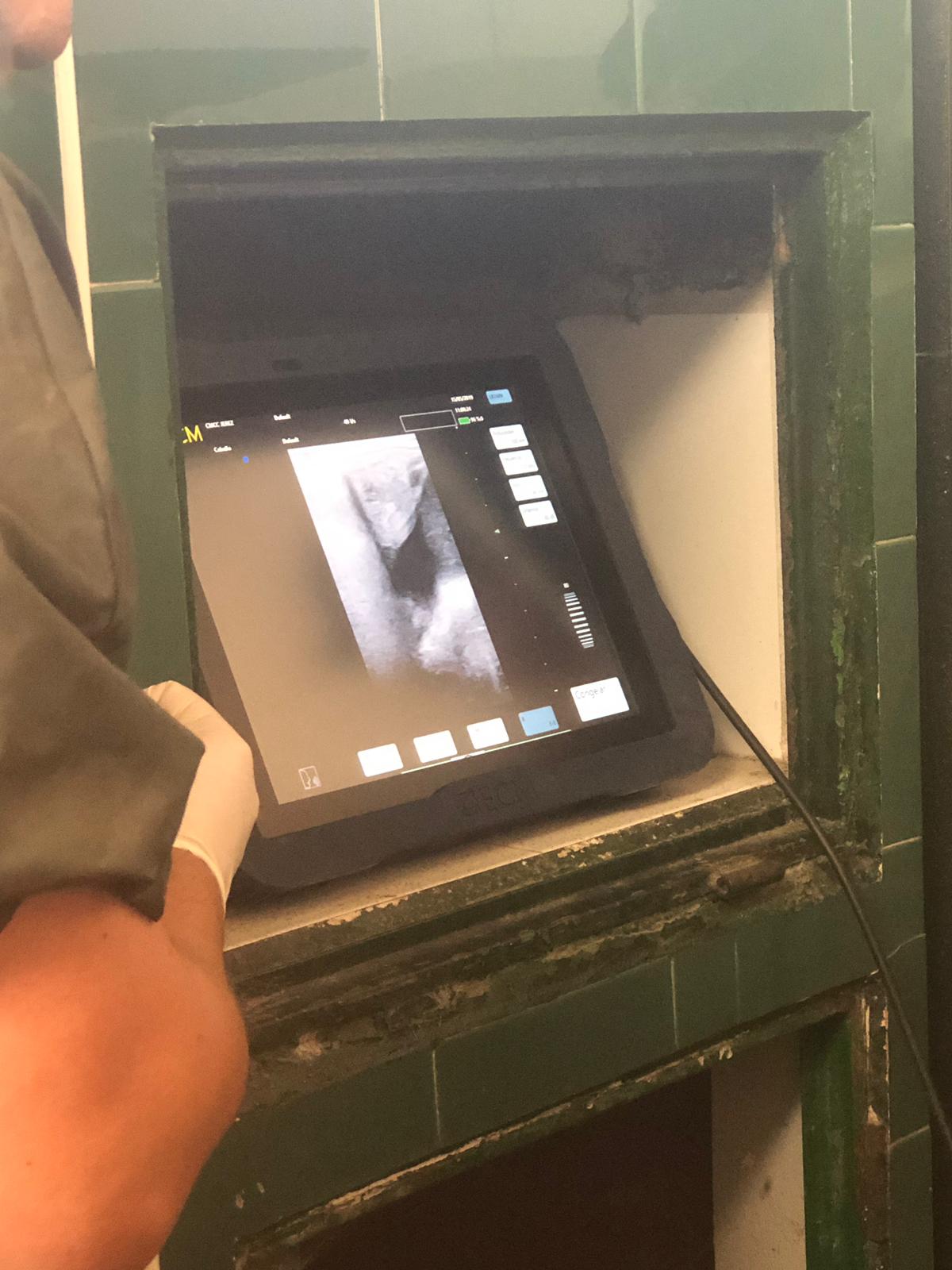
It was determined that the mare being untrasouded was approximately 35 days pregnant.
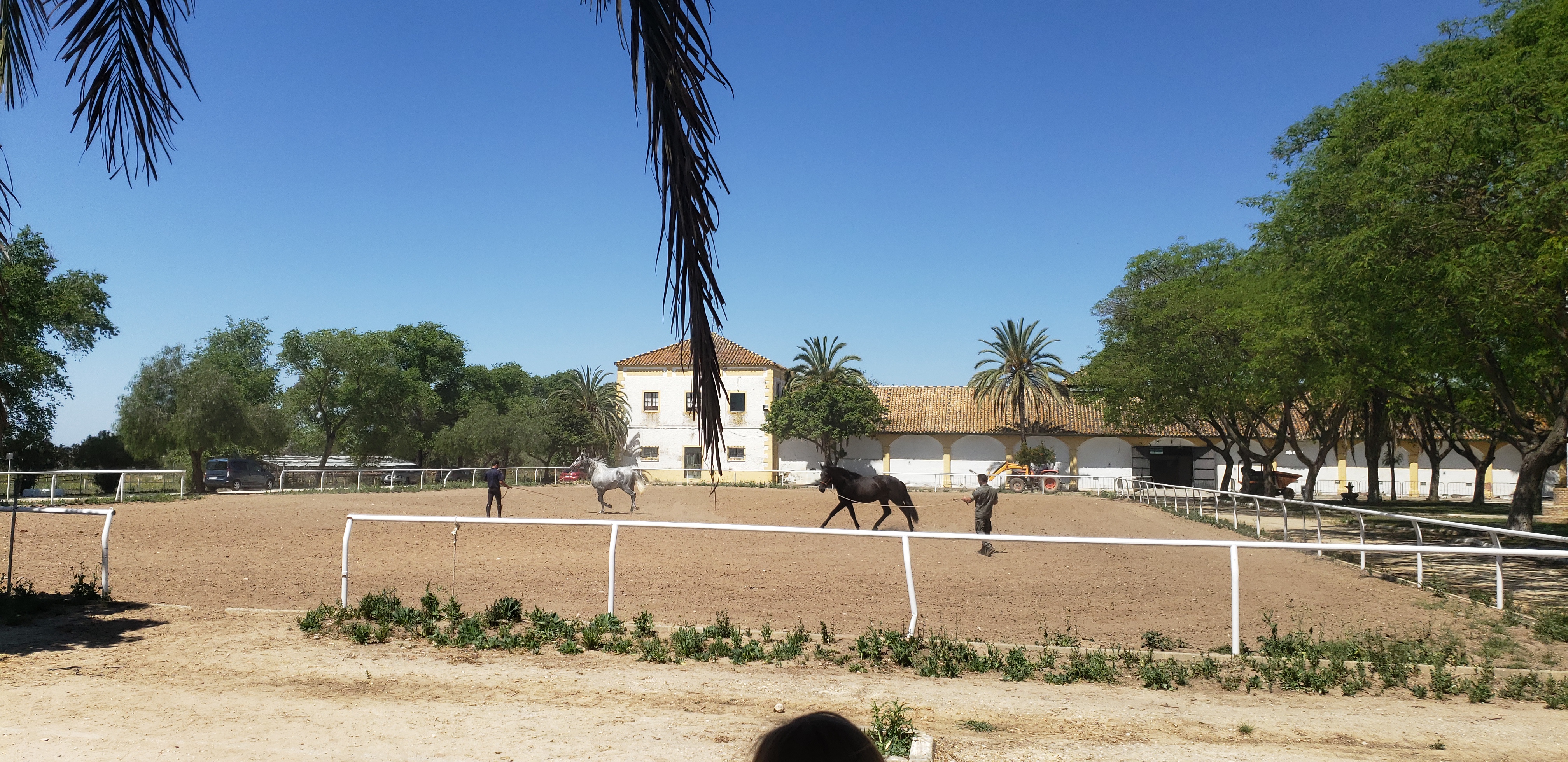
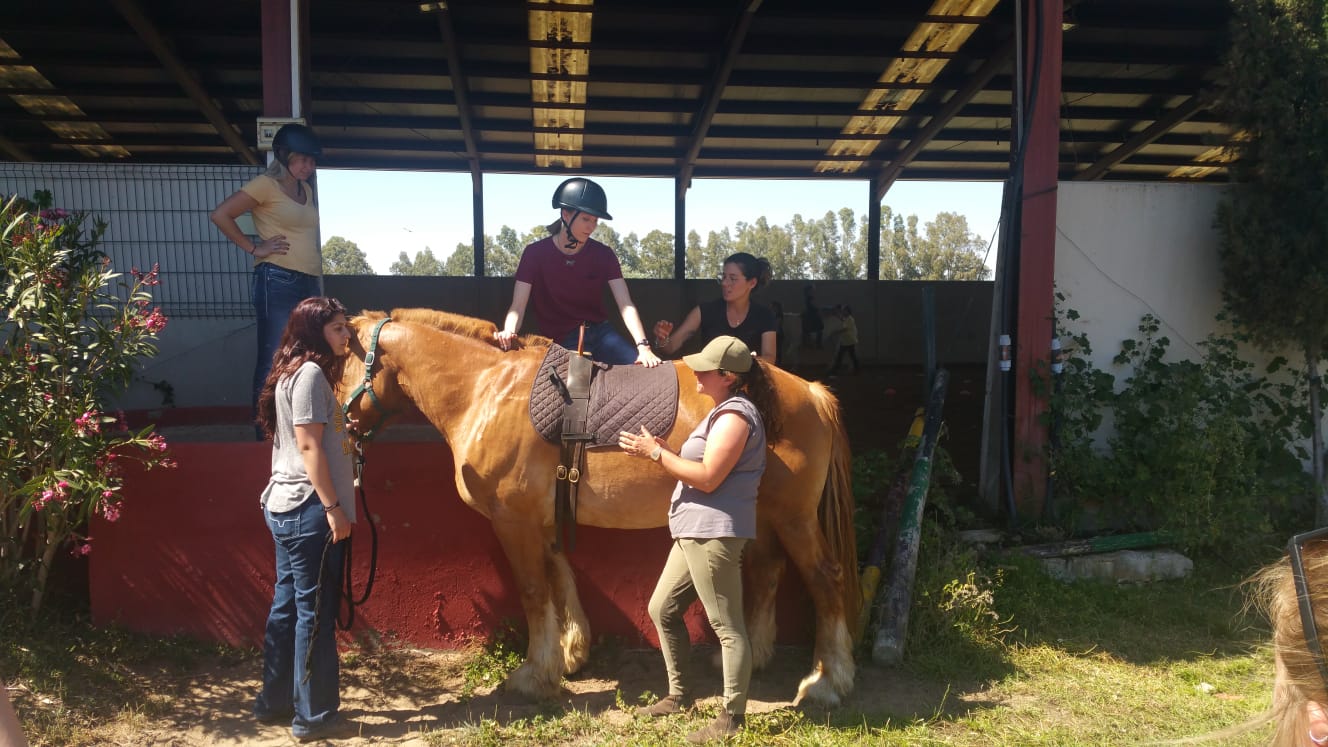
The second military base was located about a half an hour away. This base houses and trains all the stallions that could potentially become part of the military force or used to continue any desirable bloodlines. The large quantity of mares and stallions must be kept separated and never meet. This great seperation is to keep the stallions from getting distracted and is also much safer for all parties involved including any workers and other animals.While at the stallion base (above) we also got the opportunity to witness a semen collection using a tease mare.Our second industry excursion of the day was to Terapia Equestre La Corbera in Utera. This facility uses equine assisted therapy activities as a way for individuals to improve upon any disabilites they may have. We didn’t get many pictures of the clients in action due to respect for their privacy but we did get to interact with them and help out during their sessions. We definitely get some lovely shots of us riding some of the therapy horses though and participating in some of the activities they use during sessions.
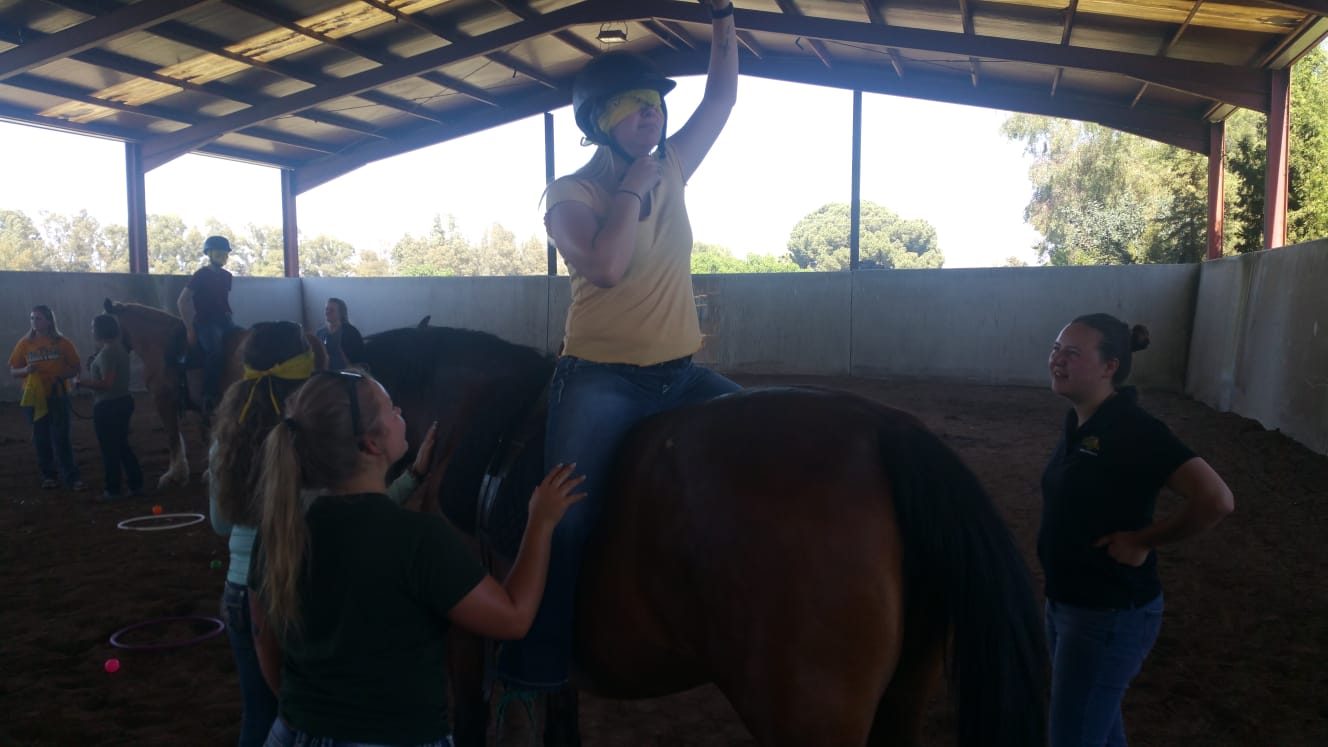
This operation takes care of roughly 200 clients who’s ages range from 2 on up. We learned that each individual, both horses and clients, work different from one another and require different types of therapies for their unique conditions.

I know the looks of joy and excitement on the faces of the clients put smiles right back on all our faces. The staff at the facility were so patient and kind with us while we were there.

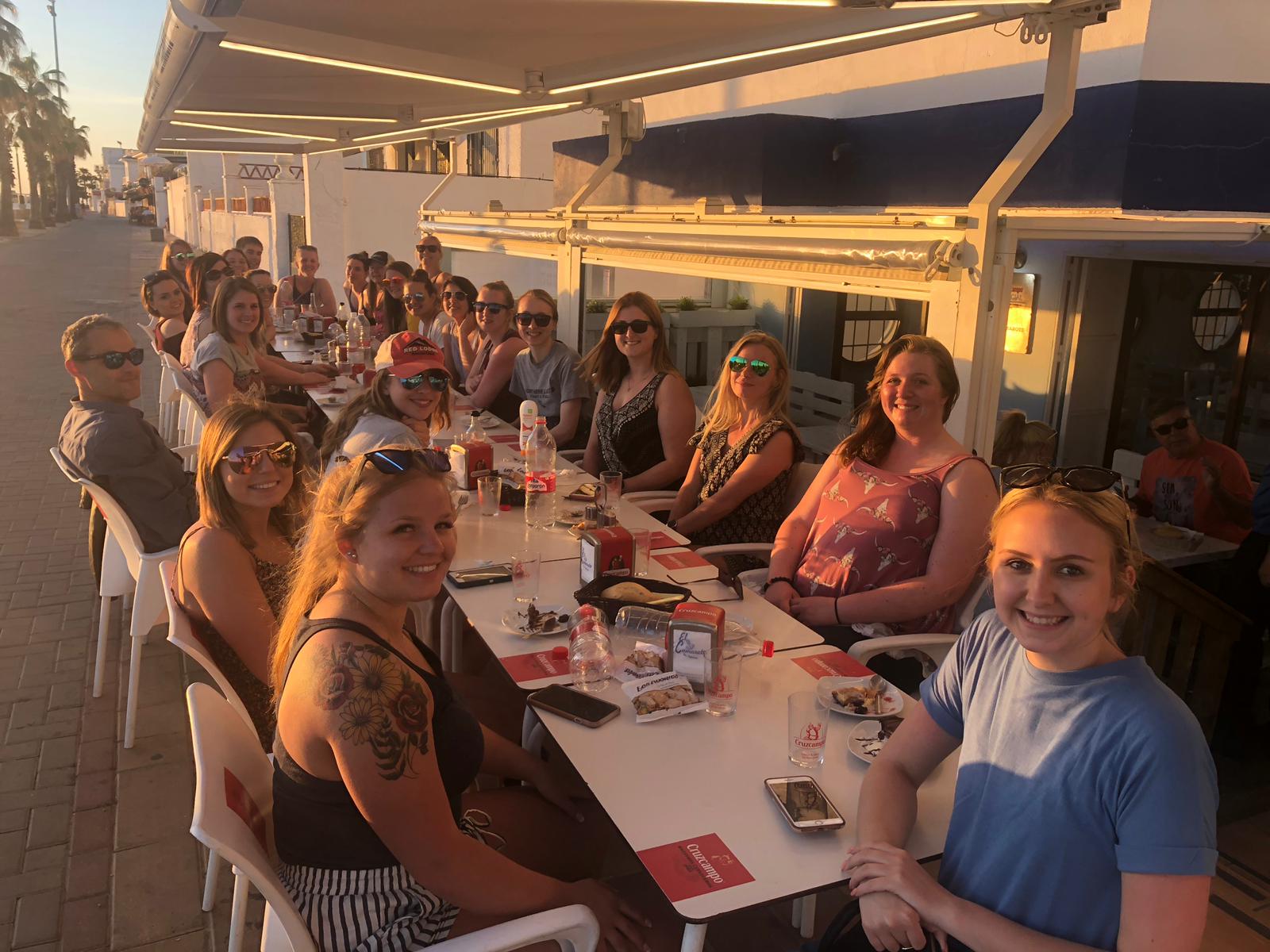
To finish off the night we went back to Chipiona and had another family dinner at El Camarote.

There is so much more to come in the next 2 weeks and we are all so excited to keep sharing our experiences with you!!!

Adios! Buenos noches!!! (It’s 11:45 pm here😄)